



















Just like plenty of other sectors, there are many people in public transport who want to secure their place in industry history for conceiving and delivering a progressive new idea.
Innovation is important in business, as is the ability to accept that sometimes, an idea simply is not good enough to stand the test of time. Therefore, my column this quarter covers just a small portion of the innovative ideas of the last few years – including the good, the bad, and the ugly.
The Arrival bus: looking at the what could have been
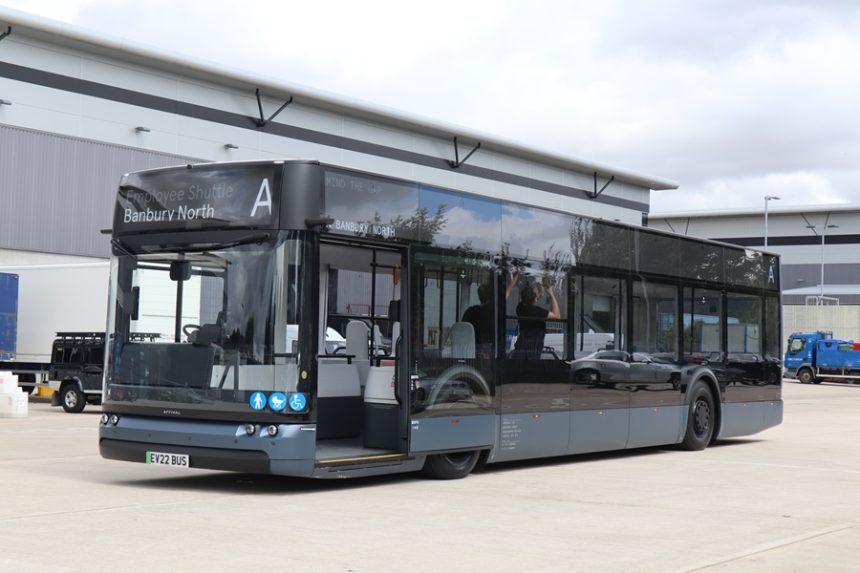
In 2021, Arrival unveiled a prototype battery-electric bus (pictured) that was eye-catching, contemporary, and much more configurable inside than others available at the time.
It boasted a full-length glass roof panel and plastic, low-cost, low-weight body panels. The enormous plug door made operators wince, though, as they inevitably wondered what would happen if it was to be opened when the wheels were on full lock, or it got stuck on top of a high kerb.
As it happens, production never got off the ground before the project was discontinued, but it remains one of the most striking conceptions in bus design of this decade.
Feet up on seats is not a feat to defeat
Sometimes, seemingly good ideas do not gather traction, and it is hard to put your finger on why.
The idea of a tip-up seat opposite another seat so that passengers who want to put their feet on the seat can do so without getting the fabric dirty is a really good one.
However, despite a handful of operators dipping their toes into this civilised modification, it did not take off. Maybe it says more about people’s behaviour or habits that an idea to make travel more pleasant for the next passenger after one with dirty shoes failed.
Meanwhile, At least two operators trialled a curved ‘sofa’ at the rear of a bus to create a more sociable ambience. It did not take off and ultimately, the getting more ‘bums on seats’ overrode the desire for increased sociability. But it represented a unique experiment nonetheless. A couple of on-board libraries were installed too, but again, did not catch on.
On-board wi-fi – once a mark of quality
For many years, fitment of wi-fi to buses was seen as the mark of a high-quality, well-invested route. Indeed, some local authority and private tenders were issued with wi-fi being a ‘pass or fail’ requirement. The advent of cheap data packages largely killed off the benefit – which some operators were happy about, given the relatively high ongoing costs of the kit.
While these have in some cases been replaced with wireless charging pads, there is no doubt that USB charging remains one of the most useful and desirable enhancements for local bus services.
They are well used, relatively cheap to install, and aside from vandalism and the odd unit failure, relatively low maintenance. It is hard to imagine these becoming unpopular any time soon.
But what else could be done?
There are a few excuses for manufacturers not building an acceptably sized toilet on a coach (such as the resulting encroachment into passenger space), but as a taller man, the awkward process of crouching to avoid a head strike, entering the cubicle, turning, locking the door and then being able to reach the toilet roll once eventually seated is not an elegant one.
You must then reverse this manoeuvre to wash your hands before then doing it for a third time to reach the door, only to then unceremoniously exit and climb the stairs in front of half a coach load of passengers who are wondering what the shuffling and banging was about.
Most also have sloping ceilings, which are only comfortable for shorter people. The comfiest toilets for many are the flood-mounted versions on purpose-built express coaches.
The next item does not seem too much of a stretch. When will someone build a ticket machine that can do everything that the best ticket machine can do; automatically set the destination display (perhaps with manual override) based on the route selected on the ticket machine; link with the CCTV kit so that remote downloading or viewing is possible via the ticket machine connection; and link with the fuel management system on the bus so that instant MPG and fuel usage data is available?
Currently some buses have as many as four separate technology packages fitted to deal with these four requirements.
And finally…
When will someone create a user-friendly, simple, intuitive, approved digital tachograph unit?
Current units are so incredibly, and needlessly, complex that they almost guide the driver into making a mistake. Anyone who has ever had to do a complex manual entry on a digital tachograph will feel my pain.
Ticket machines, destination displays and so on have all been simplified to the extent that minimal training is required now, but tachographs remain firmly in the exact opposite category: clunky, complicated, old-fashioned, and utterly frustrating to use.