




















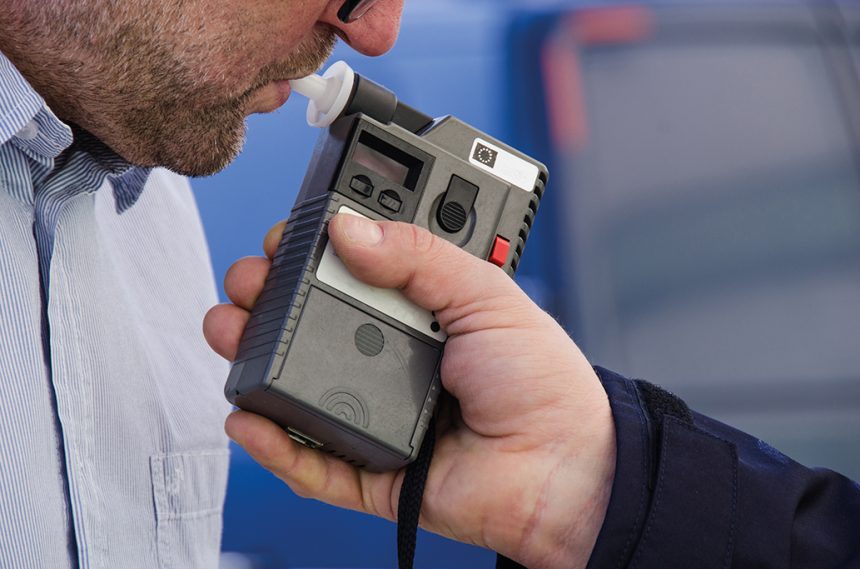
What should happen if a coach or bus driver fails an in-house random breath test for drink-driving? JMW Solicitors’ experts explain
- One of our drivers failed a random breath test when they arrived at the operating centre at the start of their duty period. We subsequently dismissed them for gross misconduct in accordance with our disciplinary policy. Do I need to notify the Traffic Commissioner?
- I have read that the Acas Early Conciliation (EC) period is changing. What is this and what does it mean for operators?
One of our drivers failed a random breath test when they arrived at the operating centre at the start of their duty period. We subsequently dismissed them for gross misconduct in accordance with our disciplinary policy. Do I need to notify the Traffic Commissioner?
You have a legal obligation to report any convictions of drivers for drink (or drug) driving offences to the Traffic Commissioner within 28 days of the date of the conviction – this is one of the conditions on your O-Licence.
In the absence of a criminal conviction (such as here, where it is your own internal testing regime that has identified that a driver has presented for work under the influence of alcohol), you are not required to notify the Traffic Commissioner, but you may choose to voluntarily do so.
You should, however, have a clear and comprehensive drug and alcohol policy, which (among other things) specifically details the circumstances in which notifications to the Traffic Commissioner (both mandatory and voluntary) will be made. That policy should be applied consistently from driver to driver.
The notification of driver conduct matters to the Traffic Commissioner involves the sharing of the driver’s personal data
You should also consider your GDPR obligations. The notification of driver conduct matters to the Traffic Commissioner involves the sharing of the driver’s personal data. You must therefore have a lawful basis for such a disclosure.
Notification of any report of drink-driving to the Traffic Commissioner will result in a conduct hearing for the coach or bus driver concerned where action against their vocational driving entitlement (including potential suspension or even revocation) may be taken.
It may also lead to Traffic Commissioner scrutiny of your systems and procedures for managing the risk of drink driving within your business, as it is an undertaking on every O-Licence that operators and Transport Managers will ensure their drivers comply with all laws relating to the driving and operation of vehicles — this requires you to have an effective system to manage the risk of drink driving within your business.
I have read that the Acas Early Conciliation (EC) period is changing. What is this and what does it mean for operators?
From 1 December 2025, the Acas EC period has been extended from six weeks to 12 weeks for all cases notified on or after that date.
Acas (Advisory, Conciliation and Arbitration Service) is an independent body that helps resolve workplace disputes without going to Tribunal. For most employment claims, such as unpaid wages, unfair dismissal, or discrimination, you must notify Acas before submitting a claim. This aims to encourage settlement and avoid costly litigation.
Once you notify Acas, it acts as a neutral mediator to help both sides reach agreement. If no settlement is achieved within the EC period, Acas issues a certificate so an employee can proceed to Tribunal. Some claims, however, such as certain collective disputes, are exempt from this requirement.
With rising demand and increasingly complex cases, doubling the EC period gives parties more time to negotiate and reduces pressure on Acas. The new rules will be reviewed in October 2026 to decide if 12 weeks remains appropriate.
This means employees now have a longer window to resolve disputes and gather evidence.
The Employment Rights Bill will extend most Tribunal claim deadlines from three months to six months. Combined with the extended Tribunal time limits, the extension of the EC period means that employees could now have up to nine months to bring a claim (because the EC period pauses the Tribunal clock). Operators should therefore keep records longer, as cases may take more time to conclude.
[Answers by Laura Hadzik, Partner, and Elle Holland, Paralegal]