


















In his final column as CPT President, Paul Lynch outlines why increasing the speed of our coaches and buses is the industry’s biggest challenge
Early in the new year it’s natural to think ahead, to make plans in our jobs about how we’re definitely going to get everything right this time (!), alongside, no doubt, improving various aspects of our non-work lives too.
You’ll hopefully forgive me, therefore, for briefly looking back as my spell as Confederation of Passenger Transport (CPT) President comes to a close, before looking forward again.
Whichever part of the UK you are in, it has certainly been a busy and important time with new or prospective legislation and many other developments, whether political, technological or social.
The subjects I’ve written about in this column over the last two years reflect this.
As you’d expect, I’ve covered matters particularly relevant to CPT and its work on behalf of the industry, such as the launch of valuable research reports on the economic impact of coach and bus, progress against our manifestos, age limits for young drivers and, most recently, the innovative toolkit for local authorities on how to navigate finding the best solution for local buses from the range of tools now available.
There have also been events to write about such as our new Coach Conference as well as a review of the history of the organisation on its 50th anniversary.
These columns have enabled me to share wider thoughts about our industry too.
I’ve discussed the increasing profile of coach and bus, technological advances that benefit customers, the so-called “war on the motorist”, road pricing (a particular hobby horse of mine that may finally be getting a foot in the government policy door), what it’s like to operate in London, traffic conditions, autonomous buses, the particular value for money our mode represents compared to others, and more.
There have also been some more personal reflections such as why I came to work in this industry and the impact the COVID pandemic had.
This range of issues reflects the breadth and importance of what is going on at any one time, and the challenges and opportunities that are always present.
And there have been many topics I intended to write about that I haven’t been able to – punctuality standards, safety, the image of coach and bus, diversity issues and the appropriate role of demand-responsive transport.
The issue that is exercising me most urgently, though, is bus speeds. CPT Scotland recently commissioned research on this which updates and reinforces previous work such as that by London TravelWatch.
We have long known that declining bus speeds means declining customer journeys and the latest work usefully puts numbers to this. One example is that a more than half-billion pound improvement to bus’s already large contribution to Scotland’s economy (£5.3bn) would result from an improvement of just 8% in bus speeds.
The research also demonstrates the environmental and social benefits of faster buses as well as the positive impact on cost of provision. Simply put, modest increases in speed could result in millions more journeys.
Unfortunately, the opposite is happening nearly everywhere. I fear that, in London, we have reached a tipping point where some routes are now so slow that the impact on customer numbers is now beyond even the elasticity rates that the research shows.
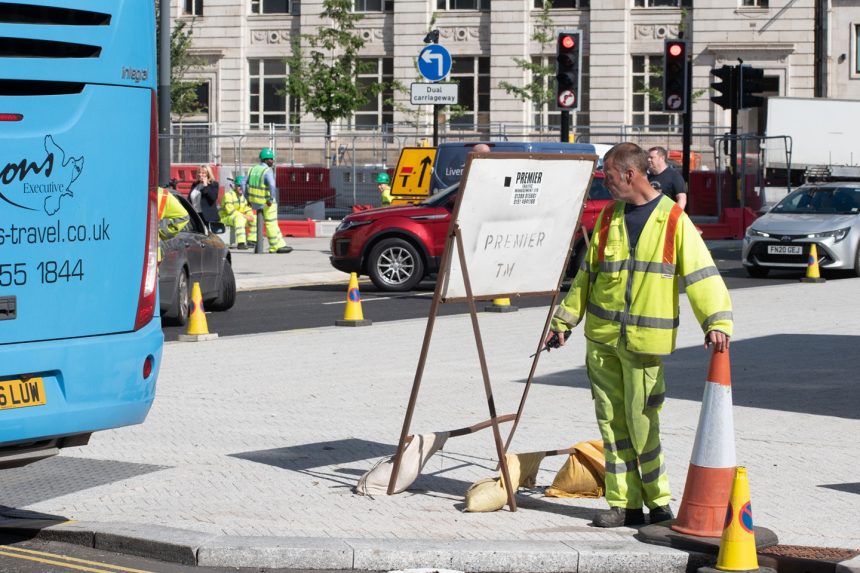
The reasons for it are many of course but the number, nature and impact of roadworks are a particular factor.
CPT gave powerful evidence on this last year to the UK Parliament’s Transport Select Committee and I was able to do so similarly last month to the London Assembly’s Transport Committee. Both events garnered press attention so there is momentum on this subject we must build on.
Such issues are huge challenges. But we will rise to them. It has been a privilege to serve as CPT President. As I prepare to hand over, I know that this is an industry with the creativity, dynamism and determination to meet the challenges ahead.