




















Authorities should listen to passengers on designs for floating bus stops rather than adhere only to minimum guidelines, says Bus Users UK
Road infrastructure planners have been urged to “go beyond” new minimum requirements for floating bus stops released by the Department for Transport (DfT) on 26 January.
The statutory guidance follows complaints from groups such as the National Federation of the Blind UK that those designs and similar layouts are dangerous and discriminate against those with a disability or limited mobility.
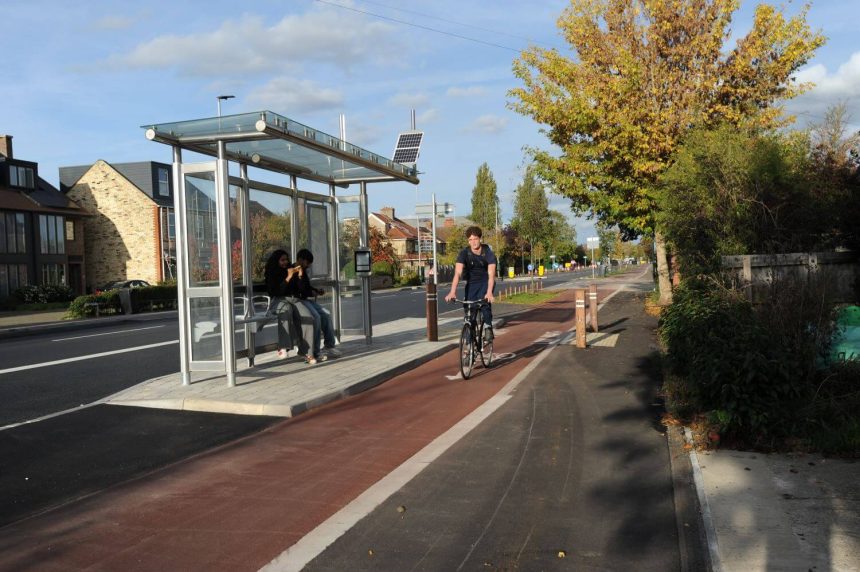
Further to DfT’s “Cycle infrastructure design” advice in 2020, the latest update imposes stricter guidelines on local transport authorities and other bodies over floating bus stops – defined as where a cycle track and bus stop intersect.
The guidance lays down a continuation of a government pause on designs which require passengers to board or alight directly from or into a cycle track – also known as a “bus stop boarder”.
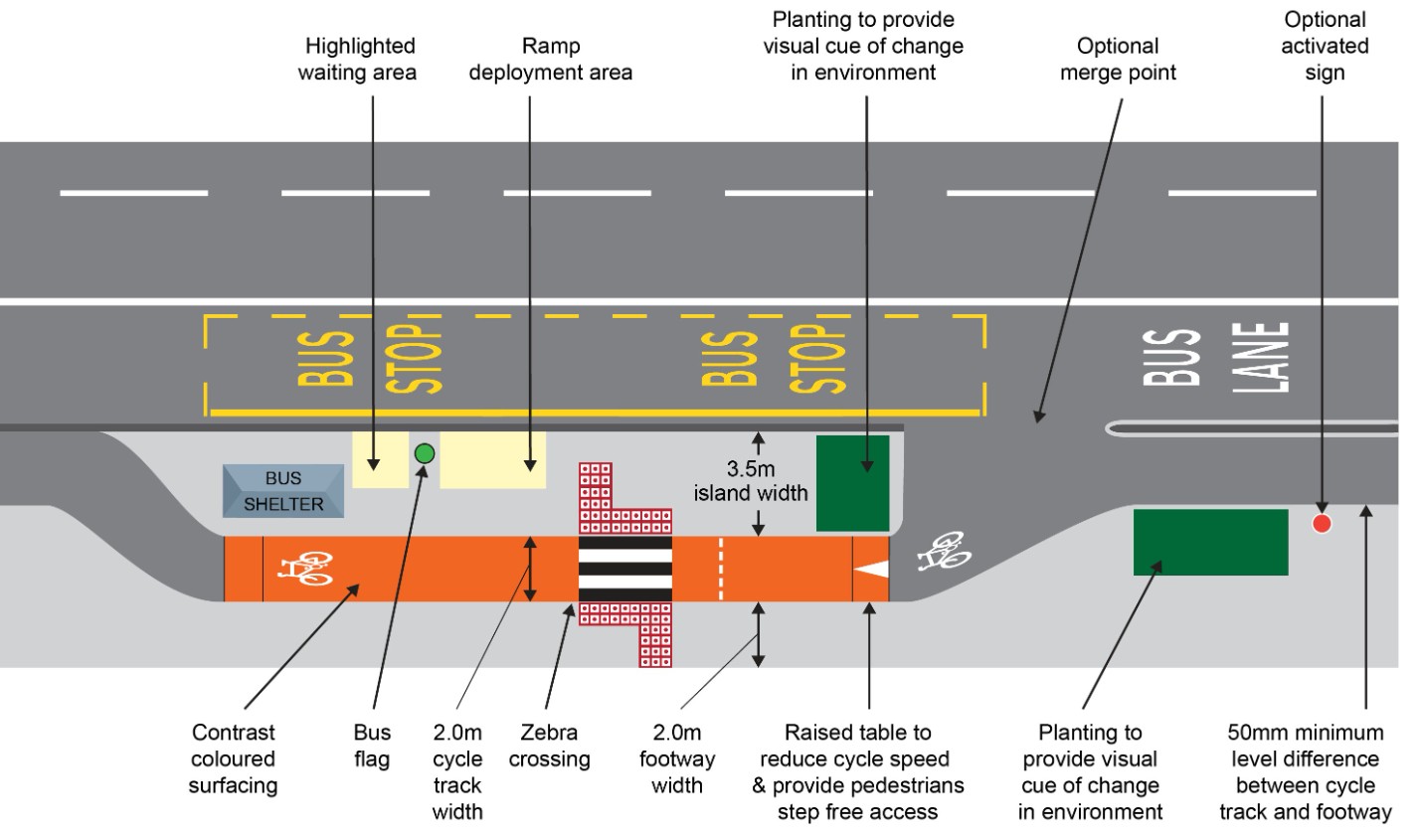
It also includes suggested minimum dimensions for the bus stop bypass island. For the zebra crossings between the pavement and the bus stop, “give way” signage is required, while there is a recommended height difference to encourage cyclists to slow down.
It also mandates early engagement with disability groups. The guidelines apply to new and existing installations.
Buses are lifelines for millions of people, and all aspects of the journey – from pavement to vehicle – must be designed so no one is left behind – Lydia Horbury
Bus Users UK Chief Executive Lydia Horbury says: “Bus Users UK welcomes the publication of the government’s new statutory guidance on floating bus stops.
“We support efforts to improve the design and provision of bus stops, but our priority must always be the safety and confidence of passengers, especially those who are disabled, older, or have sight loss. Poorly designed floating bus stops can create confusion, increased stress and a sense of fear, leading some passengers to avoid journeys altogether.
“We urge local authorities, transport authorities and designers to go beyond minimum requirements and work with the lived experience and voices of bus users at every stage of planning, design and delivery.
“Inclusive design isn’t just good practice; it is essential to enable independent travel, improve accessibility and ensure that buses remain a reliable and welcoming option for everyone in our communities.
“Bus Users UK calls for clear, consistent and accessible treatments at all bus stops that prioritise passenger safety and dignity, supported by meaningful engagement with disabled passengers and other user groups. Buses are lifelines for millions of people, and all aspects of the journey – from pavement to vehicle – must be designed so no one is left behind.”
Eleanor Briggs, Guide Dogs Head of Policy, Public Affairs and Campaign, adds: “We are pleased to see the continuation of the pause in the updated guidance.
“The guidance states that local authorities should not install new designs which require passengers to board or alight directly from or into a cycle track.
“We are continuing to review the updated guidance and we are asking for clarification on how it will work in practice. We do not think the use of bus stop boarders is safe or appropriate, and any existing designs should be retrofitted.
“We have ongoing concerns about bus stop designs incorporating a cycle path, including those with an island, and so we welcome confirmation from Department for Transport that further research will be carried out on the safety of these designs.”