


















Life in coach and bus is more than an occupation to many. Instead, it is a passion that still burns once daily involvement in the industry concludes and retirement beckons.
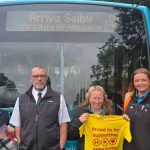
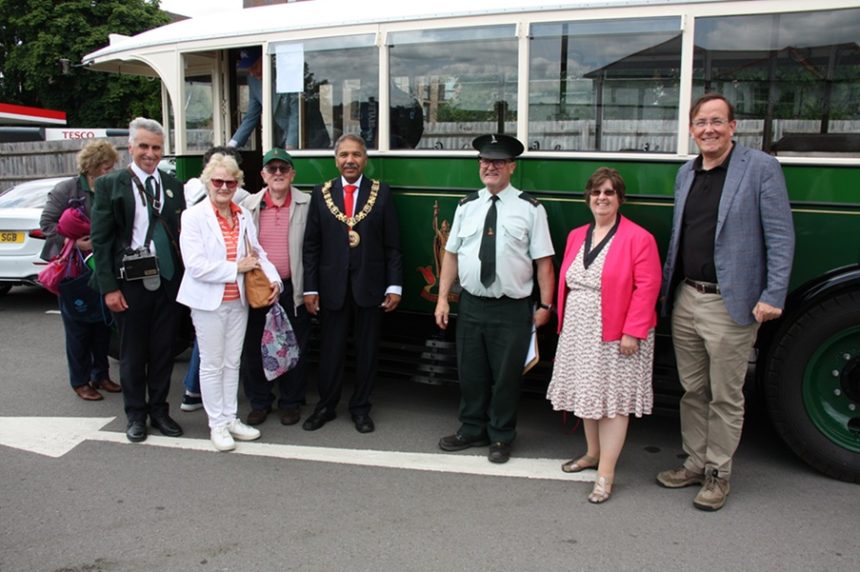
James Freeman (pictured above, third from right) is the archetypal career busman. Coming through the National Bus Company (NBC) senior management training programme at the turn of the 1980s, like many graduates he took knowledge of the basic and more complicated parts of running buses and developed his own path in the sector.
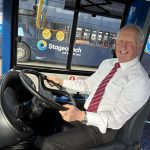
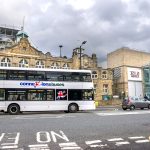
Acclaimed for his work as Chief Executive of Reading Buses and as Managing Director of First Bus West of England until 2021, James keeps his hand in by driving a few days per week for Stagecoach in Winchester. “I am still part of the bus world, but in a very different way because I do not have to worry about things now,” he notes.
“Nobody will call me in the middle of the night when something has gone wrong. But I get to know what is going on and be an active part of it. And it is fun. I enjoy being a bus driver. It has proved to me what I already knew: driving a bus is a very rewarding job.”
A long career in bus, and an even longer involvement in heritage
Involvement with Stagecoach came via James’s position as Chairman of the Friends of King Alfred Buses (FoKAB). He needed to visit the operator at Winchester to ensure that a FoKAB running day would not interfere with Stagecoach’s activities. After some to and fro, that led to him coming out of retirement as a part-time driver.
FoKAB has a fleet of coaches and buses that were once part of long-gone Winchester operator King Alfred. The oldest is from 1929. James formed the Friends in 1985 but in 1981 had personally purchased the first member of what became the group’s fleet.
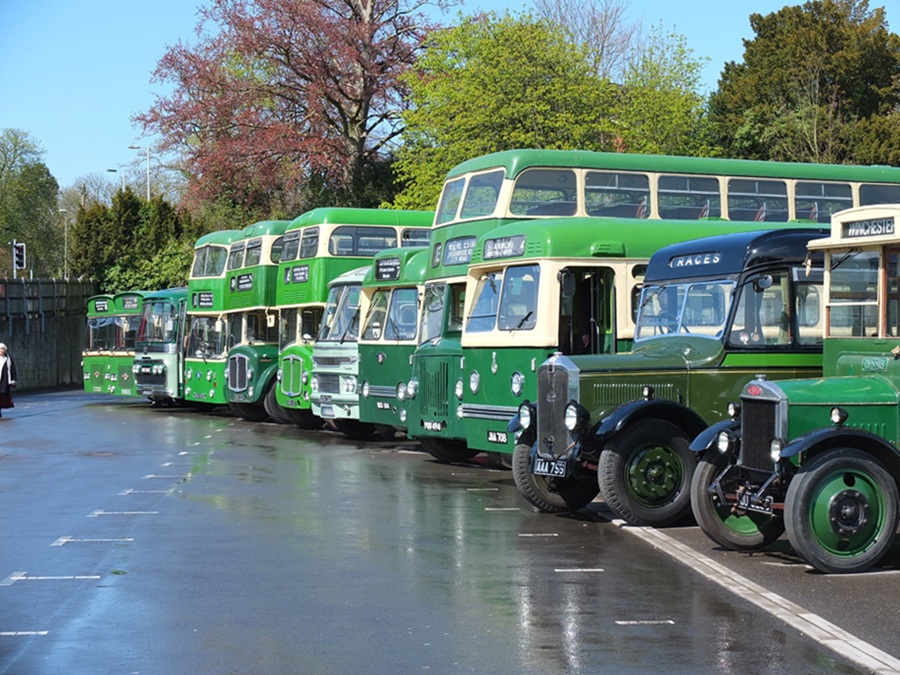
At that time, his NBC training had him at South Wales Transport. A former King Alfred Leyland Tiger Cub was working for Eynon’s of Trimsaran. That operator became aware of James’s interest in it, and offered it for sale. The Tiger Cub was not in great health, but friends around the industry helped to get it back into shape.
“That started the ball rolling. I bought another bus a couple of years later, and then in 1985, realised that I could not do it alone and that a group was needed,” he recalls. Enter FoKAB. That led to the staging of running days, which continue today. Further vehicles joined FoKAB, including one returned from the United States.
One type missing is a Metro-Scania single-deck bus. Revolutionary for its time in the early-1970s, the model gained a reputation for corrosion. King Alfred’s thus had short lives and were beyond reach when withdrawn, although he bought one that served elsewhere to act as a replica. It proved a bridge too far and was moved on.
But James describes Scania’s arrival in the UK bus market as a seminal moment. Metro-Scanias “were remarkable vehicles,” he observes. “They were also very thirsty, but the King Alfred examples were looked after very carefully by [body manufacturer] MCW, because it was so proud of the sale.”
The Metro-Scania’s positive first impression resurfaced when James was at the head of the boardroom table in Reading and the West of England. “I bought Scanias then because they are excellent vehicles, although I do not believe in being dewy-eyed,” he continues. “I never mix my professional life and work with FoKAB; I try to keep them as separate as possible.”
FoKAB contributes to painting a strong industry picture
Retirement from First Bus allowed James to increase his contribution to FoKAB. It has long striven for good relations with local operators. Go South Coast under the late Andrew Wickham has been a staunch supporter and Stagecoach backs the group. The local authority is also cooperative and running days serve to paint the wider bus industry in a positive light.
“I like people to be able to experience these things,” James continues, noting how in its earlier days, FoKAB could use surviving former King Alfred conductors. Services run along the correct routes and accurate tickets are issued despite no fares being charged. Public response is good, although the idea of halfcab, front-engined vehicles is increasingly alien to some visitors.
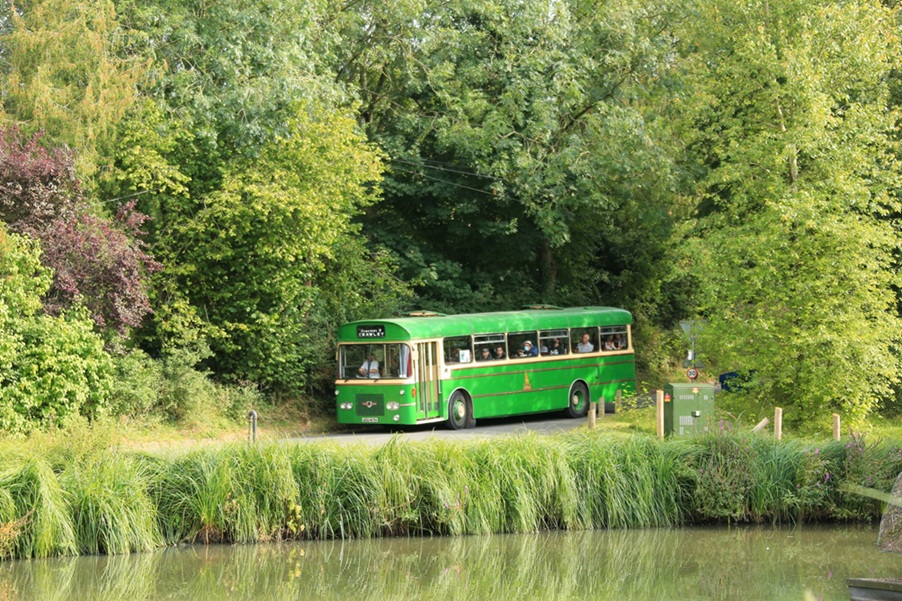
“We get young people and families who otherwise might never go on a bus, and who do not know how they work,” he says. James adds to an existing weight of opinion within the sector that specifically telling non-users how to catch a bus is sometimes needed.
“From a purely professional point of view it is quite frightening to think how many people when confronted with a FoKAB bus do not know what it does. That is scary, but it is a good lesson.” Experience with Stagecoach has also illustrated that when young people start to use buses on their own, such education can be a benefit.
Change is forever ongoing for industry and heritage
The extent of mechanical change from FoKAB’s vehicles to the stock of today means that finding people able to drive the former is no longer simple. “I started on a Bristol Lodekka with a crash gearbox so I understand it. Now we are taking people back to square one and teaching them to drive our fleet,” James explains.
At least one FoKAB bus has the throttle pedal in the middle. Others need consideration of selecting a low gear before descending hills. Not stopping in a position where non-power steering needs to be turned on the spot when moving away is another element.
Keeping vehicles serviceable that may have been out of production for 90 years can also be challenging, although resourcefulness and connections have been fruitful, as is proving to be the case in one vehicle in particular. That relates to FoKAB’s Leyland Olympic bus, which was involved in a disastrous fire in late-2023 (see below).
For James, the bus industry has been much more than a career. While passengers in Reading, the West of England and elsewhere continue to reap the benefits of his work, the industry’s heritage via FoKAB’s immaculate fleet is also showcased thanks to his efforts.
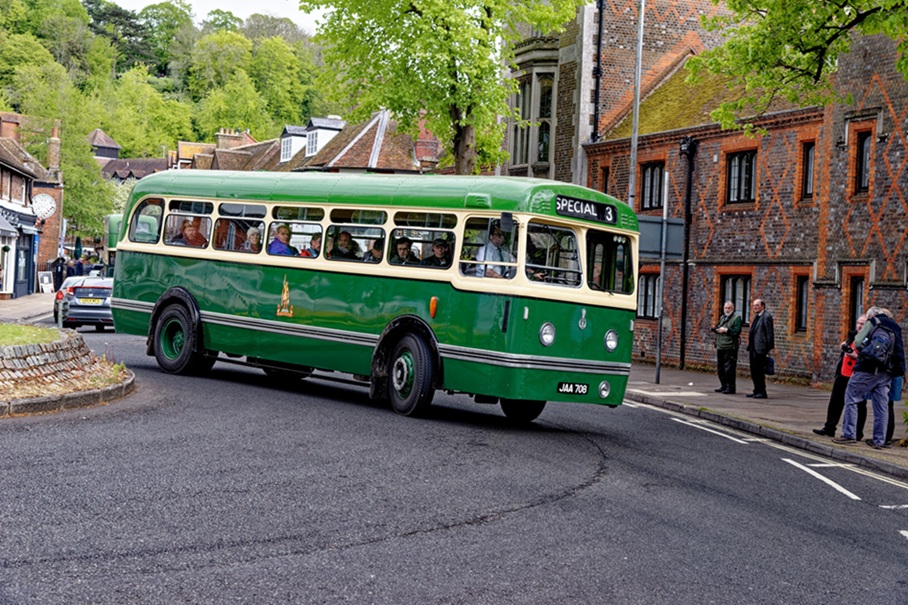
Historic Leyland Olympic bus continues its rise from the ashes
Part of the fleet is a Leyland Olympic with MCW body. New to King Alfred in 1950, it ended service in Ireland, where FoKAB found it as a hulk. It was repatriated, restored, and put back on the road.
Disaster struck in December 2023. The Olympic was among eight vehicles in a storage unit that caught fire. It was severely damaged, and what to next do was a conundrum.
“I looked at it said ‘we have got to save this’,” James recalls. Insurers were less keen, and asbestos in the building roof complicated things. Eventually the threat of scrap receded and the wreckage was sold back to FoKAB. Exhibition of it drew donations, and exploration of potential restorers began.
Andy Crockett of the Scottish Vintage Bus Museum at Lathalmond had already worked with FoKAB, and upon examination of the Olympic, believed it was restorable. “I took no notice for a while, but we got to the point where Andy was sure we needed to think about it. So we did,” says James.
Body drawings had been rescued from MCW, finding their way into the Bus Archive. It supplied them digitally in what he adds was “an amazing development.” That allowed new metal to be formed, and the rebuild was on.
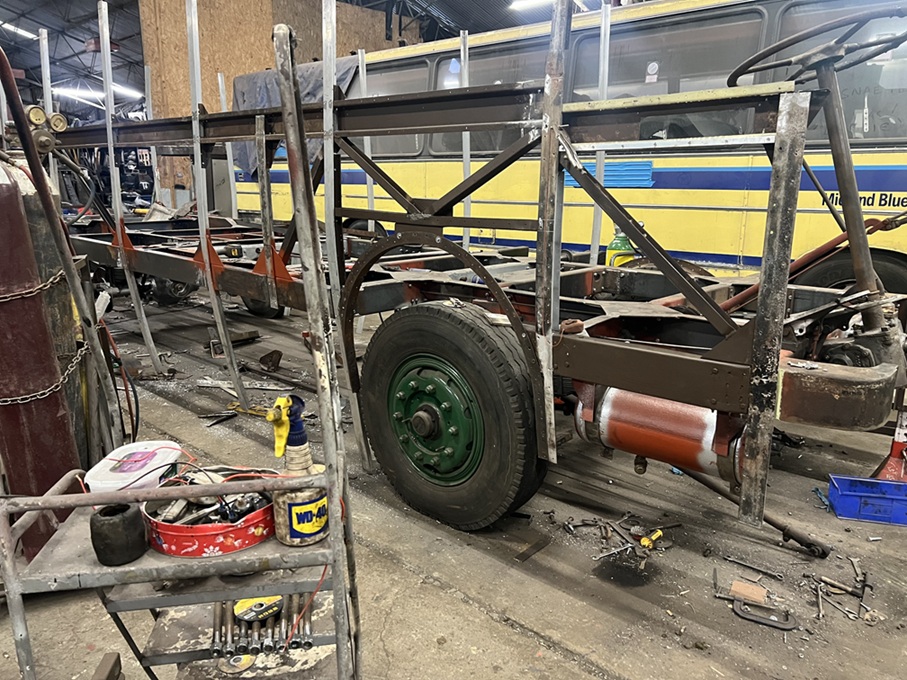
The Olympic was moved to Lathalmond, while at the same time a similar bus was discovered in Aberdeenshire. It has yielded many parts either for direct use or as templates. FoKAB’s vehicle is now back on its wheels, but much work remains as part of what is expected to be a £500,000, three-year programme.
Over half of that is in hand or pledged, but the remainder is “the tricky part,” says James. Donations in kind are equally welcome. Interior fit-out is likely in 2027, for which many items will be needed.
“That is when getting the message around matters,” he continues. “Every time Andy sends me pictures, things have moved on.” A lot is still to do, but with the right support, what was a charred wreck in 2023 looks likely to run again.
For more on the Leyland Olympic story and to donate towards its rebuild, visit the FoKAB website.