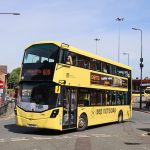

















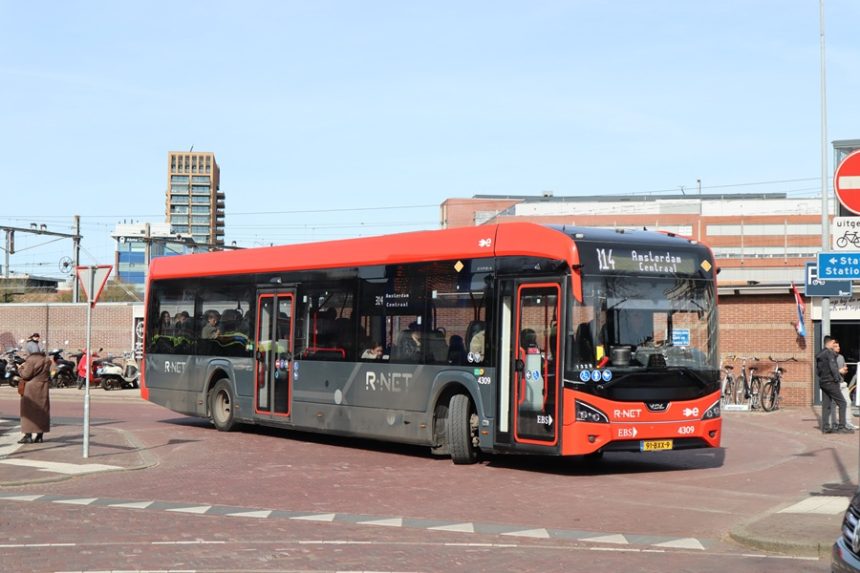
I was struck by a recent announcement that Copenhagen has become the first major European capital to operate a fully electric bus network across its entire municipal route structure.
The city has announced that its final two routes, the 5C and 19, would be served by electric buses from 29 March. That is a historic milestone, but one that arrives as the broader European bus market has already passed a tipping point.
The news from Copenhagen is very encouraging, and it prompted me to take a closer look at what has been going on in other parts of Europe.
We are fond of saying that the UK is leading Europe in terms of bus decarbonisation. While we can justify this claim in the context of the continent’s larger bus markets, several of the smaller ones have also been making great progress.
According to a recent study by the NGO Transport & Environment, five EU member states purchased 100% zero-emission city buses in 2025: Bulgaria, Denmark, Estonia, Latvia, and Slovenia. Another six – Belgium, Finland, Lithuania, Luxembourg, the Netherlands and Romania – reached over 90% zero-emission share.
Of the major markets, electric powertrains accounted for three out of every four new city buses bought in the UK last year. Italy ranked second on 64%. Spain’s new zero-emission city bus share was 56%, Germany was fourth on 50%, and France trailed on 42%.
According to Transport & Environment, the Netherlands deserves particular recognition. Since 2021, 99.5% of new city buses sold there have been zero-emission.
That achievement has been the product of a landmark 2015 agreement between the Dutch Ministry of Infrastructure and Environment and public transport authorities that all new bus procurement from 2025 would be emission-free.
While the UK now sits outside the EU regulatory framework post-Brexit, it has managed to top the league among major European markets, with over 1,000 new city bus sales annually.
At city level, London is of course the headline act. From just 30 zero-emission buses in 2016, Transport for London (TfL) contractors operated over 2,000 by mid-2025 on more than 100 routes, making that the largest zero-emission bus fleet in Western Europe. TfL had aimed for full zero-emission operation by 2030.
Beyond London, Coventry is one of the UK’s star performers. It targeted full zero-emission bus operation by the end of 2025, but some delays mean it now aims to achieve that by December 2026.
The UK’s position at the top of Europe’s major market electric bus league is a genuine industrial policy achievement. But with over 70% of all new UK coach, bus and minibus registrations in 2025 still combustion-powered, there remains a big task ahead.
We need to move beyond the frontrunner cities and ensure that medium-sized towns and rural operators are able to emulate those leaders.
For more about Zemo’s work supporting the coach and bus transition, membership, and to join its Public Mobility Working Group (PMG) meeting, visit the Partnership’s website. For more on the next PMG meeting on 7 May, click here.