




















The government’s new Integrated National Transport Strategy could be good news for coach and bus – if it is delivered
Immediately before the Easter break, the Department for Transport (DfT) finally published its Integrated National Transport Strategy (INTS): “Better Connected”, which contained policies covering coach and bus.
Over the last few years, decades even, ministers of all governments have talked up the merits of integrated transport, but nothing has ever really emerged in any tangible way other than in limited, localised examples.
The aspirations in this strategy are all very worthy – and that’s not damning it with faint praise at all. The objectives are all very desirable, and I can’t for one moment believe that anyone, including any politician of any party, would disagree with anything it sets out.
Will the Integrated National Transport Strategy be delivered?
The issue, as ever, is whether the strategy will be delivered. With the advances in technology, and the fact that public transport is now increasingly owned or controlled by the public sector, we now have a better chance than ever to deliver a transport strategy that is truly integrated. There should be no absence of political will, at both national and local level, to deliver.
The only issue that I can see is funding. The tight fiscal environment and challenges around affordability could impose constraints on how quickly the aspirations set out in the strategy come to fruition, regardless of political will.
The real litmus test for all policy-makers at national and local level is how much of this will happen, and how quickly
That aside, there is nothing in the strategy that should be insurmountable. Indeed, you would like to think that most, if not all, of the aspirations should happen anyway, with or without a formal national strategy. Indeed, do we need a formal strategy to deliver what most people would think should be the automatic default transport policy anyway?
The real litmus test for all policy-makers at national and local level is how much of this will happen, and how quickly. And I include in that those policy-makers and decision-takers responsible for planning decisions who need to ensure that decisions on housing and wider development proposals are properly integrated into transport planning and provision.
It sounds so obvious, but it seems we need a strategy to spell it out.
Let’s hope this strategy becomes a proper working document, and not something that quickly gets left on bookshelves to gather dust.
I would like to think there will be some form of regular review of it to assess whether policy and planning decisions align with what the strategy sets out.
How will the success of the strategy be monitored and judged? I’ve lost count of the number of strategies that end up gathering dust, or, worse still, are simply forgotten about.
All the polling evidence today continues to point to a catastrophic set of results for Labour
Obviously, circumstances are never static; they evolve. Who would have imagined, 10 years ago, that advances in technology would have led to the emergence of driverless cars, for example?
But this makes it doubly important that the strategy becomes a working document, and that there is a mechanism for a regular assessment of whether its aspirations are being applied in practice.
This is especially important given the advances in technology. I worry that, in the absence of regular assessments, this strategy would be at risk of going the way of so many others.
UK Bus Manufacturing Expert Panel issues report
Meanwhile, no sooner had DfT published its 10-year pipeline for electric bus orders, along with a series of mayoral “commitments” on bus manufacturing, following the year-long work of the UK Bus Manufacturing Expert Panel, than news broke that Scottish operators, principally Ember, I understand, would gain Scottish Government funding to buy new electric coaches and buses from the Chinese manufacturer Yutong, sparking a furious response from Jo Bamford, the Chair of Wrightbus.
Let’s remind ourselves that, when former Secretary of State for Transport, Louise Haigh, set up this panel, the aim was to find ways of helping UK manufacturers compete more effectively with the Chinese – or, as Ms Haigh put it, to ensure that buses operating in the UK are built in the UK. Well, that worked well, didn’t it?
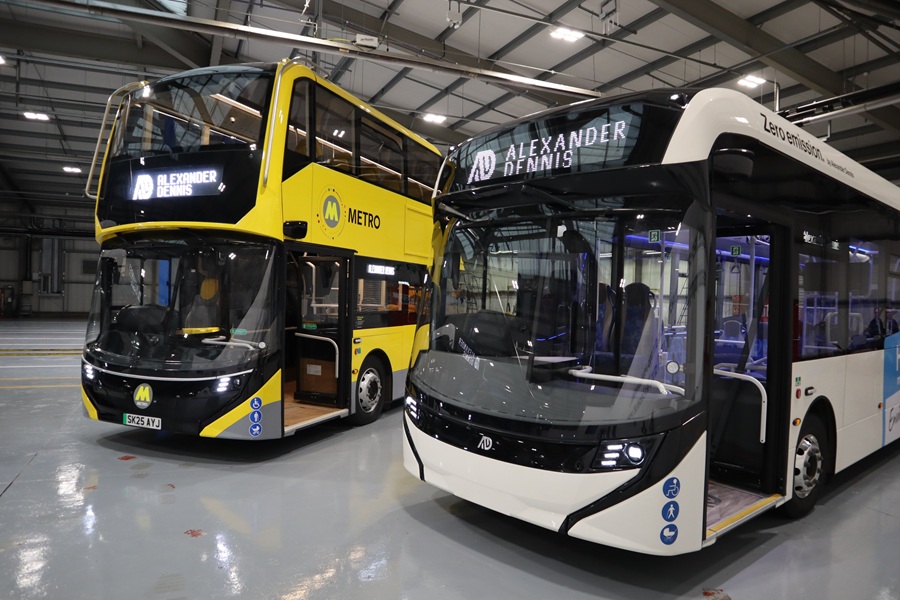
Ember’s decision to buy a large number of electric vehicles from Yutong proves to my mind that the whole initiative was a complete waste of time.
It was a knee-jerk political reaction to pressure from a small number of MPs seeking – entirely legitimately – to promote the interests of the bus manufacturers based in their constituencies. Ministers should have resisted the pressure.
The reality is that bus operators and local authorities are perfectly entitled to buy buses from China if the product being offered represents better value for money and better operational performance compared to UK manufacturers. Indeed, I would argue they have a duty to the passenger and taxpayer to do so.
Elections loom
Finally, by the time you read my next column, the local elections and the elections to the Scottish Parliament and Welsh Senedd on 7 May will have taken place.
All the polling evidence today continues to point to a catastrophic set of results for Labour, and there will be much fevered speculation over Prime Minister Keir Starmer’s future. The Conservative Party also looks set to perform badly, although the party leader Kemi Badenoch’s position seems secure, regardless.
The consensus seems to be that Mr Starmer will face a leadership challenge.
But I offer a cautionary warning to all political commentators who are circling around Mr Starmer’s expected demise: it’s possible, just possible, that the parliamentary party will look at the alternatives and decide that, at a time of major upheaval in the world economy as a result of the events in the Middle East, and given the way Mr Starmer has stood up to Donald Trump on the conflict with Iran, now is not the time for a leadership challenge.
If Labour really does implode on 7 May then a leadership challenge may well happen. But I no longer think it’s the racing certainty that I thought was the case before the conflict with Iran kicked off. Right now, I’m hedging my bets!