



















Decision on T&C Travel demonstrates undertakings given after a PI must be sustained, and that external disputes and ‘best efforts’ do not excuse weak oversight
In revoking the international O-Licence held by Bognor Regis-based T&C Travel, and disqualifying director Kenny Tye from acting as a transport manager (TM) for two years, Traffic Commissioner (TC) Sarah Bell also reported to the Senior TC the conduct of Martin Herbert — formerly a director of A&S Coach and Commercial Repairs (a company of which Mr Tye was also previously a director) — to canvas whether he should be put on notice not to be permitted to observe PSV Public Inquiries in the South Eastern Traffic Area.
Mr Tye and Mr Herbert were equal shareholders of A&S. That company was shown as dissolved at Companies House from 24 December 2024 via compulsory strike-off.
All the failings reflected what happens when the TM role is not treated with the degree of separation, seriousness and respect it requires
The TC adjourned the initial Public Inquiry because of late service of evidence, which included serious allegations around DVSA examiners’ conduct, and Darren Finnegan, representing the company and Mr Tye, expressing concerns that Mr Herbert was in the tribunal room as an observer due to an ongoing police investigation.
TC Bell directed that only the parties and witnesses were permitted in the tribunal room; all others were to be given a link to observe via Microsoft Teams.
During the hearing of the case, the TC directed that Mr Herbert’s link be removed to ensure fairness of proceedings after prima facie evidence indicated Mr Herbert sent a text saying, “lying ****” while Mr Tye was in the witness box, and which was read by Mr Tye.
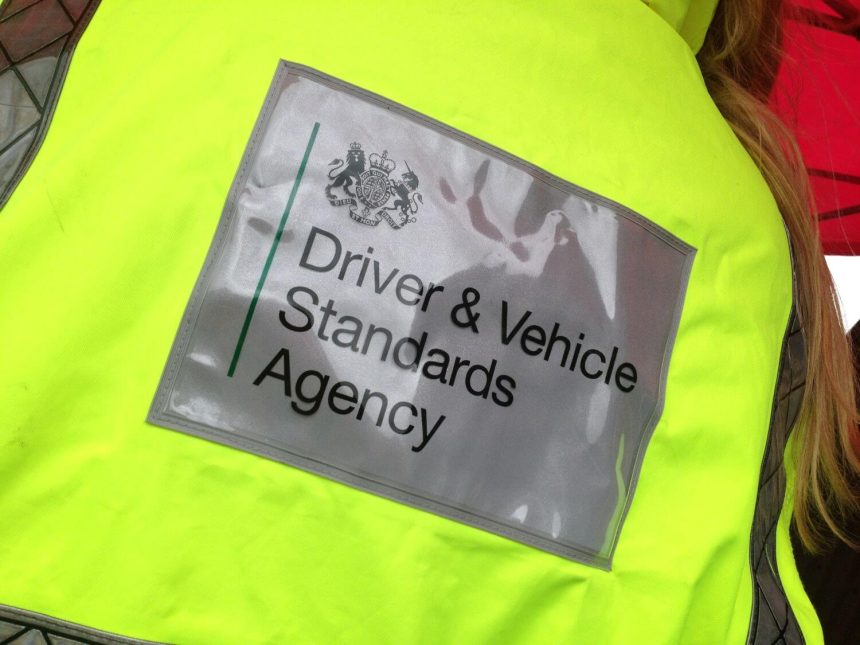
Mr Finnegan asked the TC to consider the inappropriate contact by Mr Herbert with DVSA during the investigation, while acknowledging there were many facts which were not affected by what he characterised as DVSA’s questionable conduct.
He accepted that the MoT failure rate was still high, that there were roadside prohibitions, and that vehicles were moved on the road with the signature of roadworthiness not being made.
Mr Finnegan did not suggest that DVSA was the epicentre of the compliance failings, arguing the agency “inadvertently exacerbated them to some extent”.
The TC said that robust exchanges would happen on occasion between operators, transport managers, their staff and examiners conducting an investigation.
DVSA conducted the 2023 investigation, gave significant advice and even on Mr Tye’s own evidence was faced with unsafe systems again.
In those circumstances, examiners might be blunt for genuine and well-intentioned reasons.
Further, it was unrealistic to expect examiners in the same enforcement area not to share experience of operators they might both have dealings with.
Many examiners had years of service and might see the same operator at different times on several occasions.
The information shared might be positive as well as negative.
What was important was that investigations and reports followed all relevant lines of inquiry and were evidence based.
Complaints about DVSA examiners ‘leaking’ investigation details to Mr Herbert, unless it impacted the factual accuracy, were not within the TC’s jurisdiction.
DVSA has a complaints protocol and findings of conduct bordering on (even if falling short of) abuse of power or bad faith is an issue for the appellate courts.
Out of fairness to Mr Tye, TC Bell discounted in its entirety the evidence produced or made available to DVSA by Mr Herbert, including workshop photos and a calibration certificate, because the previous business relationship between Mr Herbert and Mr Tye had turned sour, and the police remained involved.
In doing so she remained neutral on DVSA’s approach, other than to say there was a regrettable absence of recording in notebooks or similar on areas that might have assisted her.
The sustained and systemic failures, despite the company being given a formal warning in 2023, were such that TC Bell could not trust the company moving forward.
Revocation of T&C’s O-Licence and loss of good repute was not disproportionate where safety had been compromised in such a way.
The regime existed to ensure not only road safety, but also fair competition, and robust action was required where there was a risk of undermining those principles by allowing ongoing operations.
All the failings reflected what happens when the TM role is not treated with the degree of separation, seriousness and respect it requires.
TC Bell stepped back from disqualification of T&C Travel and of its directors from applying again in the future. However, both her 2023 decision and this decision would be considered on any future application.