

















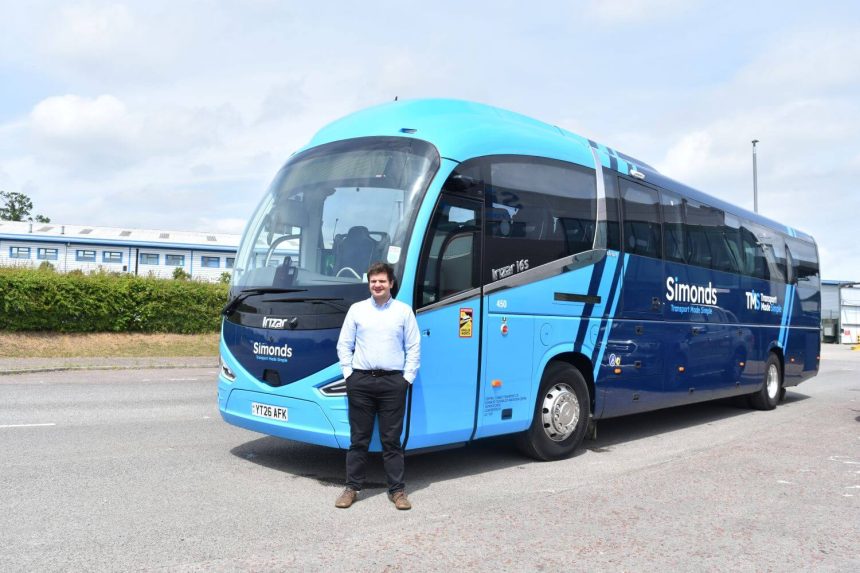
Transport Made Simple MD Peter Nathanail tells routeone how he and his business partner transformed a college transport software supplier into one of the largest independent operators in the UK before the age of 30
Just 10 years on from setting up the predecessor to Transport Made Simple (TMS) at the age of 19 and seven years after winning its first bus contract, co-founder and Managing Director Peter Nathanail now runs one of the largest independent operators in the UK.
- Transport Made Simple MD Peter Nathanail tells routeone how he and his business partner transformed a college transport software supplier into one of the largest independent operators in the UK before the age of 30
- Small beginnings for Transport Made Simple
- Recent developments
- Recognition for the sector
- Broad range of work
- Keys to success of Transport Made Simple
- Further growth?
After building up around 400 vehicles and more than 700 team members, Peter and fellow 50% shareholder Dominic Kalantary were this year included on the prestigious Forbes 30 Under 30 Europe list in the “manufacturing and industry” category.
The pair had been friends since around the age of 12, and Peter’s early interest in the industry came when he did work experience for Derbyshire operator Yourbus aged 16.
We always had big ambitions. But we never thought that we would get to this scale this quickly
Then, through a link with his university business studies teacher, he gained a job at Nottingham City Transport (NCT).
Those roles gave him a lot of the practical knowledge of the industry, and he taught himself for his Transport Manager CPC during quiet Sunday shifts at the latter’s call centre.
Small beginnings for Transport Made Simple
The idea for the business initially known as Vectare was born when Peter and Dominic observed that transport at their independent school, Trent College in Nottingham, was inefficiently run.
They set up software which Peter describes as “Trainline for school buses”, which evolved to have systems for vehicle tracking, payments, compliance, minibus management and many other features.
Vectare’s beginnings as an operator actually came in 2018 when it saw a further opportunity.
Speaking to routeone from one of the business’s larger depots in Diss, he says: “Everybody said, ‘You’re mad, stick to the software, you’ll make more money, you’ll have fewer sleepless nights.’ I think they were right about both things, to be honest!”
![[3] central connect transport made simple (1)](https://www.route-one.net/wp-content/uploads/2026/06/3-central-connect-transport-made-simple-1.jpg)
Then followed the first school contract, and then, in 2019, its first bus service.
Via acquisitions of Gardner Travel, Galleon Travel, Flagfinders, Simonds, Konectbus, and Konectbuses, the business since rebranded Transport Made Simple has expanded at lightning pace, focusing exclusively on the East Midlands and East Anglia regions.
“We always had big ambitions,” Peter says. “But we never thought that we would get to this scale this quickly.
“We think that we’re about top 10 in terms of independently owned coach and bus operators in the UK by size.”
The COVID-19 pandemic right at the start of the journey was successfully weathered because, as Peter says, they still had low outgoings, and there were enough opportunities.
In other ways, the time was right to get into the sector, notes Peter.
“An operator like Gardner Travel, which we were able to afford to buy [in 2020] for not a huge amount of money, with 10 very, very old coaches – there are still some of those operators out there, but not so many anymore.”
Recent developments
Vectare – and, with it, the technology side of the business – was sold in 2025. Dominic, who is still Director at Vectare, remains a non-executive director at TMS.
“Transport Made Simple” had already been the tagline for Vectare and the new name is “a statement about how we like to do business”, says Peter.
“I’ve always had the view that, if bus services and public transport services are going to be attractive, they have to be easy to understand to customers, they have to be simple, and so by making it the company name, it kind of sets out what we’re here to do.”
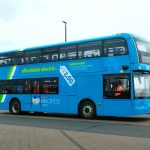
Following the purchase of Konectbus and Konectbuses from Go East Anglia last year, from July, all TMS’s bus services will fall under the Central Connect brand, although Simonds and Flagfinders will be retained for their coach identities.
Recognition for the sector
The Forbes honour was remarkable recognition for the bus sector – especially when you consider that the equivalent lists for entertainment and sport respectively included well-known names such as Golden Globe-winning actor Owen Cooper and former world No.4 tennis player Jack Draper.
Peter says: “One of the nicest comments on the LinkedIn post where we shared that news was someone who’d said it’s nice to see an industry that often gets overlooked getting some recognition. So, it was really nice to be recognised.”
Recognition for the sector is something he clearly feels strongly about. He concedes that creating modal shift from the car to public transport is a challenge, even citing himself in that regard, for he admits it took his car being in for an MOT for him to try the bus for his commute when working at the Loughborough depot, albeit it’s a two-bus journey and he uses the mode a lot generally.
![[4] simonds transport made simple diss (1)](https://www.route-one.net/wp-content/uploads/2026/06/4-simonds-transport-made-simple-diss-1.jpg)
“They’ve given huge amounts of money, which is good, but they’ve not given a huge amount of direction on how that money should be spent.”
Speaking the day after the government’s announcement regarding free bus journeys for children this summer, he comments that fare schemes are positive but better advance consultation with the industry over reimbursement would be welcome.
With reimbursement for the single fare bus cap scheme falling behind inflation, that has removed one of the few “levers” operators have to cope with rising costs, he adds.
Broad range of work
The conversation moves on from bus – after all, TMS proudly does “anything that needs a PSV licence”, given that, as Peter says, that diversification enables resources to be shared.
The holidays and excursions operations at Simonds is “one of the favourite bits of the work we do as a part of our overall business”, Peter says.
“The people who go on those trips absolutely love it and we are seeing some growth because I think people are realising, number one, it’s great value – it’s cheaper than going longer-distance – and, number two, it’s actually really, really hassle-free.”
Private hire is a small part of the business and on that, he says: “We have seen demand soften this year. You go back a year or two and it was very much a case that there weren’t enough coaches.”
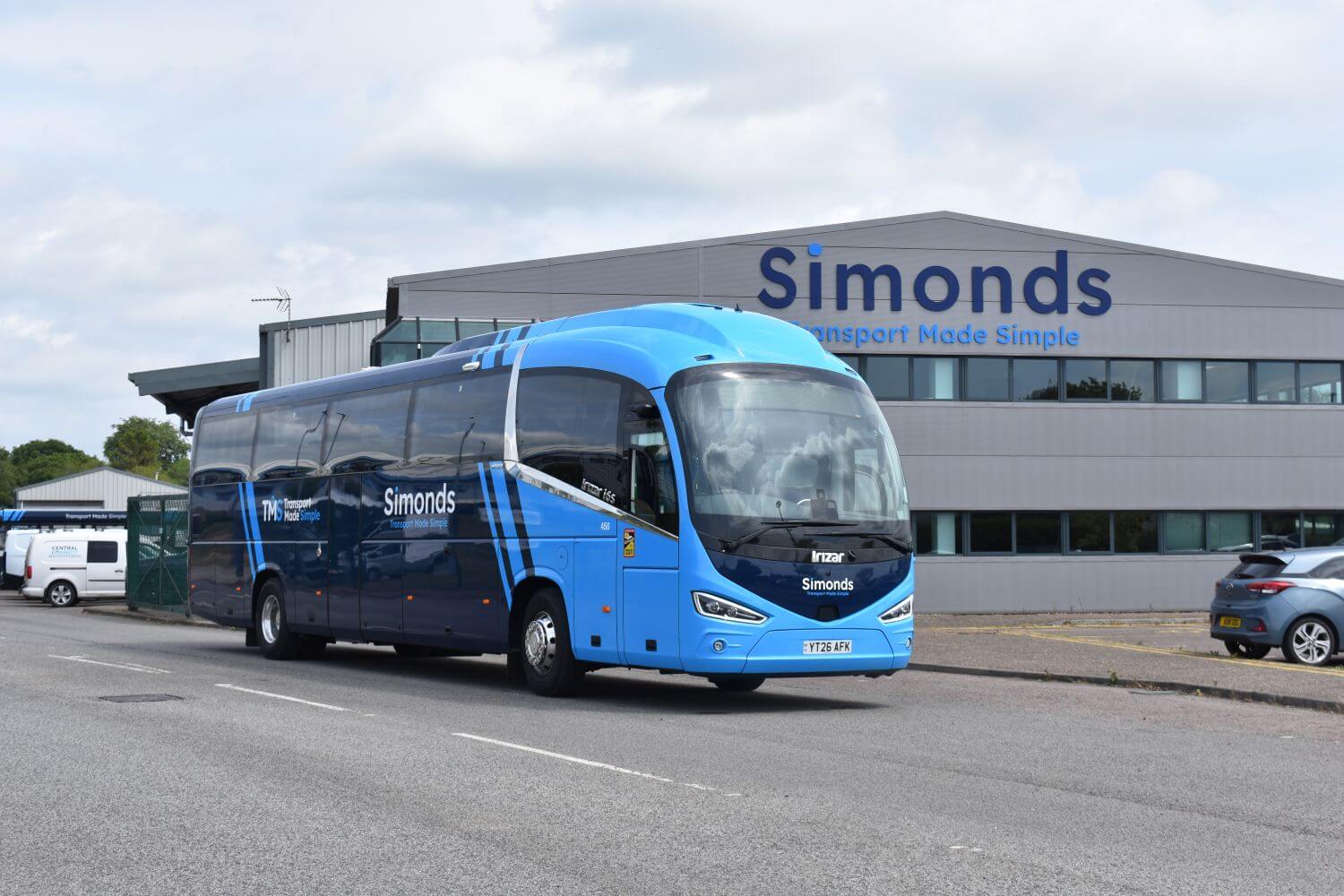
Rail replacement is not overlooked either despite industry complaints about rates for that work.
“We still do it, but we’ve increased our relationships with the rail operators who run it in the right way and we’ve reduced our relationships with the operators who don’t,” he says, adding that there isn’t enough enforcement to ensure that what is requested by the rail companies with regard to PSVAR and PSVAIR is what appears at the station.
TMS is also a FlixBus partner for long-distance scheduled services. He says: “We have a good partnership with FlixBus.
“The vision they have for growing that network of coach services is really strong… One of the routes that we put on for them is Norwich to London, which has a very good train service, but actually people are choosing FlixBus on that route and we have seen modal shift.”
Keys to success of Transport Made Simple
When asked about the keys to TMS’s success, Peter mentions “hard work” and “fantastic team members”.
“It’s just solid work, obsessing over the quality of service you deliver, building that reputation,” he says.
TMS’s “customer obsession”, as he calls it, is why it is investing £10 million in buses over the next 12 months, plus a new app and website.
It also promises passengers it will refund their taxi fare if they have to wait for more than half an hour for their bus.
“We are really trying to innovate that customer experience, learn a bit from what some of the train companies have done and say bus customers deserve as good a customer experience because we are now in a place where actually that is what is going to drive revenue….
“The bus industry has not been customer-obsessed enough.”
![[5] cafe connect](https://www.route-one.net/wp-content/uploads/2026/06/5-cafe-connect-transport-made-simple-1.jpg)
“I can’t think of a single time when I’ve driven a bus or even just travelled on one of my buses and not spotted an opportunity to either improve the customer experience or make things better for colleagues or drive additional revenue,” he says.
One customer-focused innovation was the launch last month of Café Connect, a hybrid cafe and travel information hub in Colchester.
Its employed baristas have been trained to give out information about the city’s entire bus network, rather than just the Konectbus services.
He adds: “You can run the nicest vehicle in the world, but if it’s late, or the app to buy your ticket doesn’t work, or the person who welcomes you onboard is grumpy, you won’t get the growth and the passenger satisfaction that you need.”
Further growth?
So will TMS’s extremely rapid growth over the seven years since operating its first local bus service continue?
Peter is open to hearing from any operators looking to exit, but only within the Midlands or East Anglia, and he says he is in discussions with some already.
He recognises the potential danger that other operators refer to about expanding too much, too quickly.
However, he believes he is “comfortable” with the risk, given the infrastructure the business now has to support further growth.
He adds: “When an opportunity comes up, you’ve got to take it. If we look at all of the businesses we’ve bought, and they were all the right businesses to buy, if we’d said, well, ‘we’re not ready to buy that business for another year,’ that opportunity would have gone, and we wouldn’t be where we are today.”
He sees the trend for consolidation in the coach sector continuing. “I think consolidation makes a lot of sense for the industry,” he says.
I can’t think of a single time when I’ve driven a bus or even just travelled on one of my buses and not spotted an opportunity to either improve the customer experience or make things better for colleagues or drive additional revenue
“There are challenges with it because, I think, people like small local companies, local identities, and I think that does work well.
“But, historically, your typical coach operator has been someone who is willing to get up at half-four or five every morning, see the morning school buses out, probably do a bit of driving themselves, perhaps even fix the buses in the middle of the day, work through till six or seven in the evening, and then be at home with a phone in their hand till 10, 11, until the late private hires and service buses come back.
“That kind of 20-to-30 vehicle-operator scale is really, really tough to do now. And I don’t think a lot of people want that lifestyle.
“And consolidation allows you to get to a point of scale where you can afford to have a higher overhead cost and bring in a proper team to take on that responsibility.”
For a business that began with two teenagers trying to sort out their college’s transport system, TMS has come a long way in a short period of time.
Yet, as the business goes into a second decade, it seems clear that it will not sacrifice customer focus in the pursuit of growth.