





















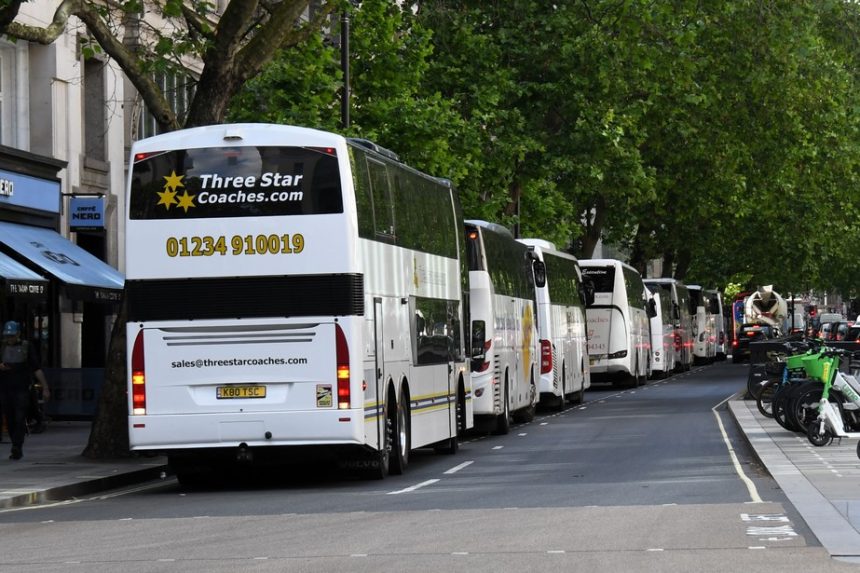
CPT will support this year’s Better Transport Week with a day dedicated to the often-overlooked but hardworking coach sector
Don’t miss the coach! That’s been a long-running campaign theme for the Confederation of Passenger Transport (CPT) in its dealings with politicians – and we’ll be reinforcing it during Better Transport Week (15-21 June).
The annual seven-day celebration of sustainable transport is organised by the Campaign for Better Transport.
We’re hitching our wagon to it this year with a day oriented around coaches, as well as the campaign’s annual activity around buses.
CPT will organise a range of activities to emphasise the national importance of the coach industry – which supports 81,000 jobs and delivers passengers spending £8.3 billion each year to destinations across Britain.
During Better Transport Week, we’ll award our coveted Coach Friendly accreditation to a prominent new destination popular with coach tourists.
This scheme recognises places which demonstrate that they value coach visitors – by offering adequate pick-up and drop-off points, facilities for drivers, prominent signage, access to bus lanes and a named representative to contact within the local authority.
And we’ll be out and about emphasising the importance of coaches in Scotland and Wales – where CPT has been pushing hard for devolved governments to recognise the value brought by both scheduled and charter services.
These aren’t the easiest times for coach operators – particularly for the smaller, often family-owned businesses that form the entrepreneurial heart of the industry.
CPT will organise a range of activities to emphasise the national importance of the coach industry
The government’s increase in employee National Insurance last year, together with changes to inheritance tax for family businesses, put a strain on margins and aspirations for business owners.
That has been followed by a sudden and steep escalation in the cost of fuel. At the time of writing, many operators are finding themselves paying 140p a litre for diesel, compared to 108p before hostilities commenced.
An increase of that magnitude is often impossible to pass on for businesses that rely on contract and charter work at pre-agreed prices. It’s no wonder many operators are feeling under immense strain. CPT has made sure the government is aware of the potential consequences – not just on the long-term viability of valuable businesses but on passengers who rely on their services, including 600,000 students who use coaches to get to school every day.
A year ago, CPT commissioned opinion polling which found that the public overwhelmingly value coach travel – viewing it as a good-value, convenient and relaxed way to travel. Asked whether coaches should be viewed as a vital part of Britain’s public transport network, 64% agreed and only 9% disagreed. Yet the same poll found that people had noticed political ambivalence – 61% had heard politicians talking about trains, 46% about planes, 40% about car travel and 32% about buses. But only 5% had noticed any political discussion about coaches.
However, that’s changing. In April, the government published a national transport strategy, Better Connected, which explicitly referenced CPT’s work on the economic value of the industry. Significantly, it set a new expectation that all local authorities should consider coach travel in their local transport plans.
While this guidance might sound technical, it’s a game-changer. It means councils will need to analyse demand for coach travel, work with highway authorities on adequate provision and consider opportunities to provide pump-priming funding for new routes. It should also unlock some of those ongoing asks – for default access to bus lanes and proper drop-off points.
The work CPT is doing is driving change. We’ll be more impactful still if we’re not the sole voices, and we work with allies – so our partnership this month with the Campaign for Better Transport, a leading voice on sustainability, is a valuable one.
The theme for the week is “celebrating how better transport connects people and places”. If you have an opportunity to participate in one of our events, please do – or, if you can support us on social media, that would be welcome too.
Whatever it takes, join us on this journey and let’s keep hammering home the message that both coaches and buses form the backbone of UK public transport.