




















The onset of chilly weather often now brings with it warnings of range deterioration for batteries in electric vehicles.
In December, independent management consultant and carbon reduction specialist Fergus Healy warned on LinkedIn that range reduction in electric vehicles is a factor that needs consideration for operators of commercial fleets. He cited a 33% drop in range for the same level of charge in sub-zero temperatures of his own electric vehicle.
Around the same time, fleet electrification specialist Beev detailed methods that fleet operators ought to use to save on running costs, noting that winter is a “sensitive time” for fleet managers.
“At a time when more and more companies are electrifying their fleets to meet regulatory, economic and CSR challenges, the winter season can undermine business models that seem perfectly mastered the rest of the year,” writes Beev author Estelle Eustache-Clément.
But coach and bus fleet operators, working within known ranges, reveal how battery-electric vehicles have proved a boon as the temperatures drop — citing comfortable environments and excellent performance, while developments in battery technology continue to keep ranges resilient.
Consumption: a minor issue?
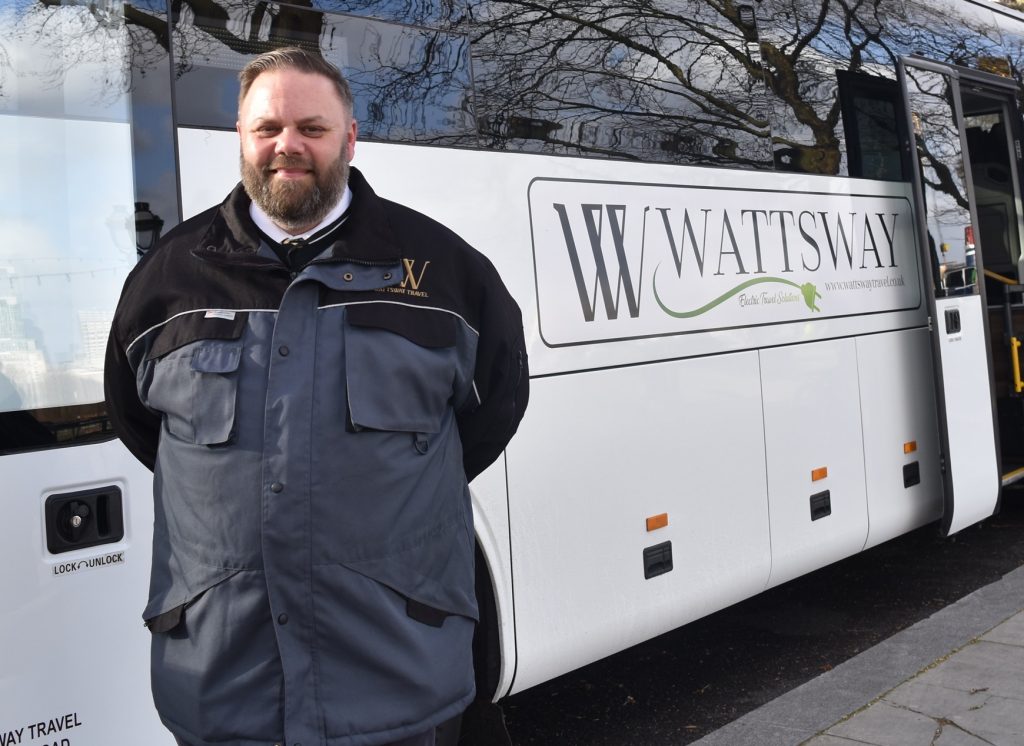
Monitoring the performance of his fleet of electric vehicles is owner of Wattsway Travel Mark Watts (pictured, above), who reveals winter operation can result in as much as a 10% increase in energy consumption for his fleet of four battery-electric coaches and buses.
That primarily comes from saloon heating adding between 1-2% extra consumption per hour of operation. But Mark says that extra draw pales into comparison to other cost savings achieved with battery-electric over diesel, particularly for the London market in which he regularly operates.
“The electrics are superior to diesels in every way,” he says. “This is what I talk to other operators about all the time. For us, they work exceedingly well.
“I haven’t yet analysed the data for the last year, but the vehicles do use more energy; that comes down to heating more than anything else. While there is a possibility this has had an impact on range, we recently sent our GTe14 from London to Newcastle for a specific job. It had a top-up charge at Pelican Bus and Coach’s base in Castleford, and still had 48% battery capacity on arrival.”
Wattsway bought its first electric coach in 2022. It now operates two TCe12s, a GTe14, and a U11DD double-decker. Despite slight range loss in winter, there is a host of other benefits that electric vehicle operation brings when the weather bites, from instantaneous heat for driver comfort, to an absence of fears that diesel vehicles could bring — such as DPF problems, punitive measures against engine idling, and broader maintenance costs.
Of the multitude of reasons a business decision might be made, Mark says the financials are always likely to be at the forefront — and battery-electric therefore wins out.
“For me, an electric coach has a 15-year life cycle,” he explains. “Within that 15 years it will likely have one, maybe two refurbishments inside. Essentially, these vehicles are timeless, and we don’t have problems with running issues. We are not spending thousands on a new gearbox. We do not have the risk of engines seizing, or big end bearings failing. When it comes to that lifecycle, we are much better off.”
Mark notes winter follows the same pattern of day-to-day savings among electric vehicles that the company sees on running costs year-round. “Even with energy prices what they are these days, the battery-electrics over the course of a year save us approximately £20,000, given the costs of oils and the level of servicing we undertake on our diesel vehicles.
“Adding to that financial saving is the fact we are not pumping diesel fumes into the atmosphere. We’re improving things locally — I was in London at the beginning of last week, where we saw four or five coaches lined up either idling or with their Webasto heaters working. It’s good that we don’t have to worry about that with our electric vehicles.”
One of the most praiseworthy aspects from both owner and driver alike is the efficiency of the heating systems. “All of our drivers would rather drive an electric vehicle in winter than a diesel, now,” Mark says. “Our diesel ‘decker had to go for a PMI and we swapped it onto the usual electric driver’s route — he knew it wouldn’t get warm anywhere near as quickly, and was mortified!”
Constant developments
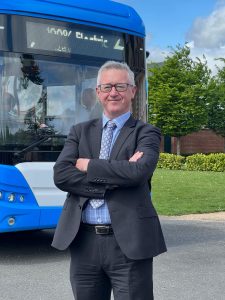
Ian Downie, Head of Yutong UK at Pelican Bus and Coach (pictured, left), explains that battery-electric buses have the edge over diesel in winter thanks to the electric heating element, which, while drawing from the vehicle batteries, has the advantage of instantaneous heat — while excess heat from diesel vehicles must be pumped through radiators and circulated through meters of pipework, resulting in a less efficient process.
To assuage any fears around how that draw affects the long-term range and health of a vehicle’s battery, Pelican looks at the capabilities of its vehicles with customers via degradation curves and “worst-case” scenarios — such as in winter.
Given that the same electric vehicles are seen operating in Norway in arctic temperatures, Ian says UK operators should have confidence in their resilience.
“If we take a 15-year battery warranty, we have a guarantee at the end of that 15th year that 70% of the battery health will still be available,” Ian says. “We then factor in that 30% reduction in capacity and various scenarios, such as if the environment is hilly, flat, interurban, city, or in a coach operation. That gives us our estimation of what the range will be on a daily basis, based on a full charge.”
Improvements in battery management technology — for example, the change from air-cooled to water-cooled batteries within the last decade, designed to keep batteries operating at an optimal temperature — deliver further efficiencies. Another development at Yutong is the introduction of a flat wire drive motor, which Ian says is expected to improve energy efficiency between 3-5%.
“A flat wire means the cable can be optimised in how it is coiled within the motor. That helps drive efficiency. We’re working on optimising air conditioning systems and controllers as well. Each individual change may only make up a small percentage of improvement, but they all add up.”
These combine with a broader improvements in battery capacity, which has jumped from 275kWh in the first E12 model that Pelican offered to 467kWh in the current generation — all without any decrement on passenger numbers. Health checks, undertaken with customers, make sure battery degradation curves are performing as expected.
The consequence is that, according to Ian, range anxiety for buses, even in winter, is almost non-existent now among buyers. A challenge remains for coach, but that has prompted the integration of larger battery capacity in vehicles such as the GTe14.
Driver training can help there, as Ian notes a driver’s approach has a large role to play when it comes to maximising range, with drivers able to affect the performance of a vehicle’s range by up to 20%.
“If a driver is heavy on the accelerator and light on the brakes, that will affect energy efficiency. Conversely, we have seen in some operations drivers able to harness as much as 40% regeneration from the brakes.”
‘Lovely working environment’
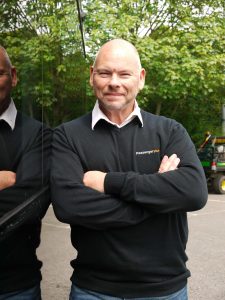
Managing Director of Passenger Plus Mark Drury (pictured, right) is full of praise for his fleet of four electric Yutong E10 buses, which he operates on a corporate staff shuttle contract for energy giant BP. That extends to their winter operation.
“This is our third winter of operating electric buses. We specified the fleet with the 422kWh batteries, which is a much higher capacity than we need, and we are not seeing any noticeable difference between summer and winter in terms of their consumption,” Mark says.
Much of the praise is directed at the environment electric buses provide for Mark’s drivers. Vehicles are heated while still plugged in and heating continues while vehicles are at idle with no risk of DPF problems. “In many of the locations we go, there are restrictions when it comes to leaving engines idling. From our point of view, running electric vehicles is much, much easier when the weather is cold, and even when it is hot. It just makes sense.”
Mark has always valued the vehicles for their smoothness in service and says there are plans to double the current fleet. He recognises the larger investment battery-electrics require for the type of work undertaken, but notes that the manufacturer’s own investment in technology is evident in the vehicles.
When it comes to monitoring performance, Passenger Plus says it focuses on maintaining battery charge between 20-80%. Mark says doing so has had a positive impact on degradation curves and that there has been “no visible degradation” in battery performance so far. “Although we do acknowledge that this is helped by the fact the vehicles are not worked as hard as they would otherwise be on a contract for Transport for London, for example,” he adds.
Weather is no barrier for Maynes
Where vehicles are worked hard, operators are equally full of praise.
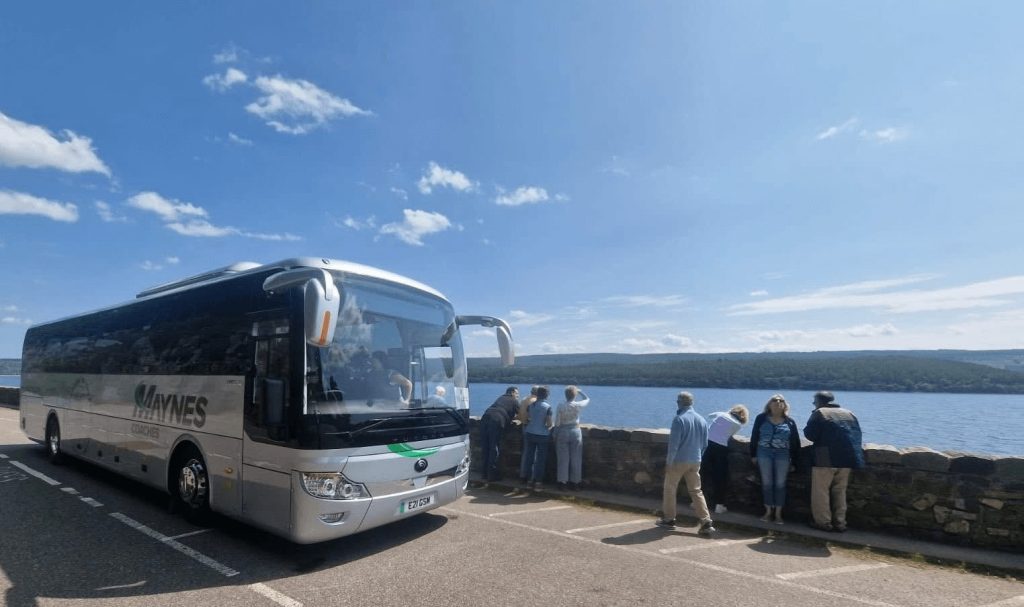
In Scotland, Maynes Coaches of Buckie recently celebrated the fact it surpassed 100,000 zero-emission miles three months ahead of schedule via six battery-electric vehicles. It took delivery of four of those electric coaches in April 2025.
They are worked on daily contracts, cruise ship excursions, private tours and other work.
Owner Kevin Mayne says the coaches have worked in the Scottish climate with aplomb — with the only problems in recent bad weather caused by factors outside of the operator’s control.
“We are very well experienced in multiple weather events, this being our first with the battery-electric coaches,” he says. “They have given us no issues to our operations. In fact, the only route changes we have had to make were for our 0400hrs and 2200hrs returns, due to drifting snow and impassable roads, and drivers taking different routes to get our clients home from shift changes. We are working closely with our clients to ensure a safe operation for everyone in our team and our passengers across our journeys and bookings.
“Charging has been working well without any issues, and we have been so far operational at full capacity when routes allow after clearances. We have our own contractors that clear our depots to ensure swift clearance and salting of ground as required to ensure our depot is kept fully operational and have 4×4 vehicles to check routes if needed to ensure they are clear to use for our team.”
Stories such as Maynes’ may bring some comfort to coach operators still anxious about the capability of electric coaches, which may still be an issue according to Mark Watts, who notes that anxiety around range (particularly winter range) could still be a concern given poor availability of charging on the public network.
But strong business assessments will help operators find where electric vehicles can fill a role.
“A number of operators are hesitant, even in the summer, when instead of heating, air conditioning will be a factor,” Mark says. “But I think those operators need to do an honest analysis of their business, of the work they do, and if they look closely, ask themselves how often they need a full-size coach. This is for operators that undertake a lot of work in their area.
“Operating electric vehicles is often about understanding the details of what your business does and how electric can fit within it.”