


















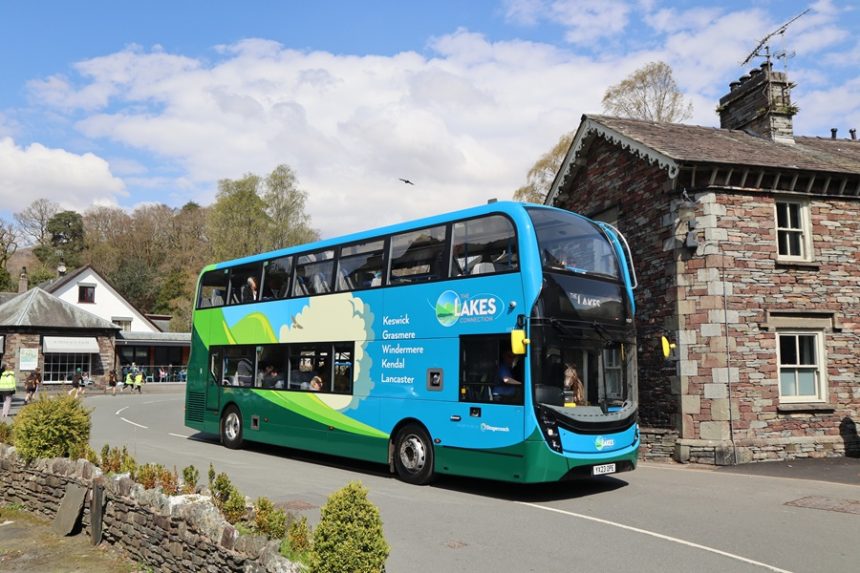
Running buses in an area with a low population density and which relies heavily on the visitor economy with the peaks that brings is no easy task. But Stagecoach Cumbria and North Lancashire does so successfully in the Lake District, where strong partnerships with multiple parties have fostered a depth of service that is comparable to many more urban settings.
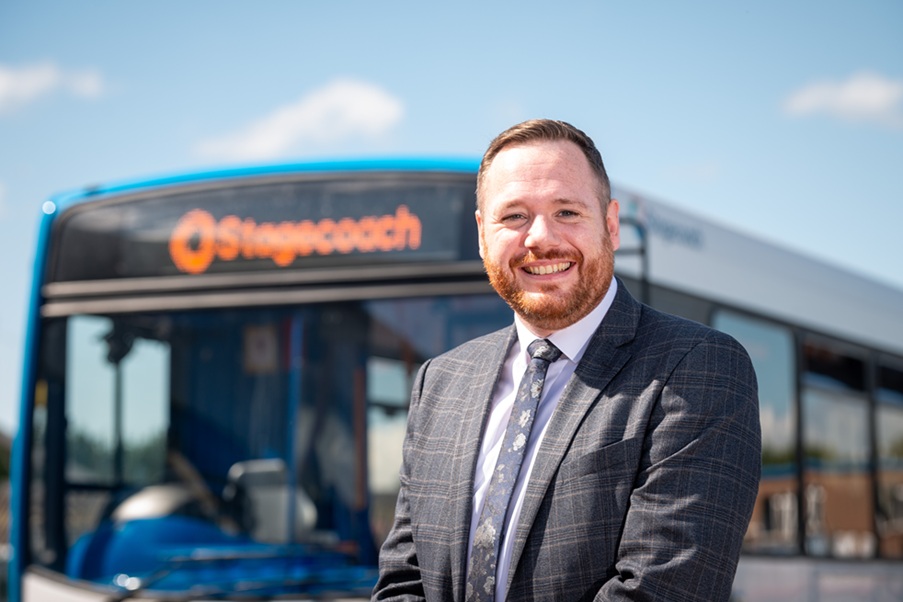
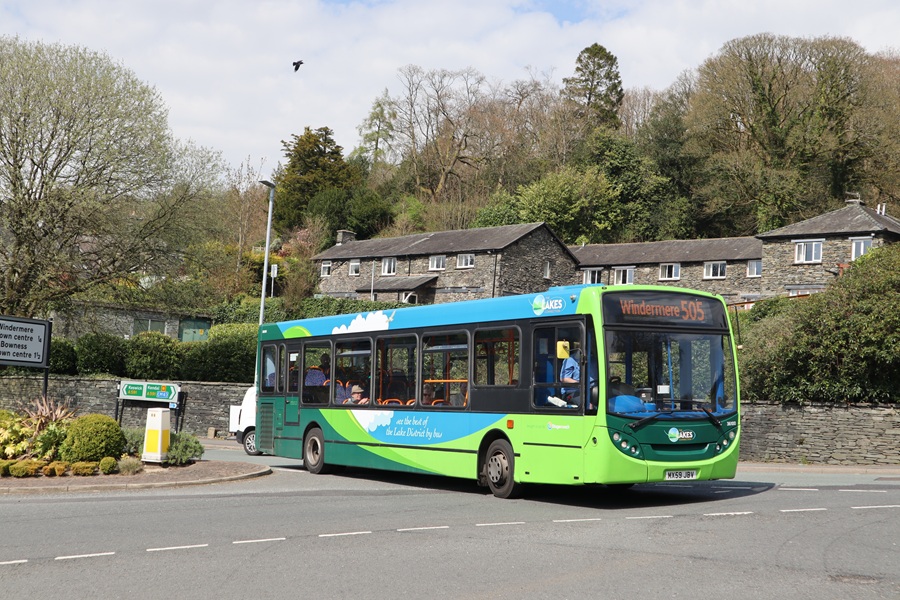
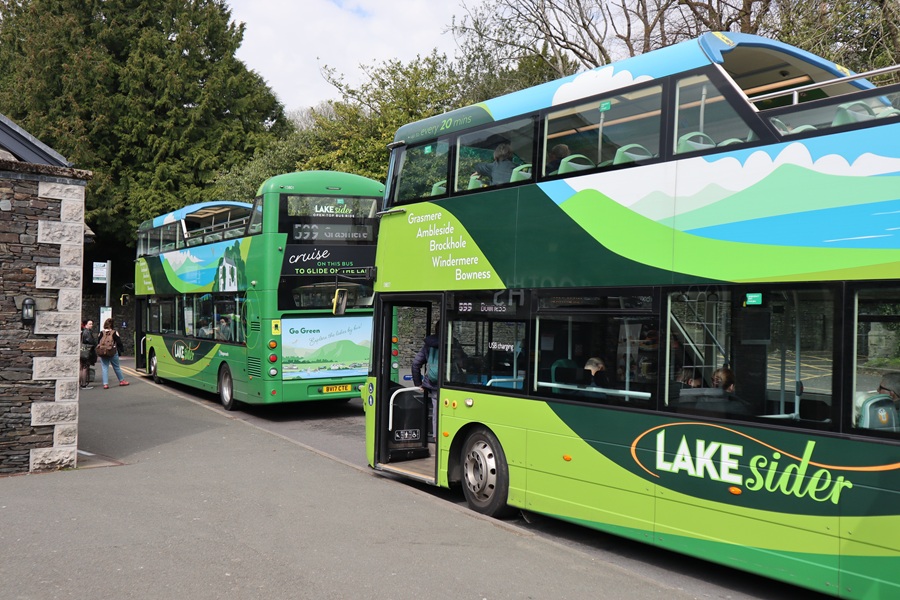
One key to the operator’s Lakes Connection network is its prominence, says Managing Director Tom Waterhouse. Most buses used are in a distinctive blue and green livery, while some open-top examples carry a Lakesider identity for a route along Lake Windermere.
That approach translates to customer-facing marketing material, contributing to a growth of summer patronage by 10% from 2023 to 2024 despite an overall drop in footfall in the Lake District National Park. Bus usage held firm for the 2025 season despite a 50% increase in the national fare cap, Tom notes.
He adds that a particular area of success has been with in-area travel by visitors. They may drive to the Lake District, but then leave their car and use buses to visit attractions. “Much activity around growing the network is based on that element,” Tom continues. “And we have had a lot of success. There was genuine modal shift from 2023 to 2024.”
Collaboration critical to Lakes Connection success
That is not to say leveraging the bus offer for travel into and out of the Lake District is any less important. Its trunk provision has seen some uplifts via Bus Service Improvement Plan (BSIP) funding from partner local authorities, and work with train operator Avanti West Coast delivered through rail and bus ticketing to and from Keswick.
Tom notes how the enthusiasm for driving public transport use shown by tourism bodies and local authorities in the Lake District is key to an overall partnership dynamic that is at the root of network and patronage growth. And it is genuine from those parties, not lip service, he adds.
Cumbria Tourism has targets for travel into, out of and within the national park by public transport. Its Destination Management Plan gives sustainability, inclusivity and accessibility as key factors, all of which are core for bus.
Even so, congestion at peak times remains a problem. Tom believes that much of it is created by in-area travel between attractions. A clear strategy for car parking is cited as a way to mitigate that. Putting spaces on the periphery of the park and encouraging people to use the bus beyond there is one approach. Focusing charging for electric cars in those facilities could act as a further driver.
Dealing with congestion will be best accomplished by modal shift, he continues. The Lake District road network is limited and scope to expand it is minimal. Adding bus priority measures is also difficult, and in most places, physically impossible.
“What we need to do is keep encouraging more people to use the bus because it takes cars off the road,” Tom adds. “And keep doing what we are doing with Avanti and others to encourage and make it easier to visit via public transport. The local partners we work with are signed up to that, and the passenger numbers we have seen are proof it is delivering.”
Print key to Lakes Connection promotion, says Stagecoach
Communicating the service offer to non-natives is imperative for the Lakes Connection network to succeed. Much out-of-area social media activity is undertaken, both by Stagecoach on its own and in partnership with Cumbria Tourism.
Print material is equally important, and the Lake District approach is tailored to suit a network that sees heavy visitor traffic. A comprehensive seasonal booklet is published that in addition to timetables includes a clear map, information on ticketing, how to use a bus for those unfamiliar, and details of town centre stopping points.
“Our strategy around print is important,” Tom explains. “We present in a premium format; it looks like a tourism leaflet rather than a bus timetable, and we place it in tourist information racks as well as at hotels and B&Bs. The idea behind the latter is that while a visitor is having their breakfast, they can look through the booklet and take inspiration on where to go.” The publication can additionally be downloaded as a PDF.
Accommodation providers are also supplied with tear-off desk pads with the bus map on one side, and information and a QR code for timetables on the other. Leaving such material on hotel and B&B reception desks has proved worthwhile.
Roadside publicity is equally important, as is signposting customers to Stagecoach’s digital channels. To assist stop dwell times that could be extended by users who are unfamiliar with the area, the purchase of tickets via app is strongly encouraged, with that platform also delivering journey planning and vehicle tracking services. Staff are posted at the busiest stops in summer to sell tickets and answer questions.
Scale of existing network brings scope to spread further
While there is a strong focus on visitors and their use of the Lakes Connection network, it also delivers vital connectivity to local people. Growth in provision has come gradually over many years, and some of that is in early morning and later evening journeys. At those times, schedules are more focused on staff in hospitality industries.
Tom believes that the scale of the Lake District and the number of visitor-centred businesses within it make a difference to travel patterns compared to other national parks. That gives a broader portion of the day and year at which demand is present.
Despite the low population density, the vast majority of Lakes Connection journeys are commercial. The network may yet further expand where some currently-unserved parts of the park gain provision using smaller vehicles with fixed routes and schedules.
Each winter, time is spent reviewing the previous peak season and understanding how it played out. That informs decisions for the following summer. Items such as vehicle MoTs and Driver CPC training are dealt with over the quieter months, but casual staff are not recruited for the summer.
Some employees are happy to go on loan to other Stagecoach businesses during the off-season, although Tom notes that the difference between peak and off-peak resource requirement is not as great as may be expected.
“I want to retain staff all year round. The value of their knowledge should not be underestimated, and the customer experience is always going to be better when the driver is familiar with routes, the area, and attractions. Our staff are as much tourism guides as they are drivers.”
Bus’s growing political prominence is welcomed
Stagecoach has invested in its Lakes District fleet; most recently was in 2023 with the arrival of high-specification Alexander Dennis Enviro400 double-decks for the flagship 555 route. It runs between Lancaster and Keswick, serving Windermere, Ambleside and Grasmere once in the national park.
Tom notes Stagecoach’s group-wide plans for decarbonisation. The Cumbria and North Lancashire operating company is yet to see its first zero-emission bus, but he observes how depots that deliver the Lakes Connection network are already well positioned for that shift when it begins.
How battery-electric technology would fit with the longer-distance routes there is unclear at present, although he points to the rapid pace of change as something that will “unlock options” over the coming years.
But key to such strategic decisions is clarity on the future. Cumbria will see its first elected Mayor in 2027, while constituent local authorities Cumberland Council and Westmorland and Furness Council are part of the government’s rural bus franchising and reform pilot. How the Bus Services Act works in practice also remains to be seen.
While those factors are an influence on the future, Tom believes that the political winds whipped up around buses in recent years, culminating with the Bus Services Act in England entering law in late-2025, should be viewed as a positive.
“As a career busman, I saw for a long time that talk centred on railways, with not enough said about bus. I find it very encouraging that we now hear a lot of political discussion about what we are doing as an industry. The work between Stagecoach and other parties in Cumbria to grow the network is delivering for us all, particularly in the Lake District National Park. We would not have been able to achieve that on our own.”