




















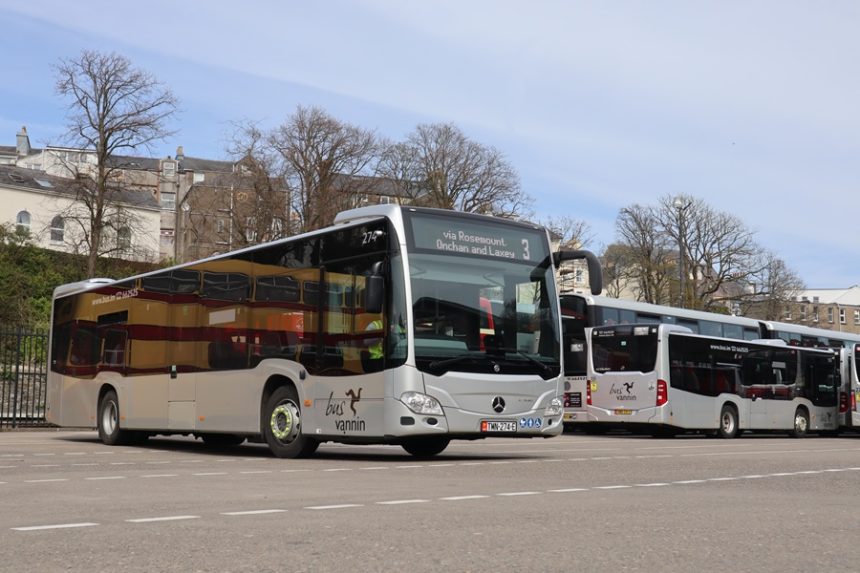
In the middle of the Irish Sea, the Isle of Man – and government-owned Bus Vannin – have an independent way of doing things. But many challenges and opportunities for the operator are common with those providing public transport in the equidistant Great Britain and Island of Ireland. Post-2020 patronage, fleet replacement strategies and technology adoption are among those.
Bus Vannin Director Ian Bates notes how significant growth in provision and patronage was seen in the run-up to 2020. Like many others, post-pandemic ridership recovery has plateaued, and the undertaking – based in Douglas and with accessible minibuses to complement its approximately 70 buses – is now working hard to drive further uptake.
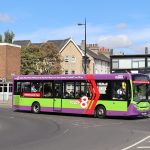
Adoption of an app, extending real-time information and dispelling negativity from non-users that most bus operators suffer are all key to that. At the same time, Bus Vannin is exploring the zero-emission field. Its relationship with Daimler Buses UK is established, and the Mercedes-Benz Citaro has long been the single-deck of choice. Around 40 are in use. Ian credits the Citaro’s travelling environment as having contributed to earlier usage growth.
Its sister, the battery-electric eCitaro, has visited the Isle of Man more than once; in July and August, that will include the latest variant with high-capacity NMC4 batteries.
While a firm zero-emission pathway is yet to be laid by Bus Vannin, Ian notes how a current requirement for each large vehicle to do almost everything could require a high range for battery-electric. In potential mitigation, separating routes from each other is being evaluated as part of wider strategic thinking.
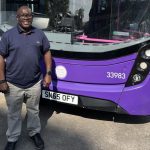
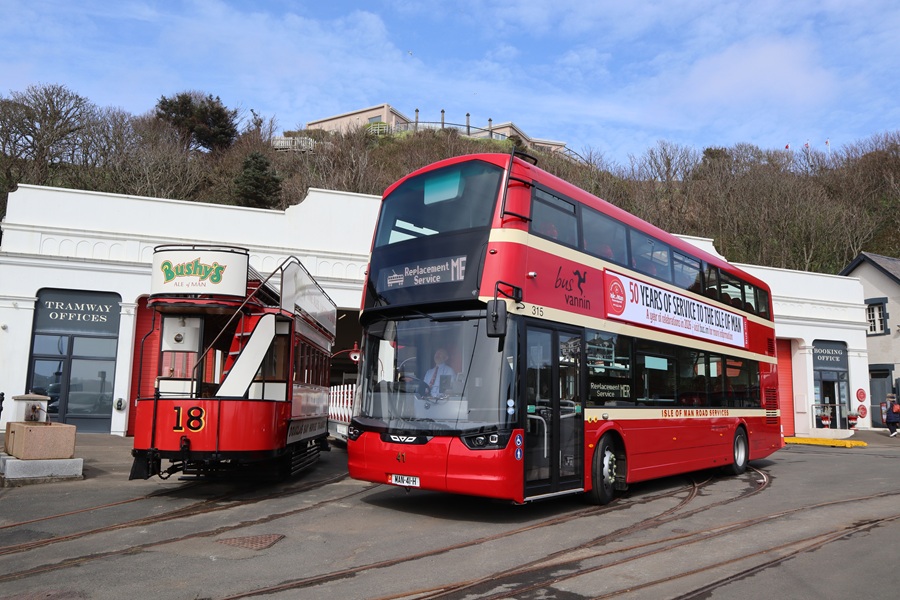
Fleet procurement restarted after the pandemic period in 2023, and two Wrightbus StreetDeck double-decks delivered recently out of a larger batch carry heritage liveries to help celebration of 50 years of Isle of Man Transport and 150 years of the Douglas Bay Horse Tramway.
Those birthdays will be marked in style at the Manx Heritage Transport Festival from 28 July to 2 August, with a hint that one or two surprises may also be seen. It is set to be a busy week, with multiple events, cavalcades and gatherings across the island’s diverse and often-unique public transport field.
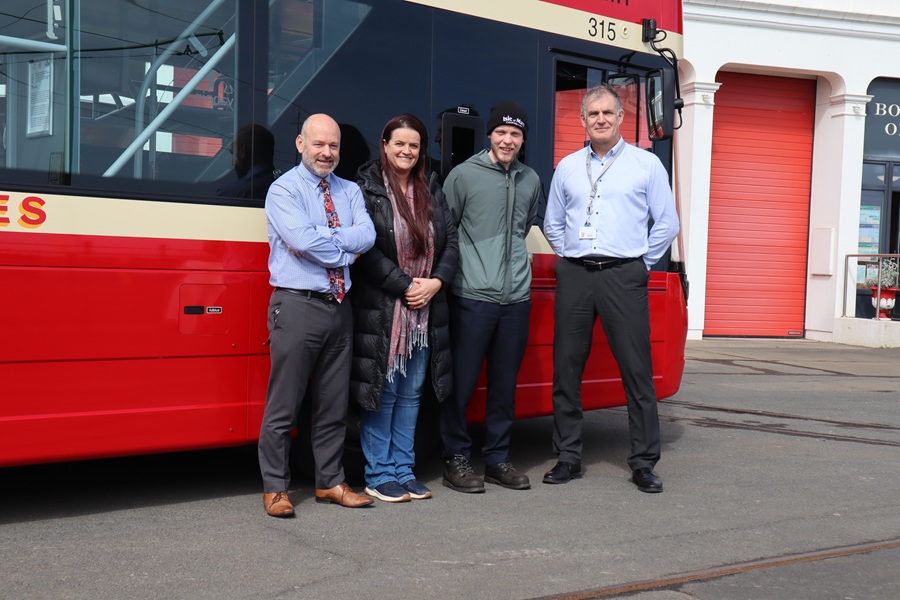
Technology work is prominent for Bus Vannin
Ian works alongside Transport Projects Manager Richard Cranmer. Both have long bus careers. Ian started at London Country post-deregulation, and Richard counts long-gone Staffordshire independent Stevensons of Uttoxeter as an early employer.
The Isle of Man Government is close to Bus Vannin; playing part of the wider tourism economy is important, and the yearly TT motorcycle event is a big part of operational planning.
With what Ian describes as good support from the Department of Infrastructure, the operator is looking towards the future. Some parts of that are relatively minor; the Bus Vannin social media pages have been separated from others, broadening their reach to around 10% of island population via Facebook. Before this year’s TT, that presence was extended to TikTok to engage a wider audience.
UK regulations for accessibility do not reach the Isle of Man, but Bus Vannin was an early adopter of next-stop announcements. Contactless payments also came early. CCTV and wi-fi are pushed as customer benefits, while the operator continues to be active in the island’s incoming tourism market. “Getting information to the customer is what gives them confidence,” Richard says.
The TT process “is oiled,” he adds. Preparation takes many months with a large number of stakeholders and the Isle of Man Government closely involved. But plans are highly dependent on weather, and campsites move from year to year, influencing how transport is provided.
Customer needs are key to the Manx operator
Return of patronage since 2020 has been an ongoing area of work for Richard. Like the UK, the Isle of Man has not seen senior citizen usage regain 2019 levels. He notes how fully understanding the ‘new normal’ for ridership has been challenging, although Ticketer machines are helpful in generating reports.
Tap on, tap off contactless payment is under consideration to boost data aggregation, although potential impact on alighting times is noted by Ian. The current position where buses heavily interwork makes trialling such an approach on one route difficult.
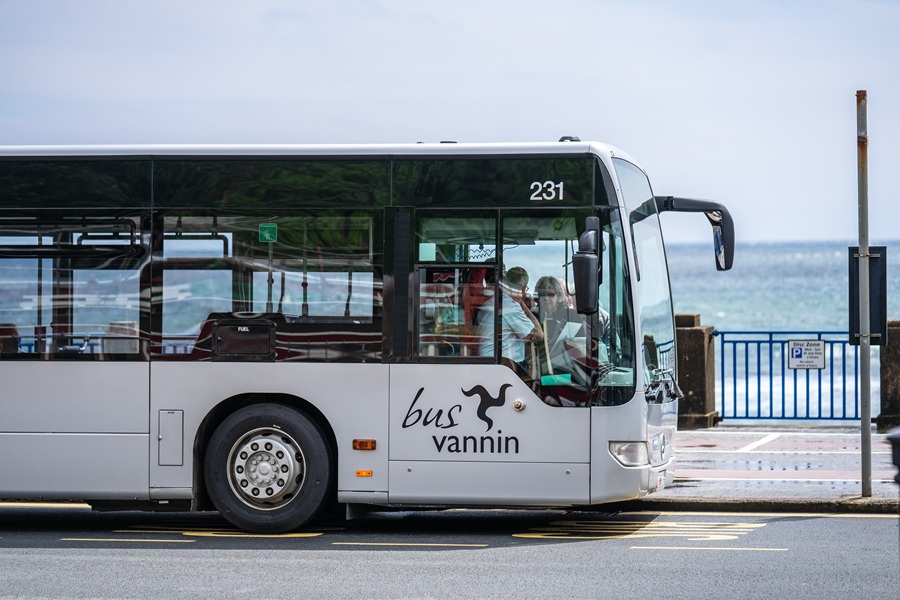
An element of island life and the ownership structure that is perhaps seldom found in the UK is reflected in how close Bus Vannin is to its customers. They are often keen to let it know their thoughts, positive and negative. The political position means that accountability is never far away.
“We embrace feedback via the usual channels, and we always act on it,” Ian explains. While some may be critical, he adds that positive deeds by drivers are often recognised by residents in what is termed “a direct line to good news.”
Citaro favour is longstanding for Bus Vannin
The favour of Citaro for single-deck requirements by Bus Vannin goes back to around 2010. Those delivered more recently have the mild hybrid package. Four more are due later this year. Ian points to strong build quality as counting in the type’s favour, while it gains excellent acceptance from drivers and customers.
Maintainability is another factor. Standardisation and impressed stock parts are important where almost everything must arrive via ferries that can be disrupted at some times of the year. To help with that, the Bus Vannin workshop in Douglas has been part of the Daimler Buses service network since 2020.
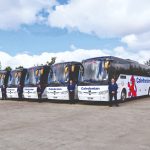
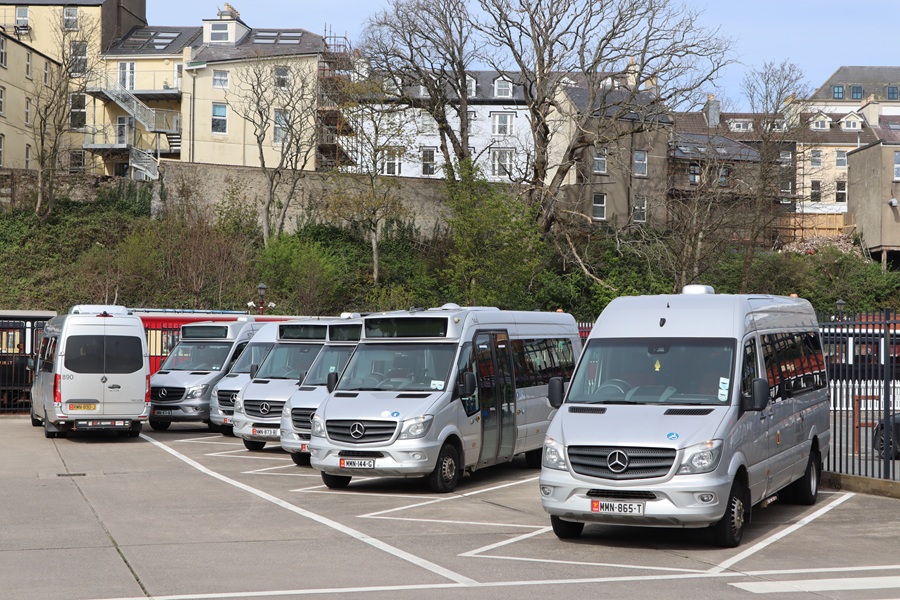
It carries out Citaro warranty needs in-house and works with third parties; as an example, Bus Vannin can support Mercedes-Benz Tourismo coaches via holding the same range of parts as any service partner, allowing over 95% of potential issues with the Tourismo to be dealt with. That sits alongside provision of parking for visiting coaches at the operating centre.
Thoughts toward fleet electrification movement
eCitaro demonstrators have been trialled on a number of occasions, but scope to take the NMC4 example for a longer period is beneficial, Ian explains. It will allow the bus to be better presented to local stakeholders, and engineers can spend more time with it. Evaluation of needs around infrastructure change is also made easier.
Daimler Buses UK Electro-Mobility Manager Adrian Felton notes how Bus Vannin has shown “incredible loyalty” to the Citaro, adding that service partner accreditation of the operator “makes this a reciprocal relationship.” He says that feasibility work around potential deployment of the eCitaro onto the Isle of Man showed that only 10% of use cases would require the highest battery capacity currently offered in the outgoing NMC3 range.
Ian observes how electrics have a lower overall maintenance burden than more complex diesel buses, and that warranty coverage for batteries would be a major factor in any purchasing decision. He adds that active participation in ALBUM and the Confederation of Passenger Transport has been beneficial in sharing learnings around electrification.
With fleet replacement by Bus Vannin having recently restarted, a renewed policy of keeping things modern and moving vehicles on mid-life would likely apply to any future zero-emission buses. For now, the preliminary focus for any electrification move is on infrastructure and enabling access to sufficient power.
Future and past are both prominent for operator
Besides consideration of zero-emission, a trial of HVO is in hand; hydrogen is also floated as a potential future power source. Electricity is generated on-island, giving a clear self-sufficiency benefit, although there is what Ian describes as “a glimmer” that hydrogen could also be produced locally. Diesel is shipped from the UK, albeit with on-island storage.
What of other future approaches to bus on the Isle of Man? Succession planning is key for Ian and Richard, while structural development of the business is advancing, with work to build training capacity coming into play. Since their appointments, most managerial changes have been via internal promotion, although fresh views from off the island are never a bad thing, Ian adds.
Driver recruitment has changed since 2020 and remains challenging, he continues. Bus Vannin now trains staff from car to category D licences; sourcing employees from the UK is not easy, with a work permit needed and housing costs around Douglas high. Maintaining engineering resource is also on the radar, particularly as technology advances.
Bus Vannin is a unique bus operation in the British Isles, and some parts of its overall landscape echo that. But it also shares a lot with peers in the UK, Ireland, and locations such as the Channel Islands: building growth, keeping staff engaged, and tackling the decarbonisation imperative. Alongside that sits celebrating its history, as will be prominent this summer. It is looking forward, while respecting what went before.