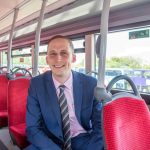





















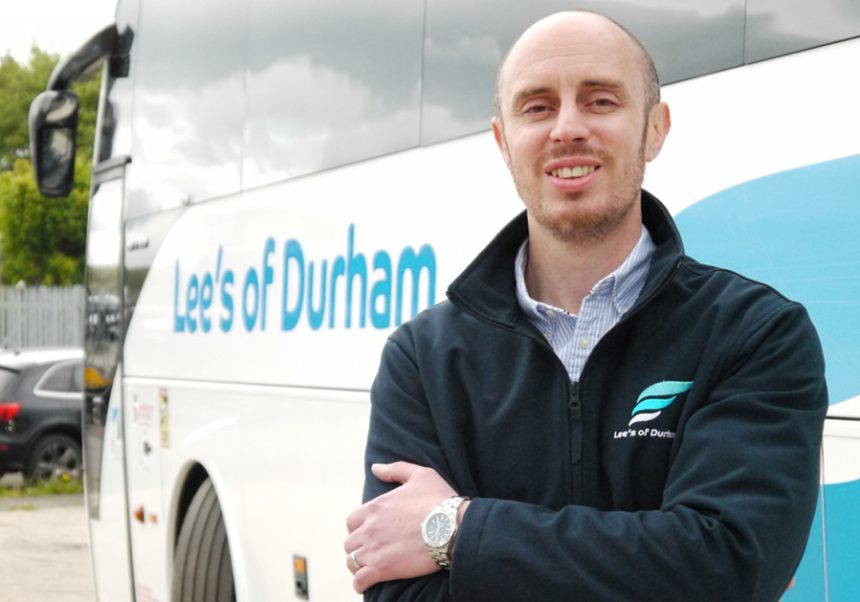
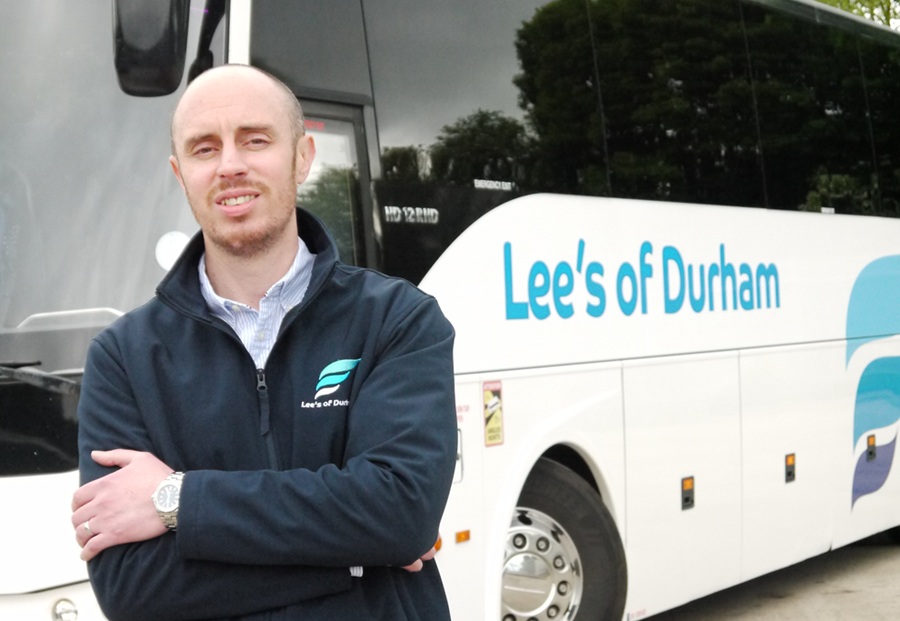
Outside interest in the coach sector continues to grow, and finance and investment specialist David Alprovich (pictured, above) is one of the latest to enter with the acquisition of family operator Lee’s of Durham.
David, who founded investment firm Alpro Capital last year, tells routeone he sees a diverse, resilient and locally rooted market with scope for growth – provided new owners respect the teams and brands that made the operators successful in the first place.
His approach is to bring a new perspective to an established family operator while leveraging the staff knowledge and expertise that has helped build it into the trusted, successful brand it is today.
Coaches an attractive market for finance sector
When David began looking for a business to acquire, he says he was seeking something established, cash-generative and rooted in its market; a business that had staff, customers, and a reputation that had been built over decades.
“I had always wanted to build something,” he says. “The idea of a corporate career as a stockbroker or financial advisor never appealed. I like responsibility, pressure, and being busy. I’m not very good at sitting still.”
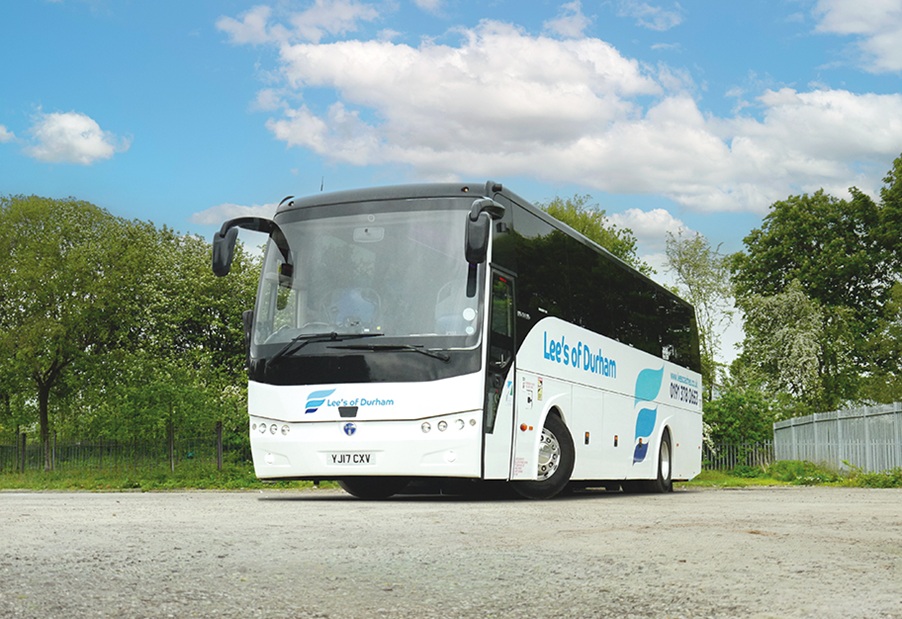
That search led him – literally – to a Lee’s of Durham coach. A North East native, David spent much of the previous year speaking to small business owners about succession. Many had spent 10, 20 or more years building companies that had become important to their local areas, but which lacked a clear route to retirement.
Some could sell to trade buyers, but worried what that might mean for their employees, customers, brand, and legacy. Lee’s of Durham appeared to fit the pattern. The operator was founded in the 1960s by Colin Lee. It had scale, heritage and local recognition. Its previous owner, Derrick Collin, had held the company for 15 years and had already considered selling.
David wrote to him, a conversation followed, and after several months of negotiation, the acquisition completed on 6 February*.
The deal is backed equally by Alpro Capital and Middleton Enterprises, where David spent 16 years learning the disciplines of business building. The result is a full-time move into coach operation for an outsider who believes the sector offers more opportunity than many realise.
Background in investment leads to Lee’s of Durham
David’s professional path began with a finance and investment degree at Northumbria University, followed by a period at wealth manager Brewin Dolphin in Newcastle. But the structure of a multinational environment did not suit him.
He moved to Middleton Enterprises, founded by Jeremy Middleton (co-founder of HomeServe) and became its first full-time employee. There, he says he gained exposure to the practical mechanics of growing companies: finance, legal, marketing, recruitment, debt and wider strategic decision-making.
Middleton Enterprises took minority stakes in businesses and worked with entrepreneurs to help them scale. For David, the experience became preparation for ownership. “I always wanted a business I owned and operated and could try to build into something much bigger,” he says.
The coach sector is traditional, asset-intensive, and operationally complex, but those characteristics form part of the attraction for David, who sees an industry where good regional operators can continue to thrive.
“Coach travel was one of the first industries I looked at, mapped out and researched,” he says. “Locality matters; if you’re close to your customers, you can be more price efficient.
“Brand matters; people want to travel with a business they trust. It’s quite a traditional industry and has been around for a long time, which in my eyes is a good thing; it’s not going to be disrupted by tech any time soon.
“There’s innovation, but there will always be a need to move a group of 50 people at a time. Tech might evolve, but the need for a coach operator will remain.”
Fleet, staff, and maintenance all key for Lee’s
For an investor, recurring revenue and growth potential might be attractive, but new entrants to the coach sector will quickly encounter the hard reality of a regulated, mechanical, people-heavy industry where mistakes can be expensive.
For David, the robustness of Lee’s existing operation gave him the confidence to look beyond the day-to-day firefighting.
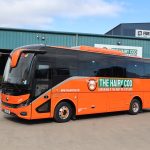
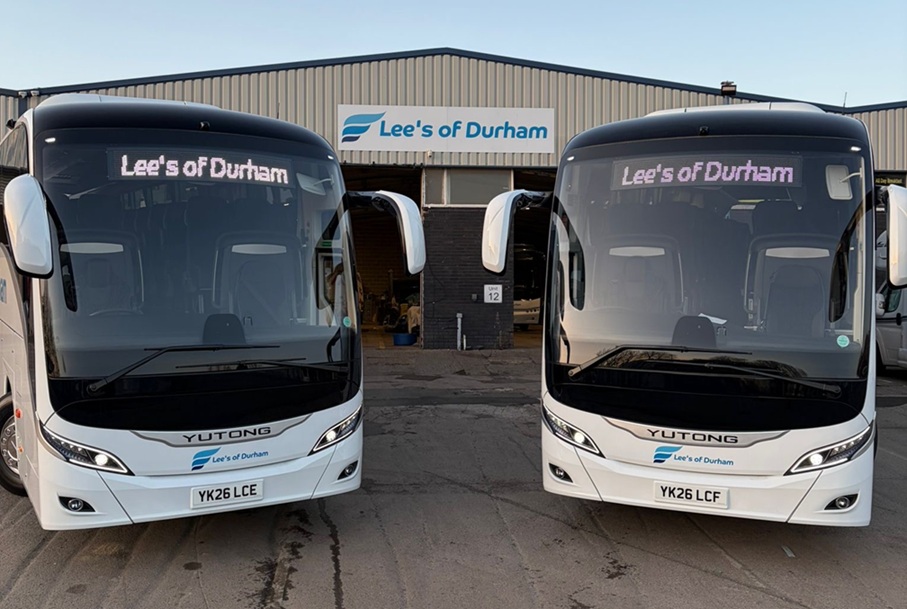
The business operates under an O-Licence for 24 vehicles and employs 30 staff, including 21 drivers, three engineers, and six office staff. It has 15 executive coaches, six of which are Yutong GT12s purchased in the last 12 months, while older Temsa HD12s remain in the fleet, and Caetano Levantes and older Van Hools see use on school contracts.
Maintenance is handled in-house by three engineers. An independent mechanic was brought in through a personal contact to review the workshop, vehicles and maintenance scheduling.
David says he was reassured not only by the state of the fleet, but by the systems around it, including a dedicated role inspecting compliance records.
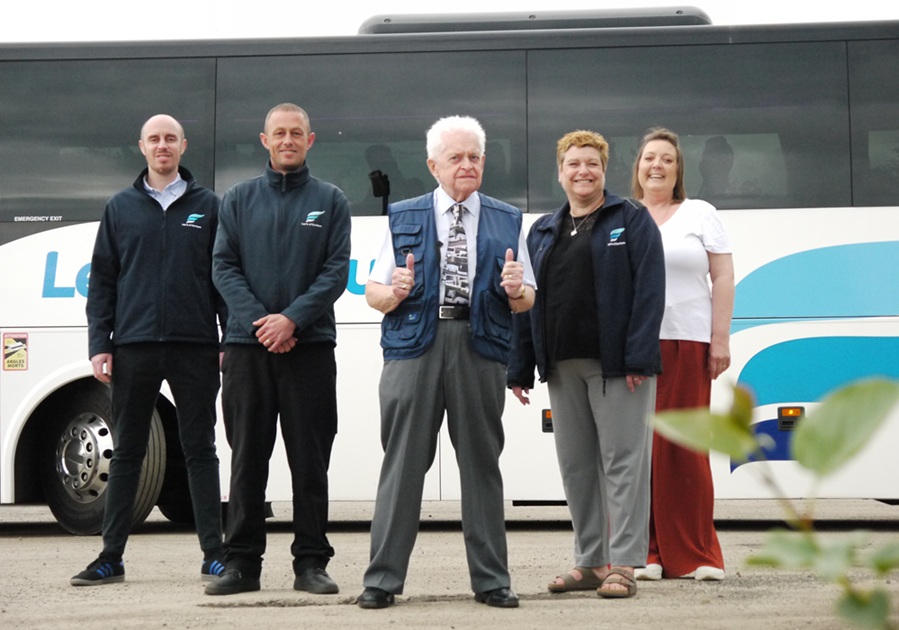
Central is an approach in which David does not try to position himself as a coachman by instinct, and instead he relies on operational experience already in the business through a crack team: Transport Manager Martin Hemsley, Finance Manager Karen Atkinson (assisted by Jacqui Teasdale), Holidays Manager Alison Williamson (assisted by Geoff Gardiner) and Workshop Manager Richard Ryan.
Each has been with Lee’s for more than five years, and all bring wider industry experience. “Because the day-to-day is managed by the team, that means I can think about other things,” David says. “About strategy, growth, efficiency and funding, which is where my skillset lies; my skillset is not in the operational running of coaches.”
The business itself is diversified, with around half of activity made up of tours and private hire, a quarter schools, and another quarter, Lee’s own holiday programme.
It works with more than 100 schools, universities and colleges in the North East, including home-to-school contracts with Durham County Council, and transport for university sports teams. It operates UK and Ireland tours, ski trips to the Alps, private hire, and its own branded holidays.
David sees growth in several areas. The first is off-season and shoulder-month work, particularly residential and activity-based school trips: ski visits, history trips to Normandy and northern France, sports travel and other educational work.
The second is the holidays business, where Lee’s has a loyal customer base, but has historically relied on traditional marketing. The company prints and mails around 20,000 brochures a year.
Around 65% of bookings remain offline by telephone, with 35% online. David expects that balance to shift over the next five to 10 years as older customers become more comfortable with digital channels and the next generation of holidaymakers enters the core coach holiday demographic.
He is upgrading the website, increasing social media activity, starting email marketing, and looking at digital advertising. David also sees opportunities in family trips to attractions otherwise awkward to reach from the North East by car.
The underlying propositions remains strong: affordability, environmental benefits, convenience, luggage assistance, local pick-ups and social experience. But David is also realistic about the learning curve.
Fresh eyes can identify opportunities, but experience holds it in balance. “For every five ideas that I come up with, the people that are very experienced in the office and who know the industry well tell me why four of them won’t work,” he jokes.
“They know the industry and they know how it works; I respect and value that, but there are some things that I think I can still look at with a fresh perspective.”
That perspective includes using existing systems more effectively. Lee’s uses Coach Manager and Tour Booking System from Distinctive Systems, and David believes the data within those platforms can be used more rigorously to assess trip popularity, price points, capacity, utilisation and profitability.
Further acquisitions in the longer-term?
The growth ambition is clear, but David is careful not to overstate the speed or scale of any acquisition strategy. He reveals he has studied The Coach Travel Group and met owners of businesses it has acquired, describing its model as one that balances group benefits with local brands and operations.
He believes consolidation certainly has a broader role to play, particularly in a diverse market where regional operators may lack succession options.
However, he does not want this to be perceived of as a buying spree. “For the next three to six months I plan to learn everything I can about the industry and maximise the opportunity with Lee’s,” he says. “In the future, I strongly believe that acquisitions will be part of the growth strategy.”
Where acquisitions do make sense, there are two possible rationales. Smaller operators in the North East could bring synergies. Operators elsewhere, particularly along corridors such as the A1, M1, and into the North West such as the Lake District and Blackpool routes, could meanwhile provide logistical benefits by positioning drivers, workshops and vehicles close to destination points.
Advice when buying or selling a coach operator
When it comes to buying and selling, David’s view is that preparation matters. Lee’s made for an attractive sale because it had continued to invest in its fleet rather than running assets down in anticipation of a sale. In an asset-heavy sector, buyers will price in the cost of deferred investment.
“It’s an asset intensive business where a buyer may need to look at financing, and that affects valuation,” David explains.
“Capital light businesses might have a higher valuation – say eight times its earnings before interest, taxes, depreciation and amortisation (EBITDA), generally, asset intensive businesses have a lower valuation, three to five times EBITDA.”
He believes the finance industry’s interest in coach operation will continue to be driven by market structure: fragmentation, independent ownership, the potential to build scale. But he notes that operators are not easy sellers to negotiate with.
“From what I’ve experienced so far, the owners of coach travel businesses are very good businesspeople, cost conscious, and strong negotiators. In this industry, you need to be a good operator; you can’t come into the industry and expect to buy a business for nothing. Operators are shrewd and will recognise a fair price for an acquisition.”
Challenges are also equally real: cost inflation across minimum wage, National Insurance, business rates and insurance are but a few. Despite acute fuel rises, existing booked work and contracted day rates are being honoured, meaning Lee’s is absorbing the squeeze.
But David’s view is that every business brings unexpected problems. “The Iran war started shortly after the acquisition, and volatility in fuel prices from a war in the middle east was not a specific risk I’d factored,” he notes drily.
“In business there’s always one drama and issue after another. Whatever industry you go into there’s going to be speed bumps to overcome. That’s just business.”
For all the pressures, David’s view of inward investment is broadly positive, and he argues that more professional investors are likely to seek growth in the coach sector.
“Lee’s has heritage, brand, and a great team,” he says. “That’s a very good platform on which to build something bigger. We have 24 coaches now, and it would be great to grow to 40 or 50 in five years’ time, whether that be operating out of Lee’s in the North East, or having different hubs in different parts of the country.
“I want to build something that does justice to the legacy, and that gives the employees and the team here just as much opportunity to develop alongside the business.”
*Some readers may remember Lee’s of Durham as part of broader venture European Travel Group. The latter and its businesses, including staff and assets, were folded into Lee’s following COVID.