





















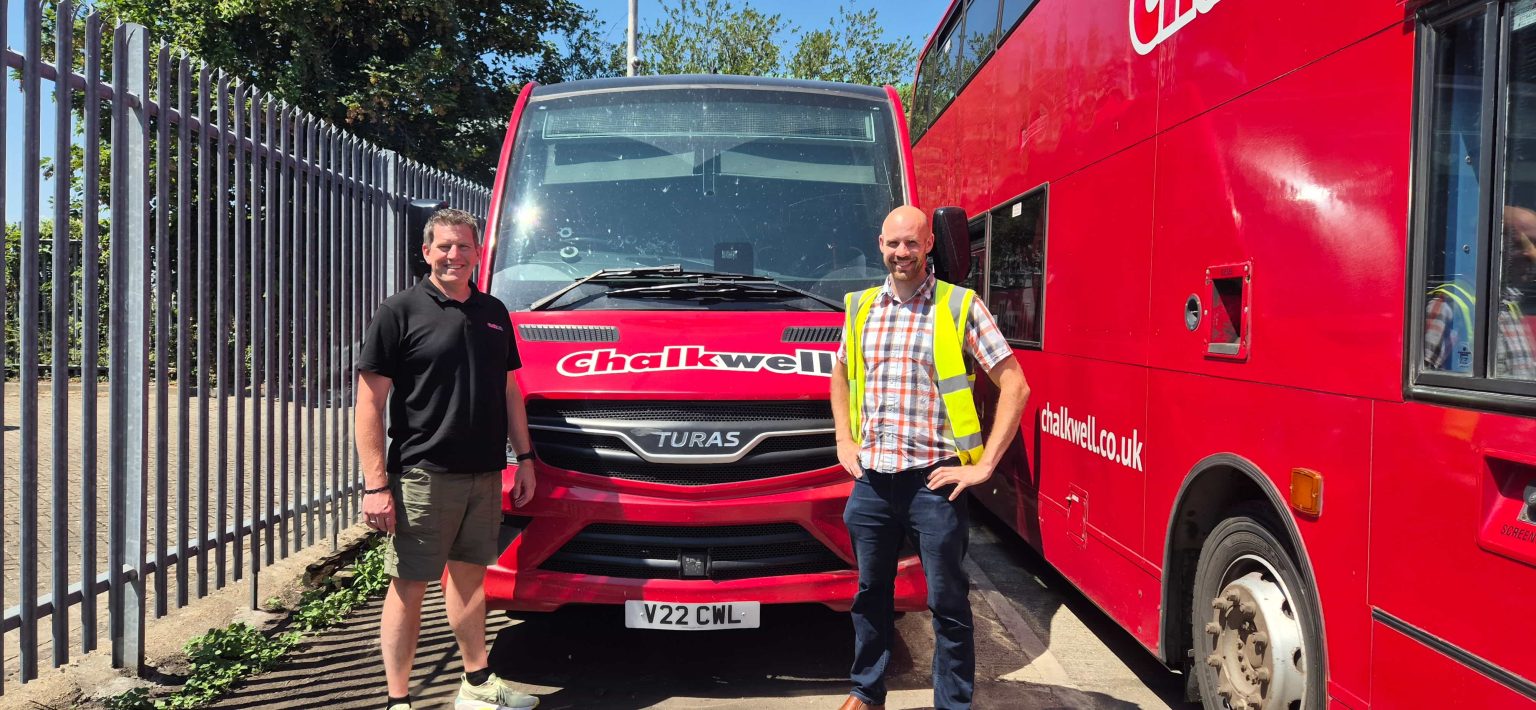
Real-time data and sharper processes are supporting growth ambitions after the Kent operator adopted Ferdia as its coach operations platform
‘If it isn’t broken, don’t fix it,’ might be a familiar saying, but longtime family operator Chalkwell Coach Hire takes a different view. The Sittingbourne operator went live with tech supplier Ferdia in April. A relationship between the two companies had been forming for some time before a partnership commitment was made shortly before Christmas.
For Managing Director Roland Eglinton, the move to work with a new tech systems provider was part of a proactive broader programme aimed at modernising the business and building a more responsive commercial operation around better information. routeone caught up with Roland and Ferdia UK Country Manager Daniel Morton to see how the tech is helping Chalkwell target an aspiration of controlled growth in coach hire.
A new way of working
Roland’s decision to move suppliers came from a practical frustration with older software, remote desktop infrastructure and a way of working that no longer matched the direction in which the company wanted to travel.
Chalkwell had already been transitioning away from older systems and over the past three years has replaced legacy platforms used across accounts, maintenance, operations, sales and even HR functions. Everything is now web based, but Roland says the company is still only “scratching the surface” of the capabilities from that change.
When it came to its coach booking platform, the company had been with its existing supplier for decades. “We needed something that could handle our whole operation, but also enhance our sales function as well,” Roland says.
“I’d been pretty fed up with the fact we didn’t have a web-based solution. With web-based solutions you don’t pay for that infrastructure element, you can access it through any browser, and you don’t have to pay for server space. Our costs have gone down considerably as a result.”
Any new platform would have to cope with the challenge that Chalkwell, like many coach businesses, is not easily reduced to a standard workflow. Established in 1931, Chalkwell still maintains a mixed operation spanning coach day trips to private hire, rail replacement and local bus services and contracts.
Ferdia is not a bus planning tool, but Roland says Daniel and the team were accommodating in tweaking the solution to ensure it could handle that mix. For example, bus duties compiled elsewhere are treated as contracts, with vehicles and drivers allocated accordingly, in the new system.
Those tweaks have gone on to benefit others using the platform as Ferdia collects feedback and builds an ecosystem of operators engaged in what they want the solution to do next.
Looking differently at business
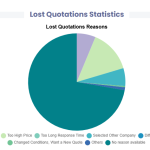
Chalkwell’s adoption of the new coach booking platform coincides with a more detailed look at how enquiries, quotations and operational information move through the business. An early focus has been the customer-facing side of coach hire.
Roland reveals Chalkwell previously had one website covering both its coach and bus operations. Analysis showed that much of the website traffic related to bus services, such as timetable and fare enquiries, and as such, the sheer volume of web traffic for the bus side was hindering the company’s search engine performance for coach hire.
“Browsers were treating us as a bus company and effectively suppressing our presence when it came to coach hire,” Roland explains. “Being able to separate the two, which we did, and embedding Ferdia within the new coach pages, has made the whole system feel a lot more streamlined – and now both elements are doing what they are meant to be doing, rather than everything being consumed by bus website traffic. It has helped us really refresh our offering.”
While it is as yet too early to draw comparison figures, the new quotation request process reduces friction further, with enquiries captured automatically as part of the sales process, rather than needing to be interpreted manually and entered elsewhere. Daniel says this shortens the time between an enquiry and its response, improving the customer journey, while also delivering better quality information to the operator.
Speed is one benefit of that streamlining process, but the adoption of the tech is also about ensuring Chalkwell works from a single source of data. Roland is wary of the way systems can become fragmented when operators rely on separate spreadsheets or side processes to fill in gaps.
“I am a big one for using systems for what they are designed to do,” he explains. “But there are a lot of people out there who will do their allocations on a system, then have a separate spreadsheet that does something else that they want it to do. The whole thing then becomes disjointed.”
That creates room for risks. Information has to be updated in multiple locations, version control becomes more difficult and different parts of the business might not even be working from the same figures.
By contrast, the new approach is intended to give Chalkwell live information that can be acted upon quickly. The latest area Roland has been working on is reporting structure.
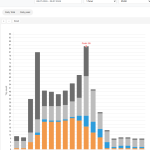
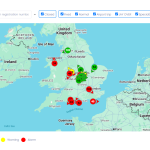
Data is extracted and shared in real time so Chalkwell’s team can compare sales figures to sales targets, conversion figures, and the number of jobs they quote for versus the number of jobs won. Each morning, an automated email is distributed to members of the director team showing key sales and capacity information.
“We are able to see where the gaps are in terms of latent capacity,” Roland explains. “It also takes a snapshot of sales for each month, how many quotes we have done this month and how many have been converted, and if we do a booking today, it will be added to the total, and that same email will go out tomorrow morning.”
That means Chalkwell is able to monitor quote volumes, conversion rates and sales performance while there is still time to respond. This is contrasted with a more retrospective model, where operators may only discover a problem after the financial year has closed.
In that respect, the system forces a change in how owners examine their business. Instead of sales, operations and reporting being treated as separate, linear stages, information moves continuously between them. “It’s a more circular process,” Daniel says. “You are doing all three things at once – selling, operating, and looking back in a circle, all the way along, with a continuous loop of information.”
Roland agrees. “We can monitor things very easily and make quick business decisions, rather than getting to the end of the financial year and working backwards to figure out why, for example, coach hire might be down in a certain month,” he adds. “We can be reactive, and that’s how we want to be.”

Middle-market growth
Much of the value of this additional information lies in the questions it prompts. If conversion rates are unusually high or too low, Roland can examine whether pricing, follow-up, customer communication or enquiry quality is the issue. If the business is not generating enough quotes, he can look at marketing, search engine optimisation (SEO), and the website.
“There are many operators out there who will say ‘my price is the price’ and who probably couldn’t tell you what their conversion rate is,” says Roland. “We can, and can alter our course at fairly short notice as a result.”
That is an example of where technology now connects directly to commercial strategy. But Roland is clear that this does not mean Chalkwell will look to chase every possible avenue for bookings. The business currently operates 55 vehicles, with a fleet that ranges from minibuses to executive coaches and double-decker buses. Roland does not expect significant growth beyond that number, and even suggests Chalkwell may step away from some lower-return work as higher quality coach hire increases.
That is growth done “the right way” as he puts it — attracting better quality enquiries but not going so far as to reinvent the business. “We have, for example, a lot of contract work with our local authority, and we’re pleased to do it, but we have very little control over the pricing when the costs go up,” he notes. “With coach hire we can adjust our prices when fuel goes up, or we want to pay drivers more, or do some investment. It’s more within our control and we like that idea.
“I don’t think we’re trying to be the next Parrys International. Our aspiration is to be a strong, middle market coach operator, happy doing educational and private hire work, and some touring, without trying to be one of the ‘elite’ operators in terms of what you see on the road.
“That may sound like an odd thing to say – but the fact is there are a lot of people who just want reliable coach hire, where the quality is good, and the people turn up to do the job right.”
Forward-thinking culture
Roland’s appetite for change was sharpened during the COVID pandemic, when he took part in the Goldman Sachs 10,000 Small Businesses programme, delivered through the University of Oxford Saïd Business School. He describes it as a condensed business growth programme that encouraged Chalkwell to think not only about what it does, but why.
“Why is the hardest question to answer,” he says. “We know what we do and how we do it, but why are we doing it, and what are we trying to achieve?”
Roland recalls that the process was uncomfortable. Transport is a practical, tangible industry built around vehicles and timetables, and the programme pushed abstract questions about long-term goals, and business purpose.
One result was a clearer commitment to the future shape of Chalkwell, including its desire to grow coach hire and move towards a zero-emission frontline fleet. That approach now runs through Roland’s view of systems. In a tough operating environment, he argues that technology needs to do more than administer work, and has a role in helping managers understand their business quickly enough to change course.
“We come from a viewpoint of continuous improvement,” he says. “Change is uncomfortable for some, particularly if they are not asking themselves the right questions. But do you want to grow, be competitive, sweat your assets, or sit back and do your regular work? Different people have different aspirations – but it’s important to make sure you understand what they are.”