



















The Bus Centre of Excellence (BCoE) was established in 2023 to support change in the sector in England outside London. It is delivered by the Chartered Institution of Highways and Transportation (CIHT) and funded by the Department for Transport (DfT).
Membership is open to all within the industry and is free. While the core reason for BCoE’s existence remains the same as when routeone spoke with it two-and-a-half years ago, much on a more granular level has changed, says current head Stelios Rodoulis.
He is an urban and transport planner by background and has worked for a major consultancy firm. He highlights with particular pride how his efforts helped to establish multiple demand responsive transport schemes. A move into the local authority field with Essex County Council followed before he took up leadership of BCoE.
Of critical importance to BCoE is its funding landscape, and that gained a boost in the first half of 2026. DfT is responsible for financing BCoE, which now has money allocated until 2029.
That will allow the organisation to grow its internal resource and what it does across local transport authorities (LTAs) and operators in England. Building work on conferences, events and training is on the agenda, while focus on new bus policies and safety is rapidly expanding. Stelios notes how a clearer funding horizon has already allowed BCoE to become more agile in reacting to what the industry wants.
Bus Centre of Excellence members ‘at the coalface’
Outreach efforts mean that BCoE now has membership from representatives of every LTA in England. Operators also feature increasingly strongly, with Stelios keen to note how participation in BCoE costs nothing but the time involved. “Our members are at the coalface,” he continues. “They are planning, commissioning, delivering and managing bus services.”
An Advisory Board chaired by Leon Daniels OBE and oversight from a Project Board comprising DfT and CIHT ensures that BCoE also acts on political priorities for bus services. Tackling violence against women and girls (VAWG) on and around the mode is an example. “We were acting on that already, but DfT has paid very close attention to ensure we are doing what is needed on VAWG,” Stelios adds.
Wider safety efforts are coming along strongly via the Bus Knowledge Sharing and Incident (Bus KSI) Network, which focuses on safety. It is co-chaired by Transport for London (TfL) Senior Bus Safety Development Manager Kerri Cheek, who has played a key part in TfL’s work on the Bus Safety Standard.
“When we say safety, that means many things to many people,” Stelios continues. “Some think that it is all about personal safety aboard the bus.” Such personal safety on buses has grown into an imperative and is integral to building trust with passengers, he adds.
Political and societal pressure around VAWG is clear, but the safety of vehicles for passengers, drivers and other road users is also growing in prominence, helped by TfL’s Bus Safety Standard focus. Attention to bus safety will continue to grow as franchising schemes and Enhanced Partnerships progress, and the Bus KSI Network will promote the important and benefits of improving safety.
“It is not just about what colour you paint buses. At the most basic level, what happens when a safety incident occurs? How is it reported, how do you collect the necessary data, and how can a franchising body instruct an operator to share the data? Accidents will happen, and while we can work hard to prevent them, equally important is what we do when they occur,” he says.
Training a growing part of Bus Centre of Excellence offer to members
One of the key objectives for BCoE over the past year was becoming “indispensable to the bus community” in policy direction, Stelios continues. Many industry members will already be familiar with BCoE’s weekly newsletter, which promotes goings-on around the sector and further afield, and he believes that BCoE has become better at telling stakeholders and the bus community what it is doing and how to access support.
“We have replaced out website and are expanding our team to hire people who will talk to LTAs and operators and capture their challenges,” he says.
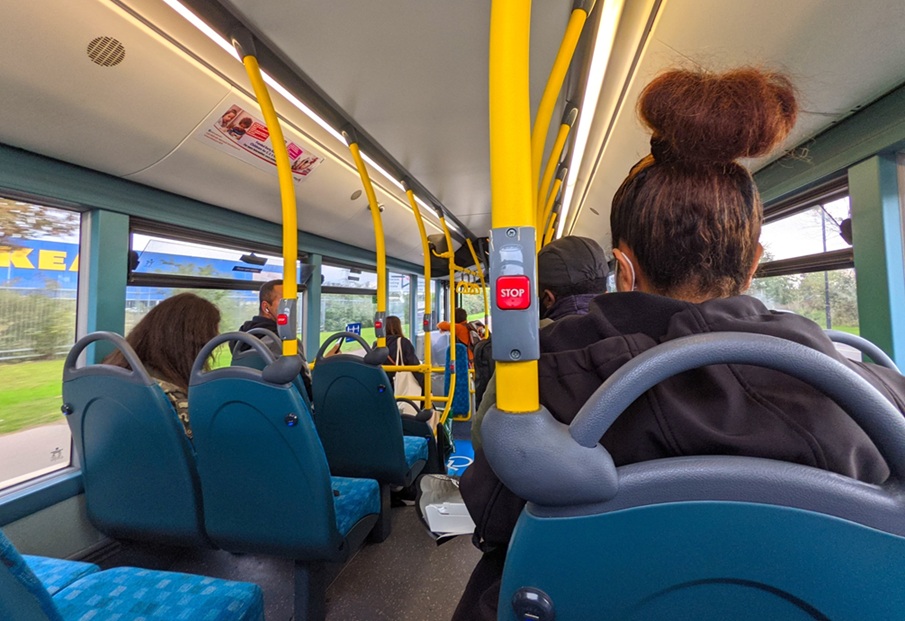
The training approach is expanding quickly, but BCoE is keen to hear from members around training needs and what they see as priorities in that field. The BCoE learning offering is primarily focused on LTAs, but also includes courses suitable for operators.
An example of that is the recently launched Driver Nutrition and Fatigue: Safety on the Road e-learning course. Participating in certain in-person training courses or events can be via application to ensure that the right people are in the room.
Growing training provision is an area of major importance for BCoE, Stelios adds. “We have a lot more bus-specific e-learning courses in development – for example, how to deliver Local Transport Note 1/24: Bus User Priority – and we are looking to host and fund more in-person training,” he says.
“We are aiming to host ‘masterclasses’ on specific themes and challenges, delivered by professionals who have ‘been there and done that’ and want to impart knowledge.” In terms of delegate numbers for in-person training, quality is preferable to quantity.
While franchising and Enhanced Partnerships are core policies to help improve bus services, he notes how the Bus Services Act 2025 reopened the door to the formation of new municipal operators in England. What desire for that will be among LTAs remains to be seen, but BCoE would be keen to explore taking its training programme into that field if it was appropriate for the bus community.
A central hub for the bus industry
In speaking at the ALBUM conference in Blackpool earlier this year, Stelios highlighted how he is keen to see more engagement with BCoE from smaller operators and LTAs with limited resources. Sometimes those parties can feel divorced from policy direction and influence.
He believes that BCoE’s relationships with ALBUM and the Confederation of Passenger Transport (CPT) are a key part of stakeholder engagement and advocacy. ALBUM and CPT are represented on the BCoE Advisory Board, which also includes organisations such as Bus Users UK and the Campaign for Better Transport to ensure alignment and avoid duplication of effort.
Growing reach across the bus community in England is an vital for BCoE. Its presence among LTAs in England is already strong, and the additional funding and clarity on its longer-term horizon will assist in closer working with operators and the supply chain.
Website resource library there for the industry to leverage
Stelios points to the depth of resources on the BCoE website, all of which are available for free, as a further benefit to participation. At the time of writing, there were almost 100 such guides, documents and portals there.
Of those, 17 are within an antisocial behaviour and VAWG hub. More submissions are welcome. In addition to the Bus KSI Network, BCoE also has a Franchising Network and a Public Sector Members’ network.
All that comes next is yet to be disclosed, but Stelios points to the pending arrival of new people with BCoE as an indicator of further evolution over the coming year and beyond.
“BCoE is a small, agile team that is expanding to become even better at reacting to what the industry wants,” he observes. “We have direction from our project and advisory boards, and from DfT and CIHT. But we always want to hear directly from the sector.”
To conclude, he notes how everything that BCoE does must be to the benefit of LTAs and operators The BCoE head does not rule out expanding into further programmes of work. An example of that is how to integrate buses with other modes.
The flagship Quality Bus Conference – to be held in Nottingham on 11 and 12 November – is going from what he terms “strength to strength,” with around 300 delegates expected this year. One of the main themes for the 2026 event is the importance of bus speed and service reliability.
“We must never forget that buses are in competition with the private car,” Stelios points out. “The improvements to local bus services that the sector is working hard to deliver might remain invisible if the bus is stuck in the same congestion as the car. Speeding up buses matters.”
-
- Contact the Bus Centre of Excellence team at bcoe@ciht.org.uk