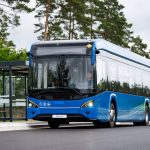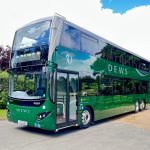



















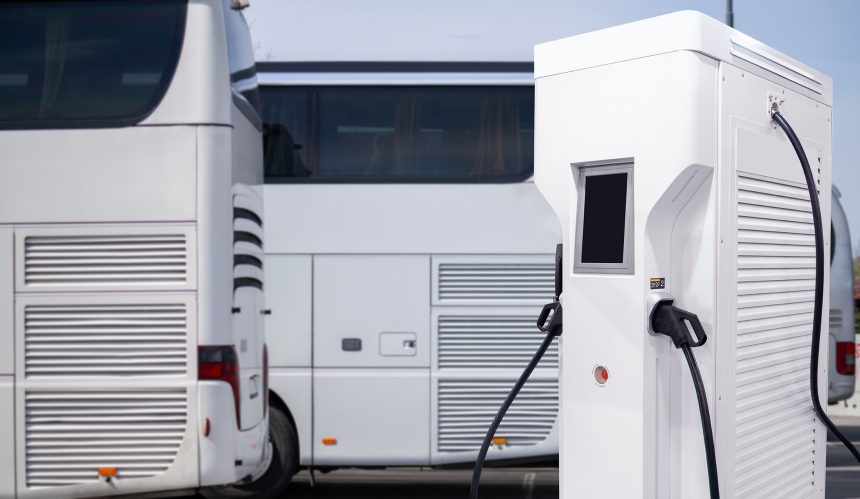
As electric coaches become more accessible, increasingly the major prohibitive factor in their use is an ability to charge them.
Last month routeone heard concerns from the coach sector of the risks that could be present if battery-electric coaches are expected to rely upon charging facilities designed primarily around eHGVs at motorway service areas (MSAs).
To gain a better understanding of what provision there is likely to be at MSAs in the near future, several MSA providers in the UK have since shared more insight into progress with heavy vehicle charging.
None of the MSA operators or energy providers say they have dedicated coach charging in the works — but most acknowledge a focus on the expansion of eHGV infrastructure is expected to support coach charging in the future. This is what they had to share.
Power supply remains a hurdle
Roadchef, which operates 31 service areas across the UK, says it is busy working to “future proof” its MSAs for electric vehicles, with its focus now shifting away from cars and vans towards eHGVs as “the next step in supporting the UK’s move to zero-emission transport”.
It points to two sites, Chester and Strensham North, that are going through planning for dedicated eHGV charging facilities. The projects are being delivered in partnership with Gridserve through the Electric Freightway initiative, which is establishing the UK’s first network of eHGV charging hubs.
“For us, these initial installations are a crucial learning opportunity,” says Paul Comer, Director of EV Implementation at Roadchef. “They’ll help us understand how eHGVs interact with charging infrastructure in real-world motorway service areas — from dwell times and power requirements to site layouts – before committing to a wider rollout. We’re watching this space closely so that when demand grows and the right partnerships are in place, we can move quickly.”
Paul notes that, while the immediate focus is on the charging requirements of eHGVs, many of the challenges and insights from early installations will inform how Roadchef supports other large vehicles, including coaches. “Both sectors share similar operational demands around space, power and scheduling,” he says. “So the work we’re doing today will help shape zero-emission coach travel in the future.”
Hurdles that Roadchef notes are power supply, due to the high energy demand of larger vehicles, space, and allocation. “Space is a key factor as any new chargers must be added without reducing essential parking capacity,” Paul says. “Then there’s the question of how charging fits into drivers’ working patterns: will operators need slower overnight charging at 100–150kW, or high-powered 1MW chargers that can deliver a top-up during a 45-minute rest break?”
Paul suggests that pre-booking is likely to be one of the ways MSA providers manage demand. “Ensuring efficient system management will be equally crucial. As the network scales, features like pre-booking systems will give drivers confidence that chargers will be available when they need them.”

A cautious approach from Shell?
Corporate and UK Media Spokesperson for Shell International Paul Connolly says the energy giant is working closely to support “every aspect of fleet operations for every fleet” including “cost-effective decarbonisation” through its Accelerate to Zero programme, which helps fleet operators build a tailored decarbonisation roadmap.
He says Shell recognises that there is no one-size-fits-all when it comes to emissions reduction — hinting that Shell may be taking a more technology agnostic approach when it comes to supporting heavy vehicles.
“While electrification can be one of the most effective decarbonisation solutions, it can also be one of the most challenging to implement,” Paul notes. “For example, switching to battery-electric vehicles tends to generate significant upfront investments for fleets, since it requires replacing the actual vehicles. Our approach is to help customers find the most optimal path to reducing emissions, including through electrification and through lower-carbon fuels such as HVO, LNG, CNG, and biofuels.
“In Europe, we are continuing to grow our Shell Recharge network of EV charging facilities for heavy-duty vehicles, including coaches, and we also provide customers access to partner locations. In terms of growth plans, we work closely with our customers to create clusters of heavy-duty charging infrastructure built around customer needs and connecting them together in a pan-European network of Shell and partner sites.”
There are currently 40 Shell Recharge heavy-duty sites live across Europe, including in the UK. The first dedicated coach and truck only location in the UK opened at Markham Moor in 2024. The site features a 400kW charge point with two connectors that can be reserved in advance.
BP focused on truck corridors
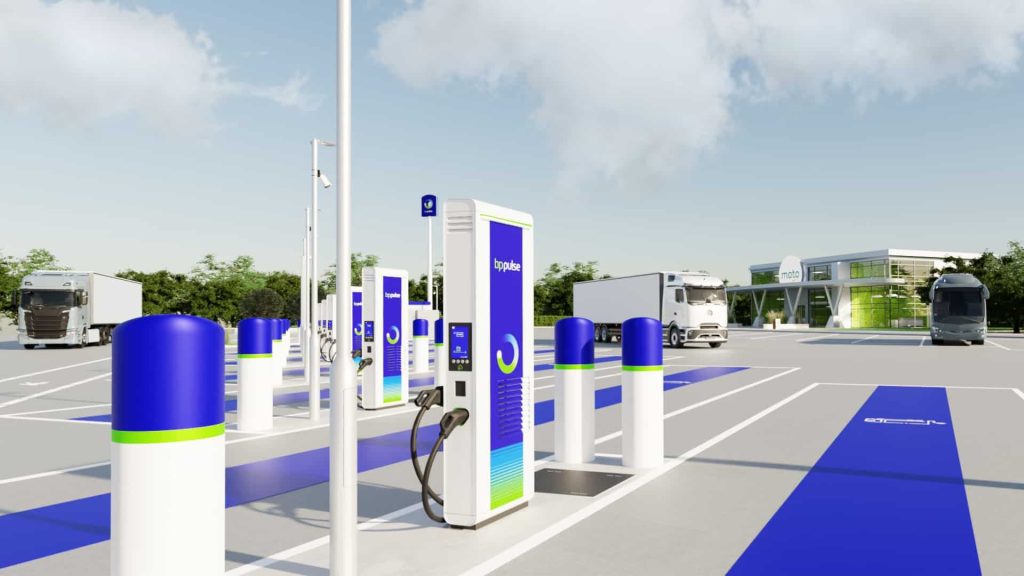
In September, BP Pulse and Moto announced a collaboration to accelerate the EV transition for freight and logistics with the creation of electric truck charging on major UK motorways.
Three MSAs have been identified so far at Lymm, Toddington North, and Toddington South. Six pull-through bays with new megawatt charging system (MCS) chargers will be installed at each site. The first site is planned to go live during 2026. The hubs anticipate the growing demand for electric truck charging and focus on “convenient locations with high quality amenities”. Moto says it has invested heavily in electric vehicle infrastructure across its 70 UK sites, with electric trucks a “natural extension”.
The project supports BP’s aims of building a publicly accessible network of multi-energy “truck hubs” across the Trans-European Transport Network, or TEN-T, routes. It is modelled on a similar network in Germany, where BP now operates what is believed to be that nation’s largest public truck charging network, with 25 e-truck sites “providing thousands of charging sessions via dedicated pull-through bays”. It also follows the introduction of BP’s first European e-truck corridor, launched across six sites over a 600km stretch of the Rhine-Alpine corridor in January 2023.
routeone approached BP and Moto to ask for any specifics about electric coach charging facilities, but did not receive a response.