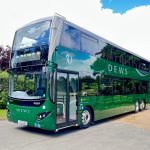




















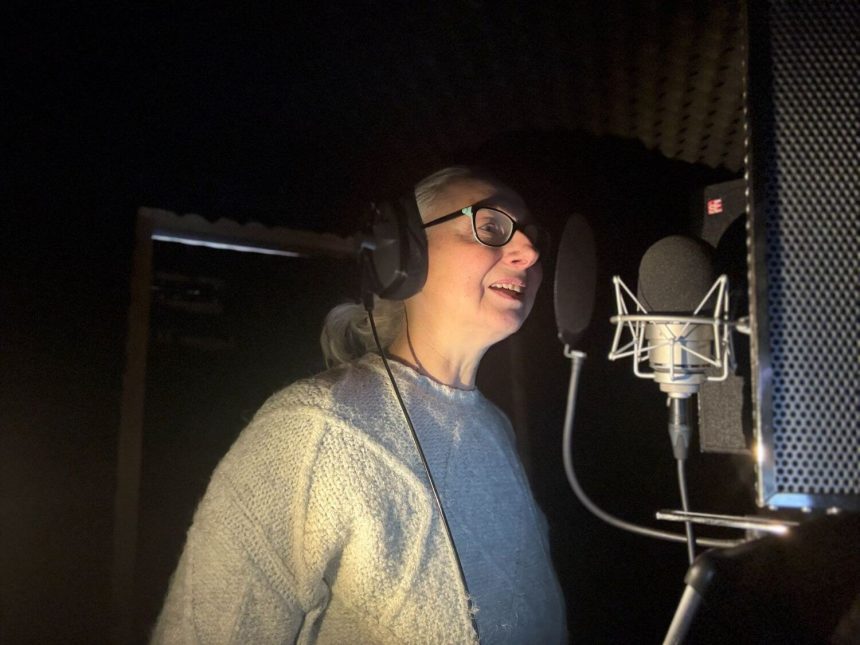
routeone speaks to ‘voice of TfL’, Emma Hignett, as she marks 20 years in the role, and considers the respective benefits of the human and computerised approach to bus announcements
If you travel on buses in London, you will have heard the voice of Emma Hignett. For 20 years, the voiceover artist has been informing passengers on buses of the next stop.
However, the human voice in next-stop announcements is gradually becoming extinct, increasingly replaced by computer text-to-speech engines, often with the help of AI.
Such technology offers great advantages to bus operators, but some organisations, such as Transport for London (TfL), have clung on to the traditional method.
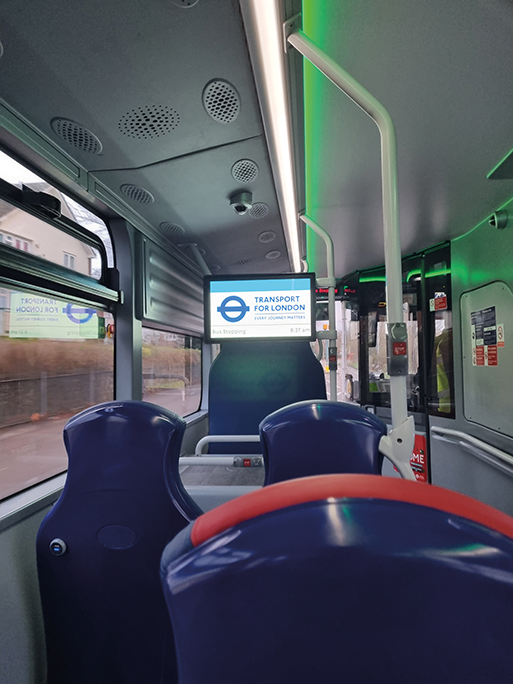
After TfL decided it wanted to roll out audiovisual announcements on its bus operations with the introduction of iBus in 2006, radio presenter Emma was chosen from a shortlist of 10 professional voice talents.
Her announcements were trialled on bus route 149 and the passenger feedback was positive, so she was put to work on 30,000 “next stop” and “alight here” announcements.
Her voice is also used for London Overground and Elizabeth Line services, leading her to be known as the “voice of TfL”, as well as on Go North East and Transpora services.
Nowadays, she has her own studio at home and, a few times a month, she receives requests from TfL to prepare a batch of new announcements for changes to bus services.
After honing her processes over several years, she is able to work surprisingly quickly – considering the degree of perfectionism required; she reveals that a typical set of six announcements would take her only around 10 minutes.
“I will do two or three recordings of each announcement and edit them up into individual files,” she says.
Emma has got to know each operator’s particular requirements for things like tone and pace.
Accent can be a factor too, she highlights. She says: “Generally, for all voiceovers, I put on what we tend to think of as an RP accent but mine isn’t a terribly ‘Queen’s English’ posh one; it’s upmarket, but it’s a London accent.”
Although Yorkshire-born and now County Durham-resident, she admits she struggles to do a northern accent when in front of a microphone, as she would in everyday life.
She adds: “I do try, with the Go North East ones, to reduce the sort of poshness of them. So, whereas London would criticise you if you said a short ‘a’, like in bath, in the North East, they want a [long ‘a’]. So, I do try and take that into consideration, but it’s still my voice.”
Local quirky pronunciations of placenames can throw up some complications. Google is a great aid in that regard, although, as Emma notes with the example of the word “lido” in London, some enunciations can be heavily disputed.
Setting the tone
She says Transport for London undertook extensive research at the outset when deciding on the tone that passengers wanted to hear.
“One of the things that was important to the team setting it up was that it wasn’t too ‘jolly’,” she says, adding that a female voice is considered less “bossy” and more inclined to “blend in”, whereas a male voice is considered more suitable for emergency-type announcements.
While some people hate the sound of their own voice, Emma loves to board a bus when she is in the capital, often with a notepad in hand “taking notes of all the ones I want to re-record”.
She elaborates: “It’s good to hear what you do and what it sounds like in the context of a busy bus.”
Emma says she feels particularly rewarded to have effectively provided an audio backdrop to so many people’s lives.
She says: “Sounds are incredibly emotive for people, and it’s quite lovely to feel that my little job is able to take people back in time.”
So big is her part in the lives of London’s bus passengers, public uproar would likely follow if her voice were replaced by a synthetic one.
With iBus 2 in the works, TfL has confirmed it has no plans to pursue that. She reluctantly admits that at, some point, though, onboard journey information will be devoid of the human element.
I think passengers like the idea that it’s a real person and not a computer – Emma Hignett
“Obviously I like what I do, and I’d like it to stay human,” she says. “I think the entire voiceover industry, whether they work in public transport or in anything else, are looking at the world of AI and saying, ‘You’re making it harder for us.’”
She says: “I think passengers like the idea that it’s a real person and not a computer,” adding that she believes the human approach can be faster and easier: “There’ll be places where you try to get an AI voice to say it correctly and you’ll spend hours trying to change the spelling of the word to get it to say it correctly, whereas you could just say to me, ‘Can you say it like this, please?’ It’s probably quicker to email me with a list of six announcements than it is to try and play around in an AI machine.”
Trentbarton values human element
As relatively recent PSV Accessible Information Regulations make audio announcements mandatory via a phased process, it is a dilemma more and more operators have faced recently.
One which is keeping faith with human voices is Trentbarton. The East Midlands business has reverted to recording its own drivers making the prompts after a spell using regional BBC TV presenters.
Scarlet McCourt, Trentbarton Marketing and Communications Manager, says: “When we switched back from the BBC presenters to the local driving team, passengers said they felt the familiarity with the local voice made them more trusting of them.
“That local voice really resonated, I think, with the local people. We feel really passionate about making sure that we’re using real people and, more specifically, our own driving team.”
The recording sessions, which tend to take place around once a year, or more often in the case of route changes, can take time, she admits. It is a few hours off the road for the drivers “but that is really little cost to us”, she adds.
The case for TTS bus announcements
However, computerised text-to-speech options are undoubtedly compelling for the operator – from the point of view of affordability, flexibility, clarity and ease of use.
Increasingly, it is becoming difficult to tell which voices are non-human, too. For example, Arriva says it uses Google’s text-to-speech tool because its network is so large and complex.
Transport is an ideal use of a text-to-speech engine… The barriers to entry have really dropped – Matthew Aylett
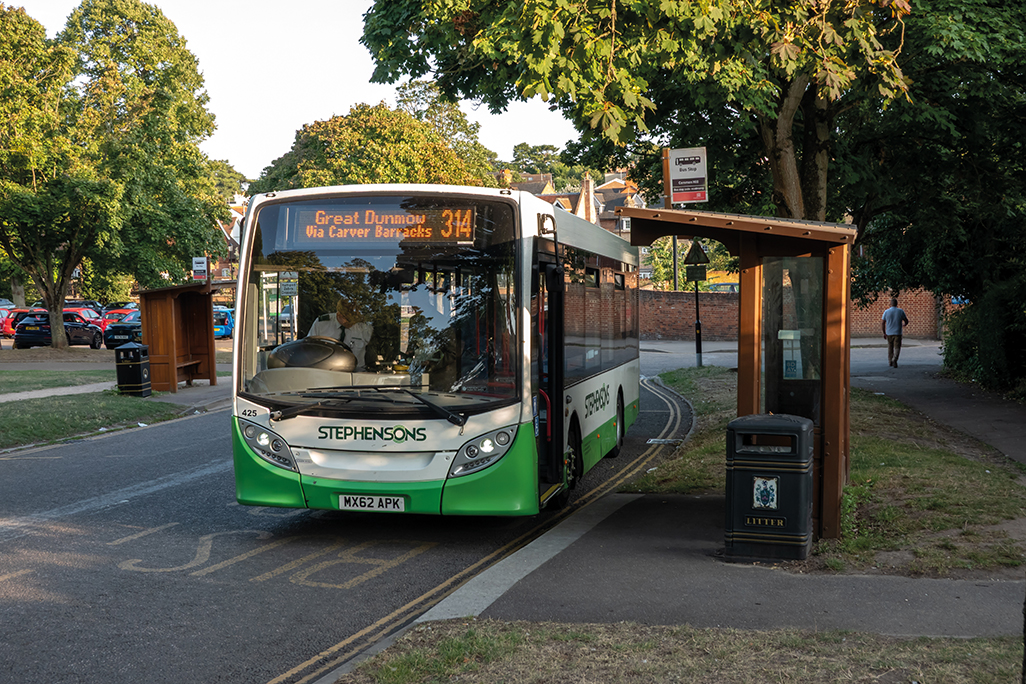
Ryan Scott, Operations Manager at Stephensons of Essex and NIBS Buses, says in support of his operators’ automated announcements: “I think the computerised voice is the simplest way of doing it. It’s clear and easy to understand; there’s no accent that could be misunderstood. It’s one generic voice and it’s easy to get things into the system.”
He adds: “If we wanted to approach a local celebrity, for example, they’d want paying for it and we’d have to pay for a studio. [Text-to-speech] is more cost-effective.
“But I understand some operators have gone down a unique approach, like using local football teams or local DJs to add a bit more personality to that specific operator or that area. It’s a bit of quirkiness, a bit of fun, and it’s a way of attracting people onto the buses.”
AI to the fore
Matthew Aylett, co-founder and Chief Science Officer of speech-synthesis company CereProc, is predictably a big advocate for using modern methods for journey alerts.
He believes human voices offer no advantages for the industry, given the power of today’s technology – as long as it is “done properly”.
“If you don’t make the effort and just get something off the shelf and bang it in, if you don’t check the pronunciation, it won’t be as good,” he says.
AI means that a voiceover artist’s voice can be mimicked precisely and, from one recording session, unlimited announcements can be produced automatically, subject to contractual agreements, he points out. Even different accents are not a problem, with the right system, he adds.
He says: “No one really wants to read out all the different bus announcements. Transport is an ideal use of a text-to-speech engine, also because, if you change the route, you’ve suddenly got to re-record it.”
The pace of change has significantly brought down the minimum cost of producing text-to-speech, Matthew says, although adding his caveat about off-the-shelf solutions and promoting the features of CereProc, which is now owned by Capacity.
“The barriers to entry have really dropped for producing text-to-speech voices. It’s almost free now,” he says. “But yes, as soon as you want to actually build something bespoke, then it’s more expensive.”
He adds that examples of advanced options include the possibility of changing pronunciation on the go based on geography, or the control room being able to send a text message to the bus and have that converted to an announcement.
An uncertain future for bus announcements
The days may be numbered for human next-stop voices, but the industry believes there is still a place for such.
First Bus celebrated Bradford’s time as the UK City of Culture last year by employing local voices for its recordings.
Further, the use of local figures on flagship services is also common. For example, well-known TV news anchor Harry Gration, who died in 2022, greeted passengers on Transdev Blazefield’s famous 36 route in North Yorkshire.
Whether Emma Hignett will be telling travellers to “alight here” in 2046 remains to be seen.
Nostalgia sometimes has to give way to commercial prudence, and the “next stop” in the evolution of bus announcements seems destined to be a computer.
However, human audio on buses can still be a powerful marketing tool in the right places.