

















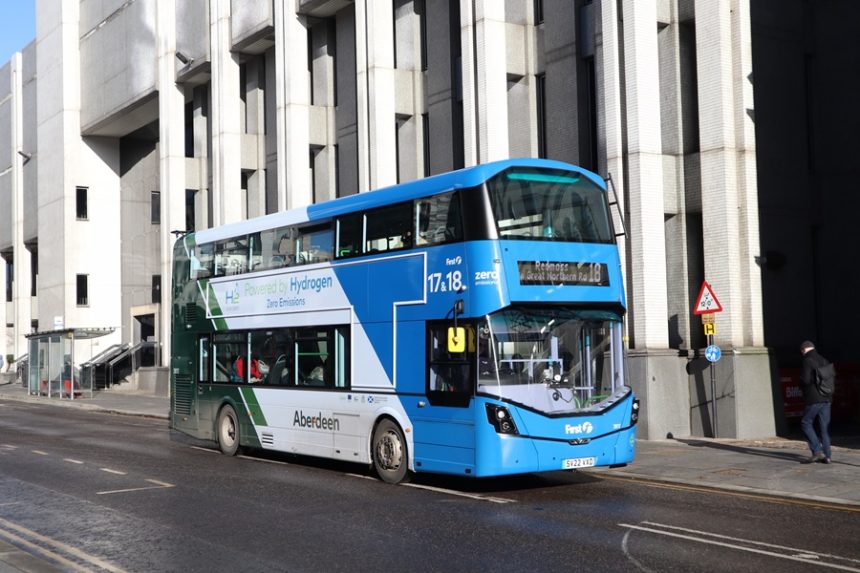
The Aberdeen hydrogen bus project has ended after Aberdeen City Council confirmed that it and First Bus have agreed “a full transition” to battery-electric power for the operator’s fleet there.
That leaves 25 Wrightbus StreetDeck Hydroliner double-decks that are owned by the city council and leased to the operator in limbo. First Bus is in talks about options for the future of those vehicles. A spokesperson for the group notes how it worked closely with the City Council on the hydrogen bus project, “which has now completed.”
A decision to end the hydrogen bus project centres on the future of the Aberdeen hydrogen hub joint venture. A City Council representative says that it and partner BP are in ongoing discussions about the hub’s viability, “prompted by significant advancements in electric vehicle technology.”
They add that as manufacturers and operators increasingly favour battery-electric, demand for hydrogen in transport has diminished. Both First Bus and Stagecoach operate significant fleets of battery-electrics in Aberdeen. In addition to taking delivery of new examples, First has also placed a number of repowered mid-life diesel buses into the city.
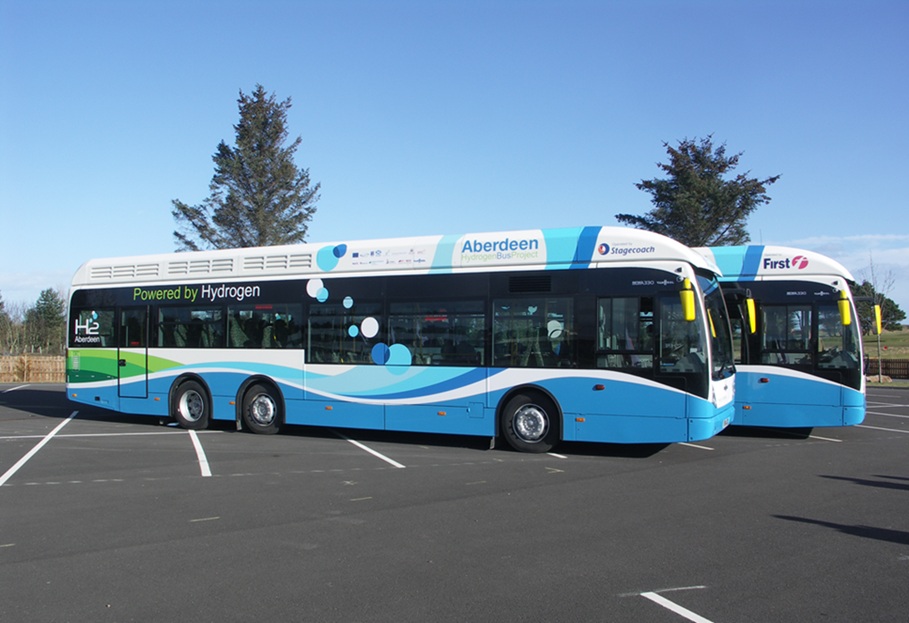
Availability of hydrogen to fuel the StreetDeck Hydroliners has long been problematic. None have seen service since 2024. The newest 10 date from 2022, with the first having arrived in 2020. Aberdeen hosted its first hydrogen buses in 10 long-withdrawn Van Hool A330s from 2014.
Because of the change in position, Aberdeen City Council and BP will negotiate a transfer of the hydrogen hub JV to the local authority, “ensuring Aberdeen’s assets are optimised to facilitate the city’s shift towards low-carbon [battery-electric] transport,” the spokesperson adds.
In addition to ending use of hydrogen buses, the steps agreed will strengthen Aberdeen’s electric vehicle charging infrastructure, reaffirm the council’s dedication to renewable energy, and secure best value for money.
A Freedom of Information response by the Scottish Government in September 2025 notes how the first 15 StreetDeck Hydroliners ordered by Aberdeen City Council were to succeed the Van Hool fleet after its lease with the manufacturer expired.
Funding for those buses came from the Scottish Government (£3 million), the City Council (£2.5 million), and the European Commission through its JIVE project (€2 million).
The local authority’s Kittybrewster hydrogen fuelling station was also upgraded with Scottish Government money to accept double-decks. Holyrood provided a further £4.5 million in 2020 towards the later batch of 10 vehicles and £7.3 million towards the Aberdeen Hydrogen Hub from FY2022/23 to FY2024/25.
An end to the hydrogen bus project in Aberdeen follows a similar conclusion to work in the Liverpool City Region. 20 Alexander Dennis Enviro400FCEVs were delivered to the Liverpool City Region Combined Authority in 2023. Half have never seen service and the others have recorded only sporadic utilisation. All are to be converted to battery-electric power.