













By using this site, you agree to the Privacy Policy and Terms & Conditions.
Accept
routeonerouteonerouteone
  • News
    • Show all
    • Awards & Events
    • Deliveries
    • Environment
    • Exhibitor News
    • Euro Bus Expo
    • Features
    • Legal
    • Minibus and minicoach
    • Operators
    • Opinion
    • People
    • Suppliers
    • Vehicles
  • Vehicles
    • Find a Vehicle
    • ZEV Comparison Tool
    • Sell a Vehicle
    • Vehicle Seller Dashboard
  • Insights
  • Careers
  • Events
    • British Tourism & Travel Show
    • Euro Bus Expo
    • Innovation Challenge
    • routeone Awards
  • Advertise
  • Contact
    • Share your news
    • Subscribe
    • Update Subscription Details
  • Latest Issue
  • SIGN UP
Reading: Keeping brands visible amid AI era and changes in search behaviour
Share
Font ResizerAa
Font ResizerAa
routeonerouteone
  • News
    • Show all
    • Awards & Events
    • Deliveries
    • Environment
    • Exhibitor News
    • Euro Bus Expo
    • Features
    • Legal
    • Minibus and minicoach
    • Operators
    • Opinion
    • People
    • Suppliers
    • Vehicles
  • Vehicles
    • Find a Vehicle
    • ZEV Comparison Tool
    • Sell a Vehicle
    • Vehicle Seller Dashboard
  • Insights
  • Careers
  • Events
    • British Tourism & Travel Show
    • Euro Bus Expo
    • Innovation Challenge
    • routeone Awards
  • Advertise
  • Contact
    • Share your news
    • Subscribe
    • Update Subscription Details
  • Latest Issue
  • SIGN UP
© 2026 routeone News | Powered by Diversified Business Communications UK Ltd
- Advertisement -
routeone > News > Keeping brands visible amid AI era and changes in search behaviour
News

Keeping brands visible amid AI era and changes in search behaviour

Alex Crawford
Published: 20 April 2026
Share
SHARE

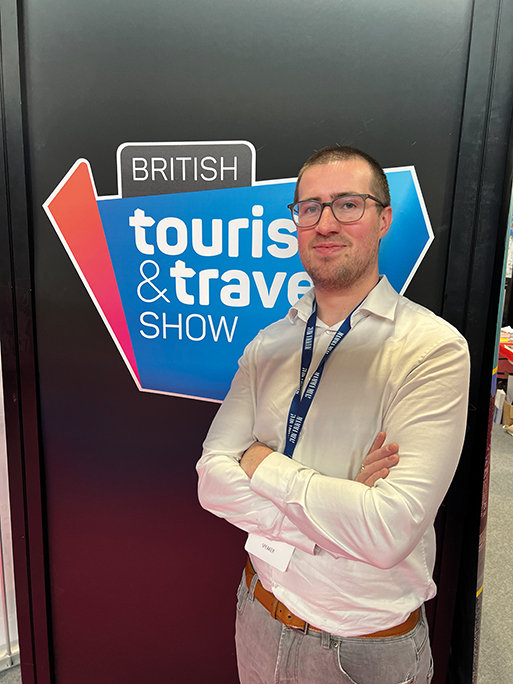
Oliver Sissons, Search Director at digital agency Reboot Online (pictured), presented a session at the British Tourism & Travel Show on 19 March on how artificial intelligence (AI) tools are changing how travellers plan trips.

“Everyone knows by now that search is evolving,” he says. “Large language models (LLMs) are growing in use. There has been a fundamental shift.”

Oliver says travellers now ask AI to plan trips for them based on specific criteria. More information is surrendered to LLMs about likes and dislikes and budget options than was possible through search engines, delivering a new experience.

This is an opportunity for travel organisers, he argues. Visibility is now no longer about ranking in search engines, but in being chosen as a recommended brand by AI.

“Travel brands that get recommended in AI have things in common,” Oliver notes. “They have easy to explore websites. AI models don’t struggle to crawl on the sites or their content; content published on those sites is optimised for AI visibility. They also have a strong brand presence, tend to be known within the travel space (especially by those searching for particular products) and encourage visibility off-site.”

Conversely, travel brands that do not get recommended also have trends in common – inefficient websites that are thin on content and lacking depth on what a company offers.

To start improving visibility, Oliver recommends “generative engine optimisation (GEO)” – setting up a website to be crawled by AI bots, optimising on-site content to reinforce signals owners want AI models to associate with their brand, and reinforcing that brand in the broader space in which it operates. Fast websites will encourage AI models to return, increasing the likeliness they will be referenced in searches.

“On-site GEO is about teaching AI models what we want them to say about us,” explains Oliver. “Your website is the best place to start. Reinforce narratives you want AI models to reference about you. We want to publish content that answers the type of long-tail queries people are asking.”

Off-site GEO, meanwhile, is about proving the truth in what a website says. Publishing fresh and unique expertise on sensitive topics will generate coverage in AI models and give them a reason to reference a brand. “It gives AI a reason to trust you,” says Oliver. “Your website is the best place to begin, alongside social media profiles and industry directories. LLMs reference social communities. 80% of AI citations come from earned media such as journalism — relevant brand mentions from authoritative voices in your space.”


TAGGED:aiartificial intelligencebritish tourism and travel show
Share This Article
Facebook LinkedIn Threads Email Copy Link
ByAlex Crawford
Senior Journalist, routeone
Previous Article Coach and bus legal Q&A: Fuel thefts and pay changes Coach and bus legal Q&A: fuel thefts and pay changes
Next Article A new coach and bus Driver CPC module aimed at tackling violence against women and girls (VAWG) was launched by the Confederation of Passenger Transport (CPT) in Basildon today. The coach and bus sector is stronger when we work together
- Advertisement -

Latest News

Scheduled bus mileage recovery post-2021 in 'a postcode lottery'
Scheduled bus mileage recovery post-2021 is ‘a postcode lottery’
News
Unite in 'full support' for bus drivers that refuse extreme cab heat
Unite gives ‘full support’ to bus drivers who refuse extreme cab heat
News
Route Robin Rapid features updates for faster rail replacement deployment
Suppliers
rail replacement coach peterborough
Early action urged on £1.85m rail replacement accessibility grant
News
- Advertisement -

routeone magazine is the indispensable resource for professional UK coach, bus and minibus operators. The home of vehicle sales and the latest bus and coach job vacancies, routeone connects professional PCV operators with complete and unrivalled news coverage.

  • Terms & Conditions
  • Privacy Policy
  • GDPR Policy
  • Sustainability
  • Advertise
  • Latest Issue
  • Share Your News
routeonerouteone
Follow US
© 2026 routeone News | Powered by Diversified Business Communications UK Ltd