




















I have a few thoughts on the subject of fitting audio-visual systems for the PSV Accessible Information Regulations to coaches.
Firstly, I can appreciate the benefits, even as a confident user of public transport myself. Knowing where the journey is heading to and which stop is coming up next provides reassurance, so that the overall customer experience is enhanced.
This applies even more so for those who are of a more nervous disposition, or suffer from conditions such as anxiety, autism, dementia, hearing and sight problems. Inclusion is important in society, and our industry needs to take reasonable steps.
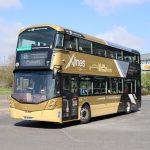
As an operator of both coaches and buses, we are getting on with retrofitting vehicles engaged in service work. By and large buses are well suited for this, having already had LED screens fitted and big open roof spaces. No luggage racks to get in the way. Not that we have been able to get a government grant to help with the cost, as our bus fleet size is just over the arbitrary maximum imposed by the Department for Transport (DfT).
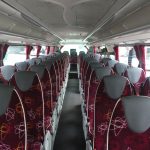
Coaches are a different matter entirely. We have many varieties of interior body design, with curved surfaces, bulkheads, luggage racks, toilets and TVs all taking up valuable space.
We have had a genuine look at the vehicles in our fleet, and each one of them has something that gets in the way of internal LED signs. Put it in one place and people will bang their head on it. Try and put it in another, and the curved surface makes it too difficult. Another location might see it knocked by people’s bags as they go up and down the aisle or get in and out of their seats. You get the picture.
I am not saying you can’t fit internal LED screens on any coaches at all, but some of the challenges with individual body types will be insurmountable. That is the problem with trying to retrofit equipment into a vehicle that it was never designed to incorporate.
By all means stipulate the requirement from new build, but after the initial design opportunity has passed, it becomes much harder to achieve with compromises.
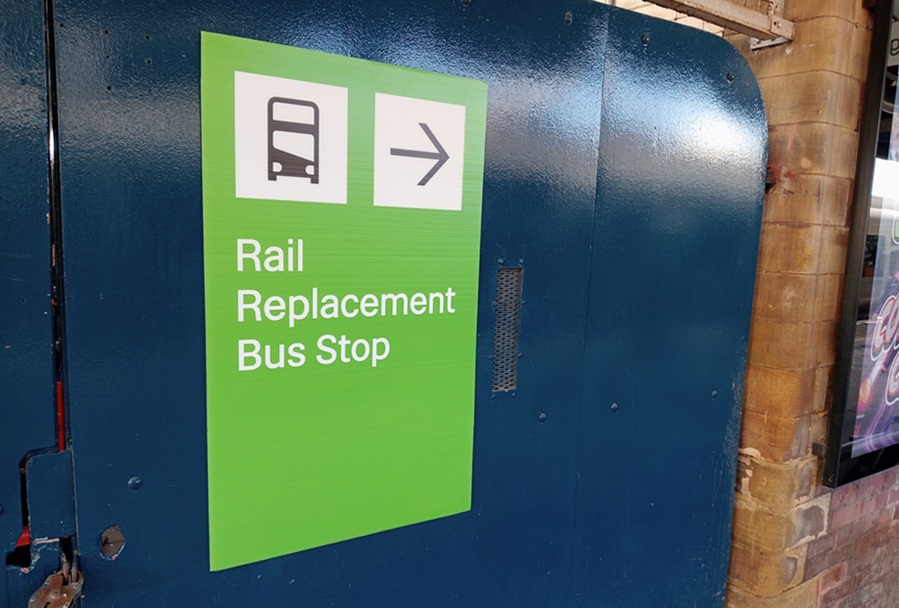
That brings me on to rail replacement. Most of the work in our area is bus-orientated and at weekends, so our trusty Enviros will already be fitted with AV kit due to their day jobs requiring it. However, coach work is an entirely different proposition.
We work for a couple of providers, and we are happy to do the work. The people who allocate the work are nice and genuinely helpful. However, the work can be very sporadic at times, with bookings only around four to six weeks in advance, despite the track works being booked a long way off. I’ve asked the rail providers and DfT a couple of fairly important questions along the way:
-
- If we invest on PSVAIR kits for our coaches at £5,000 to £10,000 a vehicle, will there be any certainty of work?
- Will we be paid any extra for PSVAIR compliant coaches?
On both counts, these questions have not been answered, which in itself speaks volumes. Despite tough words from Lord Hendy and DfT officials, coach operators will be expected to invest in expensive systems for their coaches, with no guarantee of work or an increase in rates. Does that seem fair to the coach industry?
Now, the powers that be may point to the industry having a long time to prepare for PSVAIR. That is true, but so are some counter points. There has also been a long time to answer the industry concerns about consistency of work and pricing.
Furthermore, despite the long lead up, there still isn’t a retrofit product freely available on the market that ticks all of the boxes.
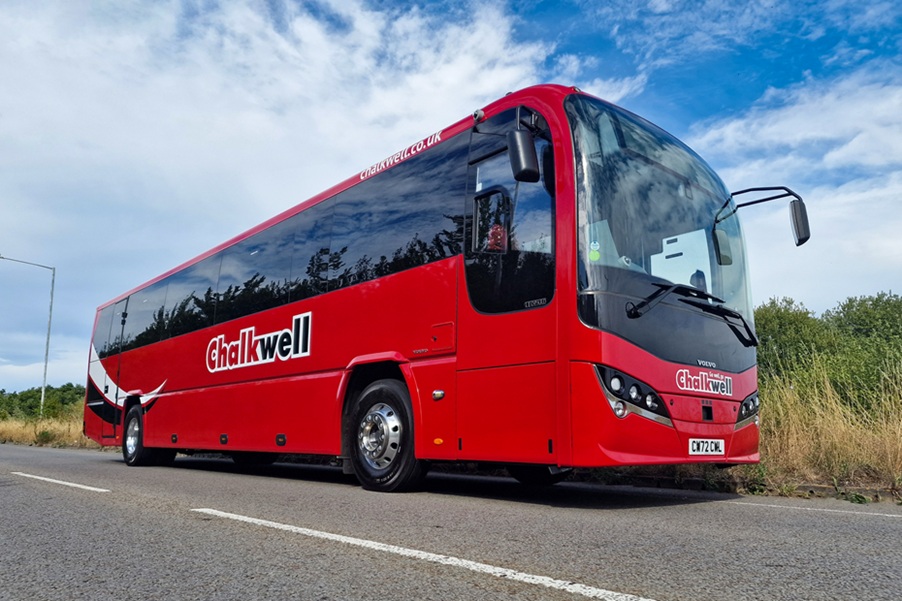
I suspect more by accident than design, SME coach operators will be hit hardest should rail work be withheld for non-compliance. Many of the bigger operators regularly buy new, and/or have express-style coaches that can accommodate audio visual systems in addition to existing destination displays.
It is the independent and family-owned operators that depend on rail work as part of their business mix who stand to be collateral damage.
I’ve recently received an email to say that DfT funding is now available to coach operators to help with the cost of PSVAIR compliance. Any funding is welcome and will lessen the financial burden – however, the greater cost is still with the operator.
It seems we are creeping towards a summer deadline with no certainty. Will there be enough compliant coaches to go around when there is a routine weekend rail job? Who knows at this point?
My feeling is that the most logical outcome would be for some form of compromise. This could be in the form of priority given to those operators who have invested, or acceptance of partial compliance where vehicle design prohibits full compliance. What is the point of sending out a coach with internal LED signs if every rail user over 5ft 9in is going to bang their head on it?
At the moment we live in hope of a common-sense outcome that does what the industry reasonably can to meet the needs of users, but without the blanket compliance that seems to be on the table. Requests for clarity around the volume of work and a pricing uplift certainly have merit.
By working in partnership we can do a lot to improve inclusion outcomes in our sector. However, the risk and the cost is all with the operator as things stand.