






















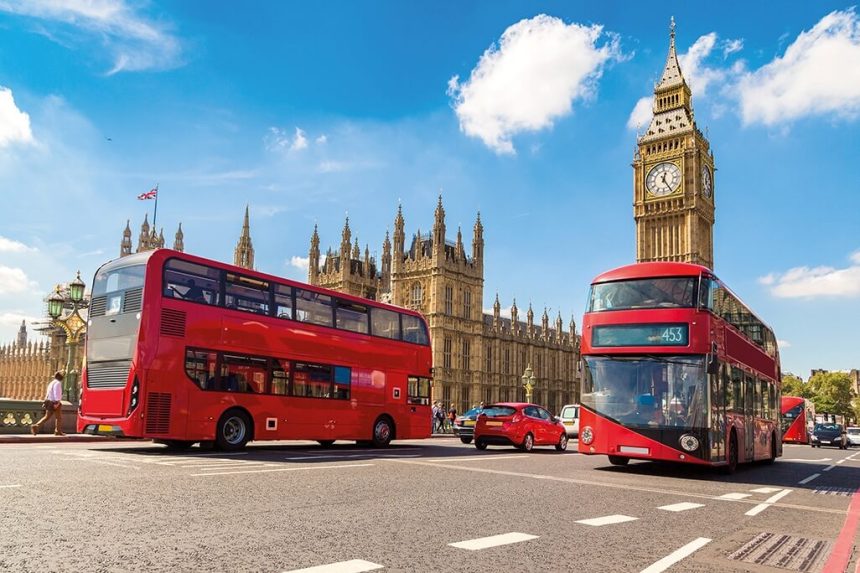
Five-year funding settlements for bus services were pushed by the Transport Committee recently, but the government was notably cautious in its response, our politics writer highlights
It was no surprise that, in its response to the Transport Committee report “Buses Connecting Communities”, the Department for Transport (DfT) firmly rejected the recommendation that the review of the English National Concessionary Travel Scheme should consider piloting a free bus pass for under-22s on the grounds that this was unaffordable.
As I’ve commented recently, it makes no sense for the Transport Committee to make recommendations if there is no money to fund them – and it was perfectly obvious that this particular suggestion was not financially viable.
Equally, it came as no surprise that DfT didn’t accept a number of the Committee’s other recommendations on the grounds that, across the country, there are significant differences in demographics, need, geography, and so on, which made acceptance of the recommendations difficult, if not pointless.
Long-term outlook needed on bus funding
I highlight the Committee’s recommendation that, by the end of this parliament, there should be a minimum level of connectivity, supported by long-term funding, as one example.
How can it make sense to have a minimum level of connectivity across the country when local circumstances are so different?
Overall, when I read DfT’s response to the Committee, it simply highlighted to me that many, perhaps most, of the Committee’s recommendations simply made little or no sense. In my view, there was little value in this inquiry.
However, there is one issue in DfT’s response that I want to highlight. Everyone seems to agree that the bus industry suffers from the short-term nature of government funding and that we need to move to a longer-term funding regime, perhaps a five-year settlement like that enjoyed in the railway industry. DfT has acknowledged this issue.
In my view, there was little value in this inquiry
The Committee recommended DfT should move to a five-year funding settlement by the end of the current spending review period.
In its response, DfT said it “commits to exploring the possibility of a five-year funding settlement for bus services with [HM Treasury] as part of the next spending review”.
“Exploring the possibility” of a five-year settlement seems to fall well short of any commitment to do so, and this choice of words gives plenty of wiggle room for the government to find reasons why five-year funding settlements aren’t possible.
Yet, in responding to the same recommendation, DfT also said that this year’s spending review “includes multi-year funding for bus to give greater certainty to local leaders” and that “this demonstrates the government’s continued commitment… to providing the longer-term funding allocations that LTAs have long asked for by securing funding until the end of this parliament.”
Part of me understands why DfT does not want to commit to a five-year funding settlement at this point in time.
However, if it says that “the government is committed to longer-term funding up to the end of this parliament”, which is still just under four years away, why can’t it now commit to a five-year funding settlement in the next spending review?
On the one hand, it says it is committed to longer-term funding settlements, then says it will only commit to “exploring the possibility” of a five-year settlement. Perhaps I’m over-interpreting this, but this seems to be slightly contradictory.
U-turn looming
Meanwhile, it’s abundantly clear that further tax increases are on the way in the Budget this month. If this comes to pass, it will be the first increase in income tax since 1975.
The political risks here are significant as an increase in income tax was explicitly ruled out in Labour’s manifesto for the last general election, and the electorate doesn’t take kindly to such explicit U-turns.
Further, on multiple occasions since the election, both the Prime Minister and Chancellor have explicitly ruled out increases in income tax – and indeed in VAT and national insurance.
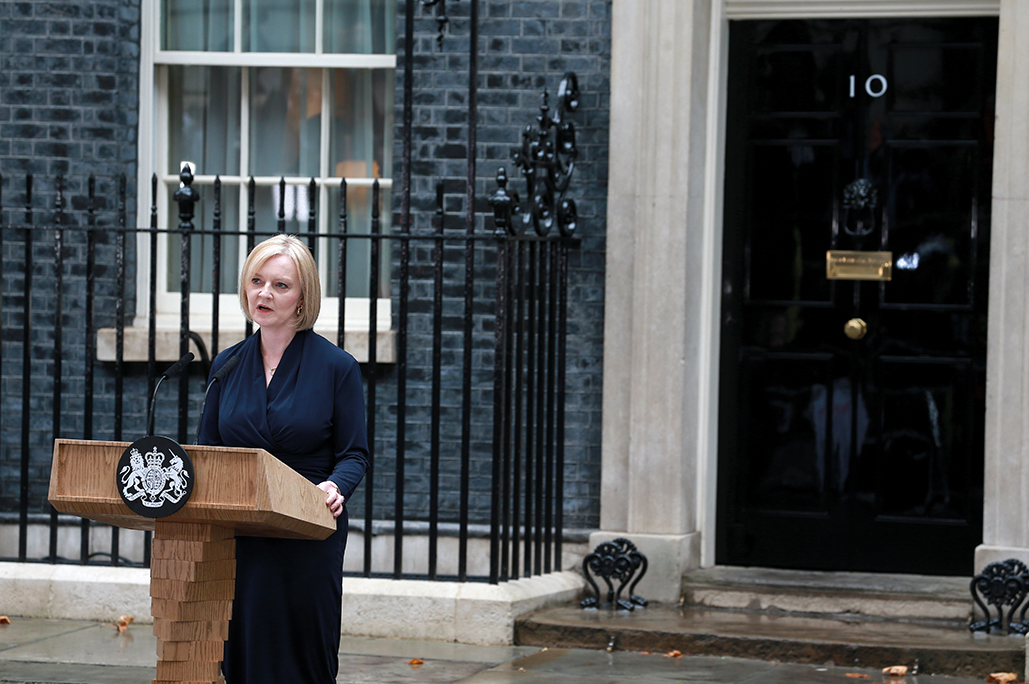
Indeed, in her Budget last November, when we also saw major tax increases, the Chancellor explicitly said that the government has “now drawn a line under the inheritance that I faced.
Public finances are now on a firm footing… which means we’re not going to have to come back for more.” However, it’s clear that the public finances aren’t on a firm footing.
The blame game
In an extraordinary early-morning press conference on 4 November, when the Chancellor sought to prepare us for a breach of a solemn and oft-repeated election promise on tax, we were told that Rachel Reeves wanted to be honest with the British public. But she was being disingenuous, to put it mildly.
The difficulties she says she now faces which necessitate this manifesto breach – the war in Ukraine, Brexit, poor productivity, soaring debt – were all well-known at the time of her last Budget.
Labour MPs are distinctly queasy at the idea of making such a major breach of a central manifesto commitment
These are not new issues. And she is still blaming the Tories despite having said she straightened out the government’s finances last year. She cannot have it both ways.
In her Budget last year, the Chancellor changed her borrowing rules in order to spend an extra £70 billion. That’s £70 billion every year for the rest of this parliament, described by the chairman of the Office for Budget Responsibility as one of the largest increases in spending, tax and borrowing of any single fiscal event in history. Perhaps this is why taxes have to go up again.
Political suicide?
I’m not making a party political point; I’m simply highlighting the facts. Labour MPs are distinctly queasy – with good reason – at the idea of making such a major breach of a central manifesto commitment.
If the Prime Minister and Chancellor proceed as expected, they might just seal the fate of this government even with four years until the next election.