





















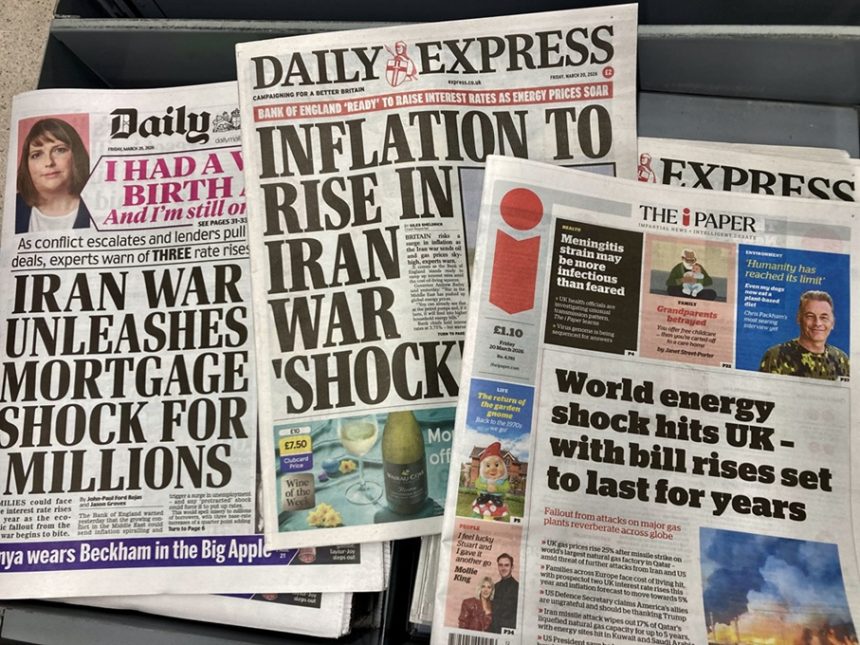
The Middle East war has forced people to throw many well-laid plans into the air. The UK’s coach and bus sector certainly hasn’t been immune to the extra uncertainty that has been created.
As I write, the Brent crude oil price remains well over US$100 a barrel and operators will be well aware that nobody can forecast its future trajectory – or that of associated oil products – with any confidence.
We might not know what all the fallout from this upheaval will be, but the signs are that the UK government (and many others) will take the opportunity to double-down on plans to accelerate the transition away from fossil fuels and reduce the country’s vulnerability to future shocks of this sort.
It’s only been a few years since Russia’s attack on Ukraine caused another energy price spike. Fatih Birol, Executive Director of the International Energy Association, has warned that the Iran war has already had the equivalent impact in scale to the fallout from the Ukraine attack and the twin 1970s oil shocks combined.
In a major announcement, Chancellor Rachel Reeves and Energy Secretary Ed Miliband have laid out plans to accelerate the UK’s energy transition. That includes measures to decouple the electricity price from that of gas, which should mean cheaper renewable electricity in future.
The government’s plans for UK transport’s transition were boosted by news that new electric car prices have, on average, fallen below those of their internal combustion engine equivalents for the first time.
With electricity cost-per-mile also falling well below diesel cost-per-mile, even for drivers who have to use the public charging network, the economic case for electrification of the passenger car sector is surely now irresistible.
There are clear indications that technical progress and cost reductions will transfer well beyond passenger cars.
Chinese producers are leading the charge and (as routeone reported in April) one of those, BYD, is planning to further diversify its electric product offering, with a new battery-electric coach. Many other products are in the pipeline from a variety of manufacturers.
Though the geopolitical upheaval is creating great uncertainty for all of us, there are plenty of ‘straws in the wind’ to suggest that the long-term impact will be to accelerate the energy transition rather than slow it down.
Heightened energy security concerns are clear and obvious as fossil fuel product costs have spiked and are likely to remain high for some time.
There is evidence that governments (including in the UK) are compressing decision-making timelines, speeding up permitting, and increasing investments in clean technologies. There are also signs of accelerated adoption of electric vehicles and smart grids in Europe and Asia.
While nobody enjoys the uncertainty (and we surely have many reasons to hope that the current ceasefire will hold and the war will end soon), major disruption on this scale is often a precursor to significant change.
For more about Zemo’s work supporting the coach and bus transition or to find out about membership, visit the Partnership’s website.