




















The Scottish, Welsh, and local election results ripped apart the traditional political order in the UK, writes our political insider
Political commentators have a tendency to exaggerate the impact of local elections, given that they historically represent only a mid-term protest vote against an incumbent government, safe in the knowledge that the government will remain in place, and that the electorate can return to normal behaviour come the next general election. Not this time.
It’s hard to find appropriate adjectives to describe the scale of the collapse of the Labour vote.
History made in Wales
Perhaps the easiest thing to do is to look at the results of the Welsh Senedd elections. Wales was the birthplace, the very soul, of the Labour Party.
The home of Keir Hardie, its founder, of Nye Bevan, the founder of the National Health Service, and of leaders such as Michael Foot and Neil Kinnock.
However, on 7 May, the Welsh electorate turned its back on the Labour Party in dramatic style.
Plaid Cymru may well have secured the largest number of MSs, but the fact that the Welsh electorate was also willing to return 34 Reform UK MSs is nothing short of breathtaking.
Labour came a distant third with just nine members. It’s truly extraordinary.
SNP on the rise
In Scotland, Labour failed to capitalise on the SNP’s difficulties over the past few years.
Two years ago, all the signs were that Labour was well on the way to recovery north of the border.
But it came a distant second equal, far behind the SNP, returning just 17 MSPs to the Scottish Parliament – the same total as Reform UK.
And the story is repeated across the north of England, where Labour stronghold after Labour stronghold fell not to the Lib Dems or to the Conservatives, but to Reform. Look at the results in Sunderland, Barnsley, Wakefield or Calderdale, where Labour was routed.
It is striking that, 10 years after the Brexit referendum, its shadow still hangs over the way the electorate is voting. Reform performed best in areas which voted for Brexit in 2016, and much less so in areas that voted Remain.
But this is different. The referendum was not about electing our local or national governments. On 7 May it was exactly that – traditional Labour voters actually voting for Reform politicians, decisively and in large numbers.
Conservative woe
For the Conservatives, the results weren’t much better. Leader Kemi Badenoch may claim that the results show signs of recovery.
But the party has lost 557 councillors. That’s recovery?
In truth, the party has gone backwards since the general election. It should have capitalised on Labour’s woes, but it didn’t.
Yes, it saw off strong challenges from Reform in places such as Bexley and Harlow, against expectations. And it took back control of Westminster from Labour.
But, in Westminster, its share of the vote went down and it only won because Labour’s decreased much further.
The party failed to take control of Wandsworth. And Conservative support in its heartlands such as Hampshire, Surrey and Sussex collapsed.
Westminster aside, I can’t find a single council where the Conservatives took control from Labour. But Reform did.
Changing of the guard
I could go on. But I will make a few general observations. First, the fracturing of party loyalty, first seen at the 2024 General Election, and then again in last year’s local elections, has been reinforced and seems set to stay.
This fracturing hasn’t been towards any kind of political centre ground but to the parties on the extremes of the political spectrum.
It has been accepted wisdom for many years that in the UK political parties only win elections from the centre ground. That no longer seems to be the case. In this context, note that the Lib Dems performed only modestly well, picking up just 155 extra councillors.
Secondly, our first-past-the-post system finally seems to be helping the insurgent parties, rather than acting against them.
At the 2024 General Election, Reform secured 14.3% of the vote share but secured just five MPs; the Greens secured four MPs on a vote share of 6.7%.
On 7 May, Reform’s vote share fell by five percentage points to 26% compared to the May 2025 elections, but it secured an extra 1,449 councillors. The Greens’ vote share was 18% and it secured an extra 441 councillors.
I wonder if Reform and the Greens will support proportional representation now!
Trouble for Starmer
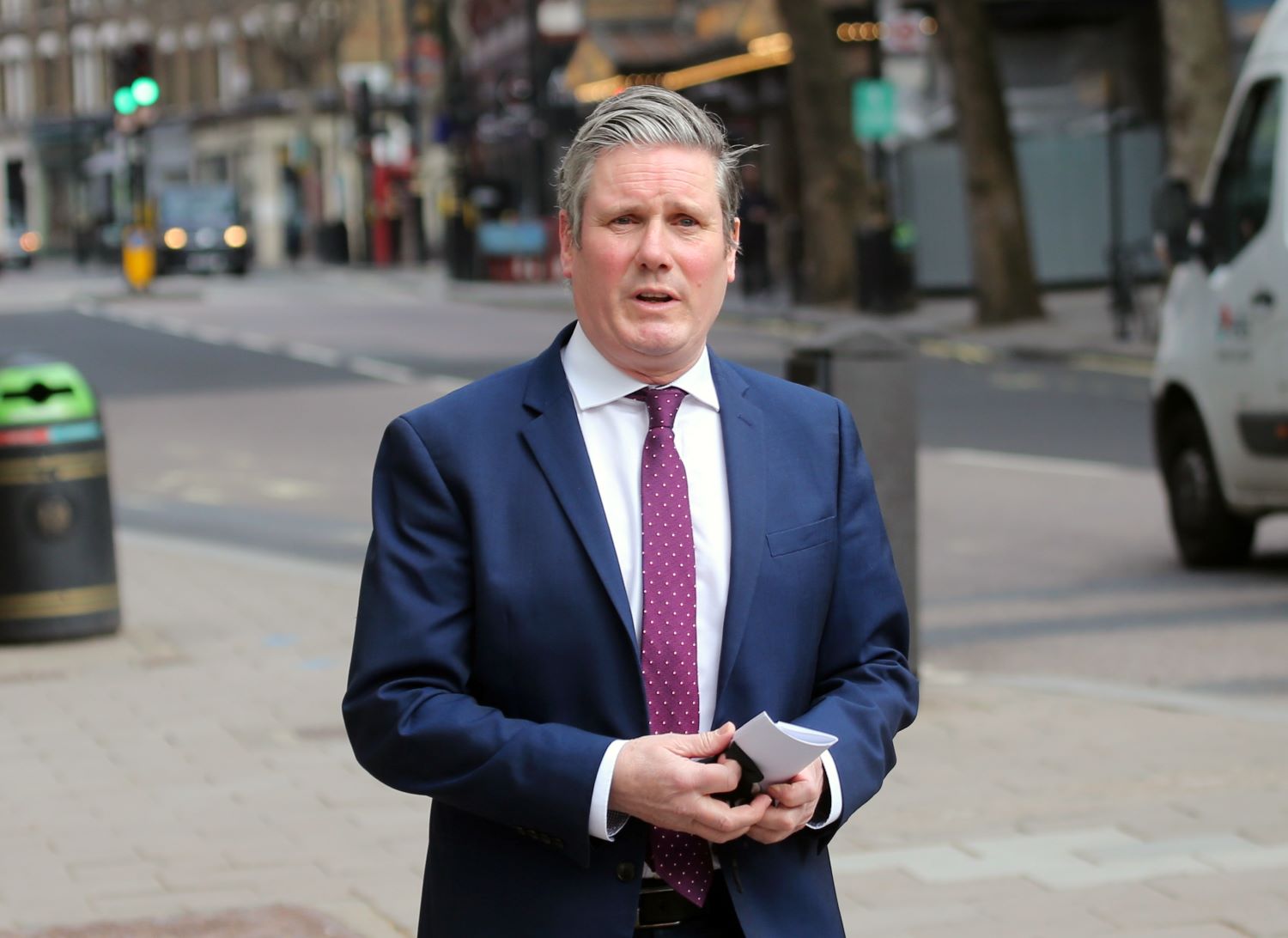
What does this mean for Keir Starmer’s leadership? As I write, none of the principal leadership challengers have made a move, almost certainly not because they don’t want to, but because they can’t.
Andy Burnham isn’t yet an MP, Angela Rayner’s tax affairs aren’t resolved, and Wes Streeting doesn’t want to be the first out of the blocks.
It seems a leadership challenge won’t happen in the short term. However, once Mr Burnham secures a safe seat and wins a by-election – although, these days, I wouldn’t take that for granted – then a leadership challenge will surely come.
Meanwhile, Mr Starmer is seeking to fight back with yet another “reset” speech (delivered on 11 May) and a new legislative programme following the King’s Speech on 13 May.
I doubt this will work. Previous “resets” have failed so why should this one succeed?
And he has lost all authority over his party and demonstrated clearly that his planned cabinet reshuffle has been cancelled. He simply doesn’t have the authority to carry it out.
Instead, he has brought back old-timers in Gordon Brown and Harriet Harman as “envoys”.
This smacks of desperation and is a poor substitute for a reshuffle. It’s raised many an eyebrow in the parliamentary party, best reflected by one Labour MP’s observation that Mr Starmer has brought back the man who brought back Peter Mandelson. Quite.