



















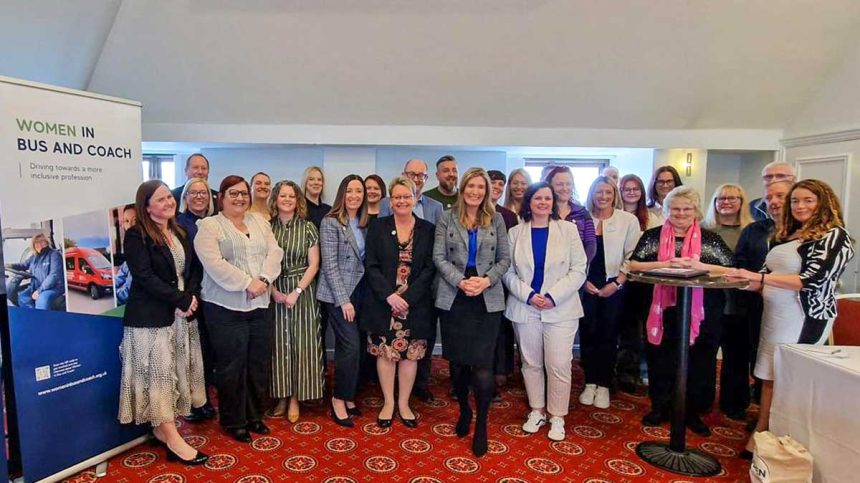
The launch of the Women in Bus and Coach (WiBC) Midlands Region marks an important step in strengthening connections across the coach, bus and community transport sectors.
It felt particularly fitting to launch in the Midlands, not just because of the people in the room, but because of what the region represents.
Geographically, it sits at the heart of the country’s transport network, where north meets south and east meets west. So much of what keeps this country moving passes through here.
There is also real momentum. Investment in bus services, wider public transport infrastructure and long-term regional strategies are creating opportunity, not just for networks, but for people. And that is where the focus needs to be.
Because while we often focus on vehicles, technology and net-zero, the future of our sector depends on whether we have the people to sustain it.
Across the industry, the message is consistent. We do not have the workforce we need. Skills shortages, particularly in driving and engineering roles, continue to challenge operators. At the same time, the workforce remains heavily unbalanced. While around half of bus passengers are female, women make up only a small proportion of the workforce. That is not just a diversity issue. It is a sustainability issue.
A sector cannot be resilient if it draws from a narrow talent pool. It cannot be future-ready if people do not see themselves reflected in it. And it cannot grow if it is not actively attracting the next generation.
This is why initiatives like WiBC and the growth of regional networks like the Midlands matter.
These networks bring people together to share experiences, build confidence and support one another. They create visibility for women already thriving in the sector and help change the story we tell about our industry.
Because the truth is, this is a sector with real opportunity. It offers variety, stability, progression and the chance to make a difference. Yet too often, we do not say that loudly enough.
If we want to attract new talent, particularly women, we need to be clearer about what this sector offers. Representation matters. If people can see themselves in an industry, they are far more likely to consider it as a career. But attraction is only part of the challenge — retention matters just as much.
Creating inclusive workplaces where people can build long-term careers means thinking differently about flexibility, progression, training and culture. It means recognising that
inclusion is not a one-off initiative, but something that needs to be embedded across organisations.
Building a more representative and resilient workforce is not a ‘women’s issue’. It is a sector-wide priority that requires collaboration between operators, suppliers, policymakers, and individuals, male and female, across the industry.
The launch of the Midlands Region is a step forward and the start of a stronger, more connected network.
Operators, suppliers and stakeholders across the Midlands who want to get involved or hear more should contact hello@womeninbusandcoach.org.uk
This is just the beginning. As our regional networks grow, we are already looking ahead to further expansion across the UK. Because change happens when people show up, speak up and support one another. And if we get that right, we will strengthen both our workforce and the future of our sector.