



















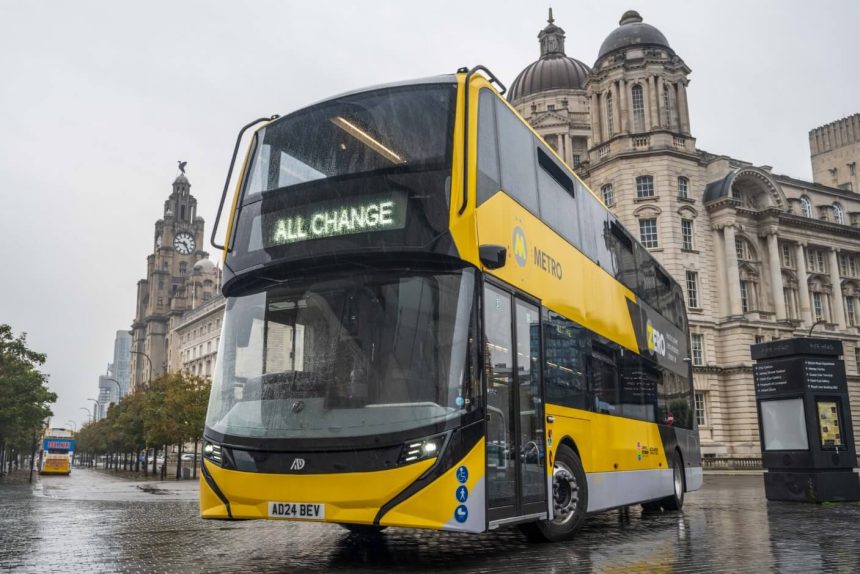
Liverpool City Region Combined Authority (LCRCA) has revealed details of some of the route and timetable improvements set to take place across the area when bus franchising begins to be rolled out next autumn.
The authority promises the public will benefit from more frequent and later running services, and better links to hospitals and workplaces from day one of service reregulation.
St Helens will be the first area of the Liverpool region to have bus services franchised, followed closely by the Wirral.
The bus network will be extended to Sefton in July 2027 and Liverpool and Knowsley two months later.
Improvements set for the second phase in Sefton, Liverpool and Knowsley include better services to hospitals such as Whiston, Aintree, Alder Hey, the Royal, Broadgreen and Liverpool Women’s.
Work hubs including Knowledge Quarter, Knowsley Industrial Park and Huyton Industrial Estate are also set to be better connected as part of those plans.
Later running and more frequent services will also be implemented as LCRCA works towards complete franchising across the region by the end of 2027.
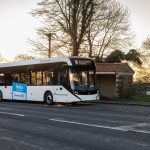
More than 100 battery-electric buses will be put into service as part of hundreds of millions of pounds of investment into the network in Liverpool, the authority says.
Among the route enhancements detailed, service 3 will be extended to Whiston Hospital, 239 will be revised to serve Huyton Bus Station and a Southport circular service will be introduced to connect to Southport and Formby District General Hospital.
Liverpool City Region Mayor Steve Rotheram says: “Buses outside London were privatised in 1985 in a failed experiment for public transport.
“I am absolutely delighted to be rolling back the 1980s in our city region, starting with St Helens and Wirral before continuing this work across the rest of the region.
“A regular, reliable, and affordable bus network should be the backbone of any public transport system, and for far too long, services in our area have been shaped by the priorities of private operators instead of passengers.
“That’s why I took the historic decision to bring our buses back where they belong: under public control.
“We’ve already begun delivering on that promise, with this second phase marking the final step in our journey to taking back control.
“It will mean that, for the first time in almost 40 years, we will have the power to set fares, routes, and timetables – and start putting the public back into public transport.”