



















As MPs discuss the origin of our buses, has the new UK Bus Manufacturing Expert Panel made a difference?
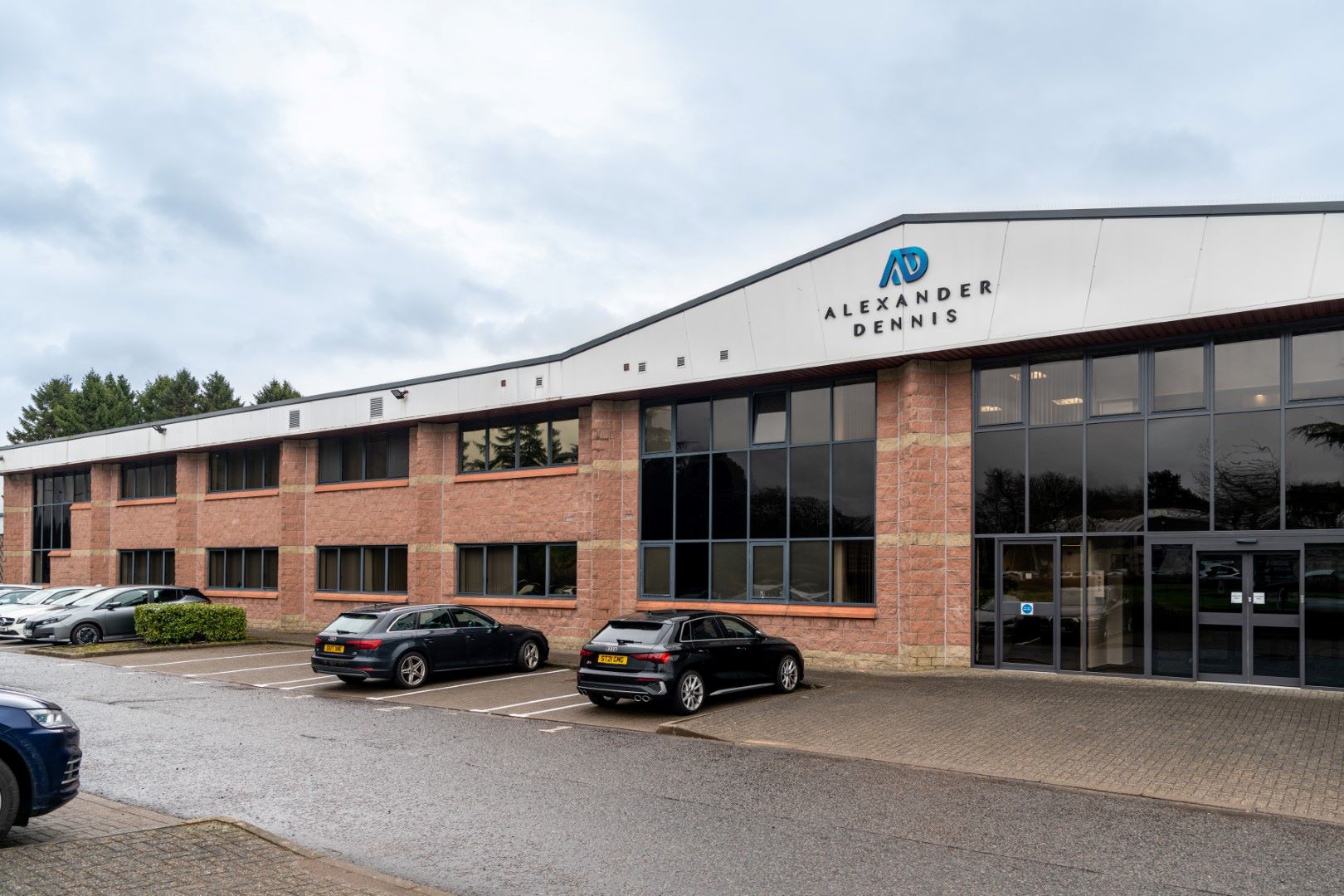
Euan Stainbank, the Labour MP for Falkirk, misses no opportunity to represent the interests of bus manufacturer Alexander Dennis, which is based in his constituency.
Hardly a week goes by when he isn’t tabling written questions imploring ministers to develop a “buy British” policy when it comes to bus manufacturing.
Further, not for the first time, he secured a Westminster Hall debate on 27 January to press the case for a stronger government policy to promote UK bus manufacturing against overseas competition – mainly from China.
He highlighted there that, while 694 more zero-emission buses were registered in Britain in 2025 compared to 2024, 167 fewer buses were built in the UK in 2025 compared to 2024.
Mr Stainbank is a passionate advocate for Alexander Dennis and its workforce – as he should be. I have absolutely no problem with his repeated calls on ministers to promote the interests of UK bus manufacturers.
He referenced the US, for example, and its Build America, Buy America Act, which mandates 70% local content for all rolling stock
However, I wonder if his persistence, pretty much since the day he was elected as an MP at the 2024 General Election, is sensible – legitimate as it may be.
Ministers and officials in the Department for Transport must surely tire of his relentless stream of parliamentary questions and debates, not least because the issue is well understood by them.
It’s not as if he is raising any new issues or providing clear evidence of unfair competition from overseas manufacturers.
Policy examples
That said, and to be fair to Mr Stainbank, in his recent Westminster Hall debate, he highlighted that other countries have stronger social-value or local-content policies compared to the UK.
He referenced the US, for example, and its Build America, Buy America Act, which mandates 70% local content for all rolling stock, and Germany, where the government has recently started to enforce a 50% rule for contract value in procurement from the EU or other countries with a free-trade agreement.
His point is that, if other countries can implement policies to promote domestic suppliers, so could the UK.
The interesting thing is that Wrightbus, which was on the brink of collapse in 2019, has turned things around following its acquisition by the Bamford family and is now a thriving business winning plenty of orders.
I don’t know how much money the Bamfords may have poured into the business when they took it over, but that’s fine by me – it’s their money after all!
It may be that the owner of Alexander Dennis, NFI Group, does not have the will to prop up the bus manufacturer – hence the threat of closure of its Scottish plants last year before the Scottish Government announced support for the business with a £4 million 26-week furlough scheme.
It’s also worth reminding ourselves that Alexander Dennis sources many of the components for its electric buses from China – a point I have made before.
The issues are, perhaps, not quite as black and white as Mr Stainbank might wish us to believe.
UK Bus Manufacturing Expert Panel promise
Still, no matter. The UK Bus Manufacturing Expert Panel will soon publish a 10-year pipeline of bus orders which will, or should, give domestic bus manufacturers a far greater degree of certainty over their future order books.
However, let’s remember this is only a pipeline, and manufacturers will still have to bid for and win these orders when they come to market. In and of itself, the pipeline is no silver bullet for UK manufacturers.
So, I was a touch puzzled when the Minister for Roads and Buses, Simon Lightwood, in responding at Mr Stainbank’s Westminster Hall debate, said that the pipeline would be “transformational, giving our domestic manufacturers the confidence to hire, innovate and compete globally”. Really, Minister? Don’t they have to actually win the orders first?
ZEBRA contribution
The Minister also said that, via the Zero Emission Bus Regional Areas scheme, the department had supported the roll-out of 2,500 zero-emission buses and the associated infrastructure.
He added: “That real investment is already translating into orders, the majority of which have been won by UK manufacturers”. That comment seems somewhat at odds with Mr Stainbank’s claim that fewer buses were manufactured in the UK in 2025 compared to 2024.
In the Westminster Hall debate, Mr Lightwood also told us that, at the next meeting of the Expert Panel in February, a report will be published detailing best practice, and that he will “strongly encourage mayoral authorities to apply that best practice consistently”.
The UK Bus Manufacturing Expert Panel will soon publish a 10-year pipeline of bus orders which will, or should, give domestic bus manufacturers a far greater degree of certainty
I must confess I’m not entirely sure what “best practice” in bus manufacturing looks like. Nor am I sure from this remark whether the minister is referencing “best practice” in procurement or in actual manufacturing. I assume the former.
Of course, as mayoral authorities increasingly roll out new bus franchising schemes, they rather than the operators will be the procurers of new zero-emission buses, so part of me understands why the minister specifically references mayoral authorities here.
But part of me would also like to think that mayoral authorities would adopt best practice as a matter of routine rather than having to be told what it looks like by an expert panel. Perhaps I’m just naive.
More Labour woe
I have resisted the temptation to comment at length on the continuing difficulties surrounding this government and Sir Keir Starmer’s premiership following the latest claims around Peter Mandelson.
Now that the police have launched an investigation into this sorry affair, I have little doubt that heads are going to roll. But whose, and how many, we shall just have to wait and see.