












By using this site, you agree to the Privacy Policy and Terms & Conditions.
Accept
routeonerouteonerouteone
  • News
    • Show all
    • Awards & Events
    • Deliveries
    • Environment
    • Exhibitor News
    • Euro Bus Expo
    • Features
    • Legal
    • Minibus and minicoach
    • Operators
    • Opinion
    • People
    • Suppliers
    • Vehicles
  • Vehicles
    • Find a Vehicle
    • ZEV Comparison Tool
    • Sell a Vehicle
    • Vehicle Seller Dashboard
  • Insights
  • Careers
  • Events
    • British Tourism & Travel Show
    • Euro Bus Expo
    • Innovation Challenge
    • routeone Awards
  • Advertise
  • Contact
    • Share your news
    • Subscribe
    • Update Subscription Details
  • Latest Issue
  • SIGN UP
Reading: The cleanest, lowest pollution transit mode we have: light rail
Share
Font ResizerAa
Font ResizerAa
routeonerouteone
  • News
    • Show all
    • Awards & Events
    • Deliveries
    • Environment
    • Exhibitor News
    • Euro Bus Expo
    • Features
    • Legal
    • Minibus and minicoach
    • Operators
    • Opinion
    • People
    • Suppliers
    • Vehicles
  • Vehicles
    • Find a Vehicle
    • ZEV Comparison Tool
    • Sell a Vehicle
    • Vehicle Seller Dashboard
  • Insights
  • Careers
  • Events
    • British Tourism & Travel Show
    • Euro Bus Expo
    • Innovation Challenge
    • routeone Awards
  • Advertise
  • Contact
    • Share your news
    • Subscribe
    • Update Subscription Details
  • Latest Issue
  • SIGN UP
© 2026 routeone News | Powered by Diversified Business Communications UK Ltd
- Advertisement -
routeone > Readers' Letters > The cleanest, lowest pollution transit mode we have: light rail
Readers' Letters

The cleanest, lowest pollution transit mode we have: light rail

routeone Team
Published: 16 March 2026
Share
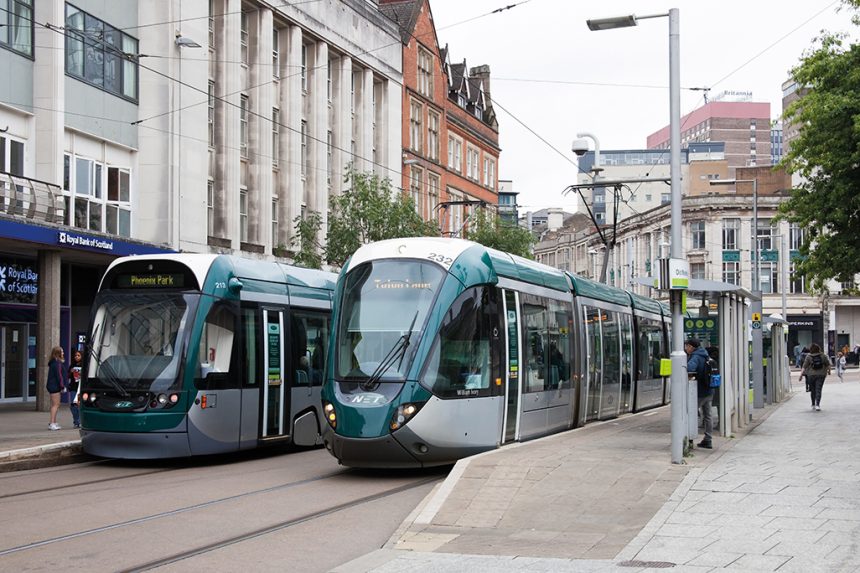
Trams on South Parade in Nottingham city centre
SHARE

Graham’s Vidler’s opinion piece on light rail last year underestimated the single most important advantage that modern rail — especially very light rail (VLR) — offers over buses: a dramatic reduction in harmful particulate emissions.

Rubber tyred vehicles, even electric buses, produce large quantities of non-exhaust PM₂.₅ and PM₁₀ particulates from tyre wear, brake abrasion and road surface erosion. These particles penetrate deep into the lungs and bloodstream and are directly linked to heart disease, respiratory illness and premature mortality.

A 2019 UK Government study showed that non-exhaust particulates now exceed exhaust emissions in urban environments — a problem that buses, however ‘clean’, cannot solve.

VLR and tram systems avoid this entirely. Steel wheel/steel rail produces more than 90% fewer particulates compared to a bus of equivalent passenger capacity.

Rail vehicles generate almost no tyre wear, minimal brake dust (especially with regenerative braking), and protect road surfaces from heavy abrasion.

Environmental benefit is multiplied again by rail’s much longer service life. A tram or VLR vehicle typically runs 30–50 years, compared with much less years for a bus. Fewer replacements means drastically lower embedded carbon, fewer manufacturing cycles, and far less end-of-life waste.
A single VLR set can also deliver exceptional efficiency of operation: one driver, and up to 300 passengers, something no bus can match.
The emissions per passenger moved are therefore not just lower — they are orders of magnitude lower.

The Light Rail Transit Association’s (LRTA) discussions recently highlighted historic civil engineering and utility diversion costs for tram schemes — but VLR directly tackles these issues. Its lightweight modular track form, shallow construction depth, and reduced utility conflict cut embodied carbon as well as cost, addressing many of the same barriers identified by David Cockle in the LRTA thread.

Meanwhile, bus patronage has been in decline since 1962 — passengers have voted with their feet into their cars — while every UK city that has reintroduced trams has seen ridership surge, demonstrating clearly that rail, not buses, is what tempts people away from polluting car travel.
VLR is not a competitor to buses. It is the mode that finally solves the environmental and public health problems rubber tyred systems cannot.

James Harkins

Campaign Group and Clean and Green Transport Solutions
Warrington
TAGGED:light railtrams
Share This Article
Facebook LinkedIn Threads Email Copy Link
Previous Article Slow bus speeds in the capital contradict the often-repeated view about franchising London’s bus model isn’t a silver bullet for service improvements
Next Article Bus franchising must avoid return of 'illogical' fares boundaries Bus franchising must avoid return of ‘illogical’ fares boundaries
- Advertisement -

Latest News

Arriva bus depot colleagues set for Yorkshire Air Ambulance charity walk
Arriva bus depot staff set for Yorkshire Air Ambulance charity walk
People
Unfolding NEET disaster: coach and bus is part of the solution
Editor's Comment
Consider the passenger when measuring bus network performance
Bus network performance: passenger experience is the lead factor
Opinion
Kleandrive sold out of administration to Palmer Energy Technology
Suppliers
- Advertisement -

routeone magazine is the indispensable resource for professional UK coach, bus and minibus operators. The home of vehicle sales and the latest bus and coach job vacancies, routeone connects professional PCV operators with complete and unrivalled news coverage.

  • Terms & Conditions
  • Privacy Policy
  • GDPR Policy
  • Sustainability
  • Advertise
  • Latest Issue
  • Share Your News
routeonerouteone
Follow US
© 2026 routeone News | Powered by Diversified Business Communications UK Ltd