



















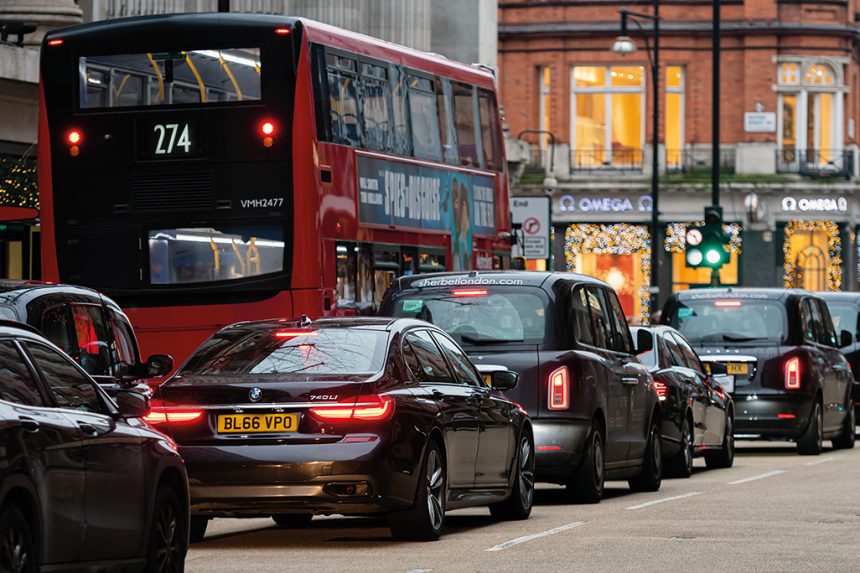
Slow bus speeds in the capital contradict the often-repeated view about franchising
What do mobility scooters, canal narrowboats and me (in a 10k race) have in common? They all move, roughly speaking, at 7mph.
That’s also the typical speed of a London bus these days according to the Confederation of Passenger Transport’s (CPT) Cost Monitor, which brings together data collected on the ground by operators.
The latest CPT Cost Monitor reports that speeds in London have fallen from 7.8mph to 7.1mph over the last three months. This is the latest sign that congestion on main roads around the capital is eating into the efficiency and productivity of bus operations.
It’s inevitable that navigating narrow streets in our busy, crowded capital city is going to be slower than moving around the rest of the country. What’s alarming is that the gap is widening – speeds in the rest of Britain are unchanged at 11.8mph and some regions – notably the south west and north east – are on an improving trend.
It pains me to highlight this point because the last thing any of us want to do is to talk down the attractiveness of travelling by bus. And London’s bus network remains, on many levels, world-standard – with terrific operators, extensive reach and impressive regularity. But something has to give. Every decrease in speed means that a bus takes longer to complete its route – leading to extra cost for bus companies.
Indeed, our Cost Monitor data finds that a bus driver in London covers just 407 kilometres per week – compared to an average of 535 kilometres for the whole of Britain. It’s no surprise, then, that profit margins are tightening to the point where Transport for London is struggling to find bidders for some of its routes.
Stepping back a bit, the challenges afflicting London’s bus network come at a timely moment. So often, politicians – particularly on the left – point to London’s contracted network as a template for other cities to emulate. In light of the Bus Services Act, mayors and local authorities across the country are eyeing the capital’s buses – how often have we heard the words “we want London-style buses” uttered at town halls around the nation?
The reality is that, under a contracted system, London has the slowest bus speeds, and the least efficient bus network in the country. While I’m not arguing that one directly leads to another, this is a very clear riposte to those who think franchising will solve all. It’s far from a panacea.
Rather than tinkering everywhere with the regulatory structure of buses, local authorities would better serve passengers by focusing on better road design and improved co-ordination of street works to make journey times as short as possible.
There is plenty that can be done to improve the situation in the capital, and it’s positive that, in general, London bus operators have a collaborative, rather than attritional, relationship with Transport for London. Top of the list should be bus priority wherever possible, to avoid bus passengers getting stuck behind queues of cars and minicabs.
Bus speeds are, and will remain, a priority nationwide for CPT. Our manifestos for the Scottish and Welsh elections have speedier buses as a central “ask”. And, later this year, we’ll be publishing England-wide research on the benefits of faster buses to economic growth.
Our goal must be to make buses quicker and more appealing than any of the alternatives – including cars, e-bikes and, of course, me running. That’s the way to drive productivity, investment and, ultimately, passenger growth.