

















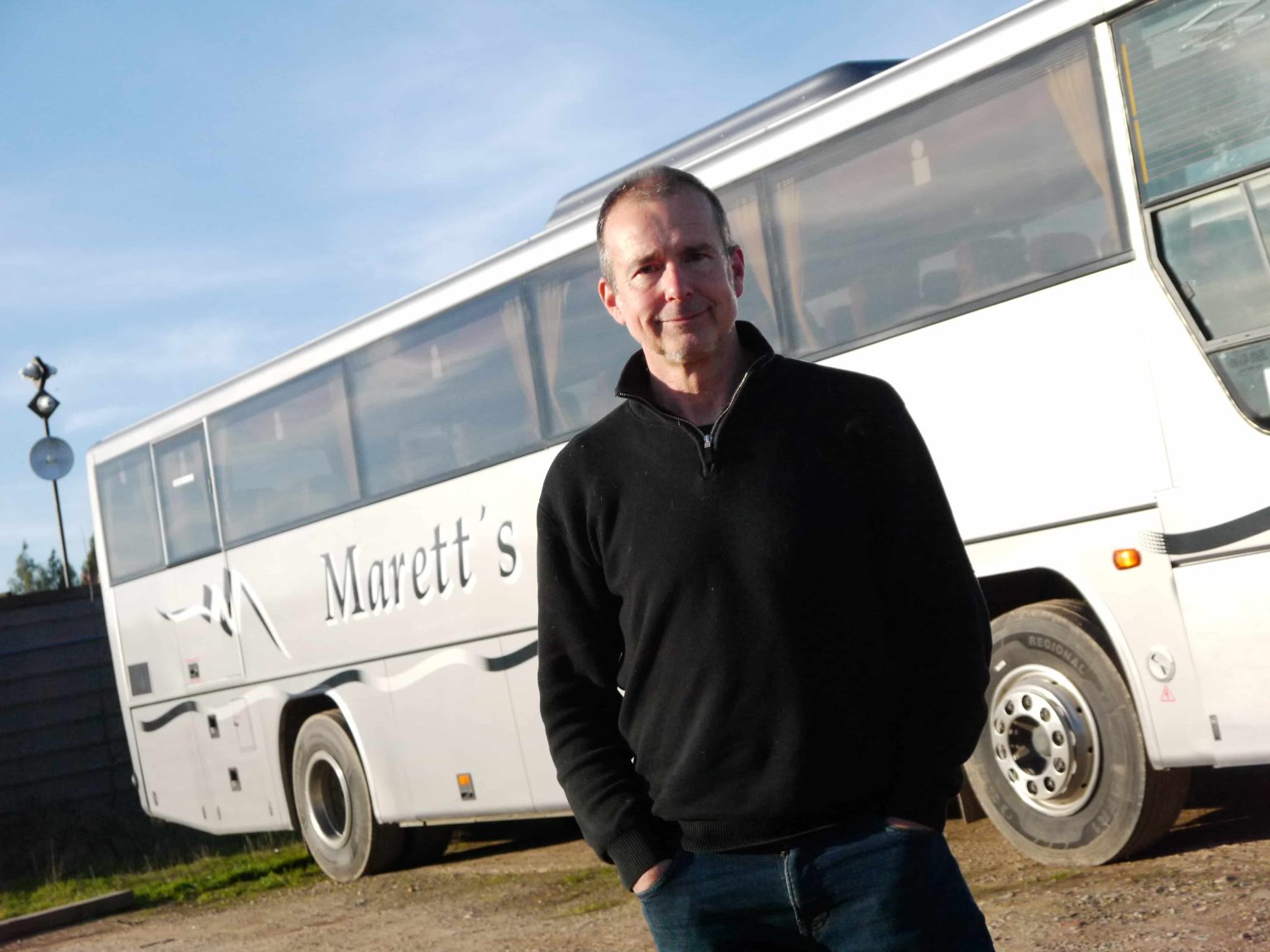
Ask Anthony Marett how deep his involvement with coaching runs, and he confesses to generally taking a “hands-off” approach. But a quick examination of his endeavours in the sector – which include founding Don’t Travel Empty in 2008, becoming Vice Chair of the UK Coach Operators Association (UKCOA) in 2022 (remaining to this day as a board member and director), and more recently masterminding several coach consolidation projects including the Coach Connect Group and the Coach Co-Operative – is more than enough evidence that Anthony has those hands busy elsewhere.
In a change of pace, recent days have been spent removing guano from a three-acre former industrial site in Frettenham, Norfolk, into which the Marett’s Chariots business will move later this year. A welcome change of pace, perhaps, as the move was not originally by choice. Anthony has hitherto leased land at a site in North Walsham — a site whose owner, Jake Silk, recently decided to turn over to storage. Marett’s is moving by necessity.
But Anthony has an infectious attitude in these situations. “When things like this occur, you have to respond to them in the most positive fashion,” he says. “We wouldn’t have moved from here if we didn’t have to. But we do. So, we have to ask: how we turn that to our best advantage?”
‘Fate and naivety’
Recent events continue something of a trend in the Marett’s business. In his own words, a great deal of “fate and naivety” have played a role in Anthony’s career. The business gained its O-Licence in 1997 and began by transporting children as part of an educational field study centre founded by Anthony’s parents Alan and Veronica. Anthony was 30 at the time and joined as an instructor, attracted by the idea of working out in the open air. When the company became an operator in its own right, he undertook his Driver CPC. The business’ first coach was a Bedford YMT from Robert Easton. Name: Billy.
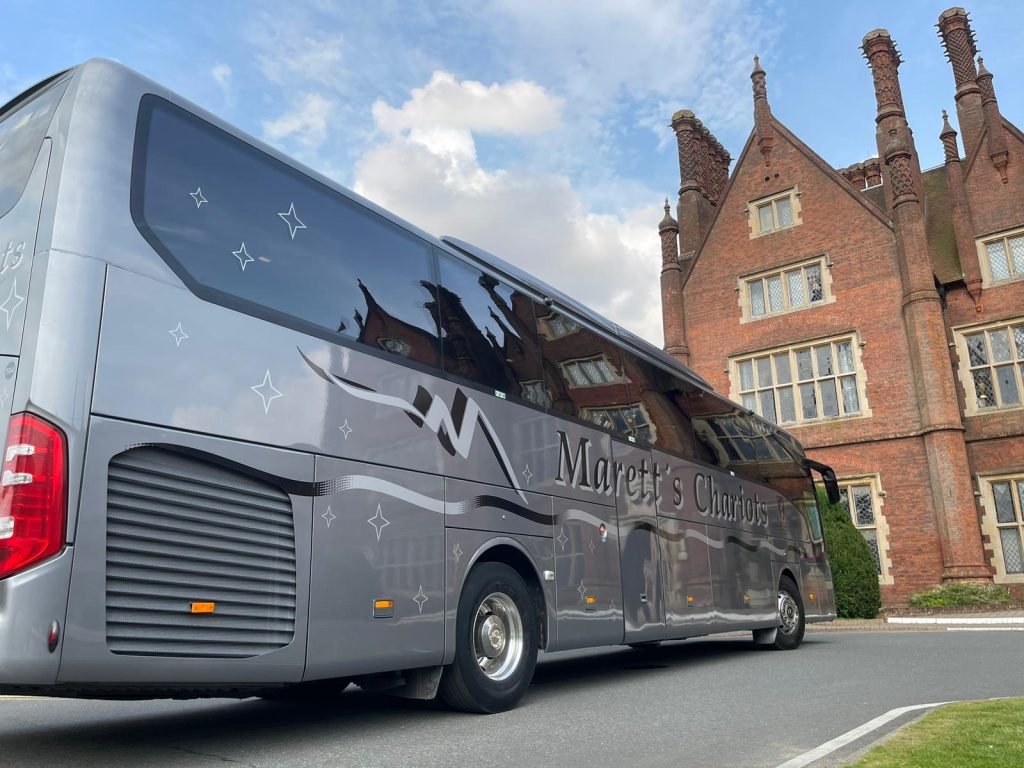
The plan had only been to facilitate the transport of children, for the sake of convenience – relying on other companies could be challenging given unpredictable schedules. But running a coach is expensive, and necessitated another income stream. One small step into private hire, and 28 years later, Marett’s has an O-Licence for 20 vehicles.
Growth came in phases. The business took the opportunity to purchase Cromer Travel in 2004 following the retirement of owner Gary Fields, when it took on three new vehicles and three drivers. That effectively doubled the fleet, doubled turnover. The majority of Cromer Travel’s work had been private hire, and the vehicles — minibuses between 16 and 29 seats — were almost brand new.
That investment provided the impetus to “become a proper coach company” according to Anthony. A round of contract wins in 2006 with the local authority took the operator’s school transport obligations from two to 12 routes, and the fleet increased to 15 by the time it acquired its current site in North Walsham in 2011.
Around the same time as the move, Marett’s was priced out of its educational contracts. The business saw its route to survival through private hire, which currently accounts for around half its work. The refocus prompted Anthony to learn about search engine optimisation, Google AdWords, and web presence.
Concurrently, another industry retirement gave the business an opportunity to take over nearby Bluebird Coaches (no affiliation with Bluebird Coaches of Weymouth). Marett’s took four of the best vehicles of Bluebird’s ageing fleet of 12 and found itself “undertaking 28 vehicles’ worth of work with only 20”. It was a trying time.
First seeds of diversification
Even as early as 2016, Anthony had been eyeing diversification beyond coaching. Plans had been to run a commercial garage in North Walsham, before Drury’s Vehicle Services beat Marett’s to the punch. Marett’s had also been approached to take a franchise out for a car and van rental firm. The seeds of diversification were sown.
“It’s about synergies and looking at what we can do with the facilities we have that isn’t just operating coaches,” Anthony says. “Even before Jake gave us notice, I had been looking at diversification with Don’t Travel Empty and Coach Hire Directory. This isn’t because I’m necessarily looking to make more money – I suppose I get bored easily, and I like creating things. As you get older, one of the benefits is being more aware of yourself and what makes you tick. Running a coach company doesn’t necessarily appeal to me for the next 20 years, but the idea of getting my teeth into a project, to transform it, and pass it on to someone else, is hugely rewarding.”
Hence the door closing at North Walsham is merely a new door opening for Anthony. Ideally, he would have liked to build his own new purpose-built workshop in Norwich. But a lack of suitable options has led him to lease the current site at Frettenham.
“We must have physically visited between 10 and 15 sites. None were 100% perfect,” he says. “There were three that would work for Marett’s Chariots, but there would not have been the option to diversify. When we looked at Frettenham, we pursued it on the potential that the site had for diversification over and above the others.”
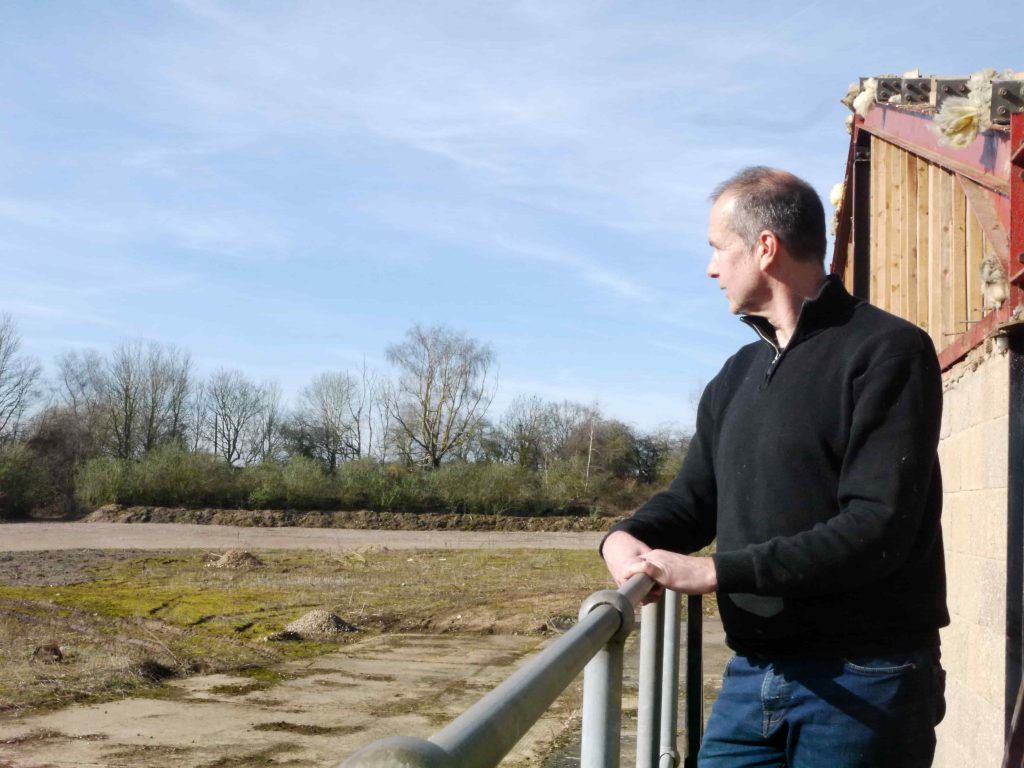
Surveying the grounds from an old control room, formerly part of a gravel pit operation, Anthony shares his ideas. The site is laid out on two levels: one will accommodate the Marett’s Chariots business, while another will potentially be used for airport car parking, a transport hub for other operators, or vehicle storage. All three ideas are in the melting pot, though Anthony is not decided on which may come to fruition.
The idea to offer competitive airport car parking with a shuttle service occurred after a company approached him as a potential lessee with the same idea. “I thought, why not do it ourselves?” Anthony says. “We have the coaches. We have the spaces. We’re near the airport. It doesn’t make sense to let someone else make the money.”
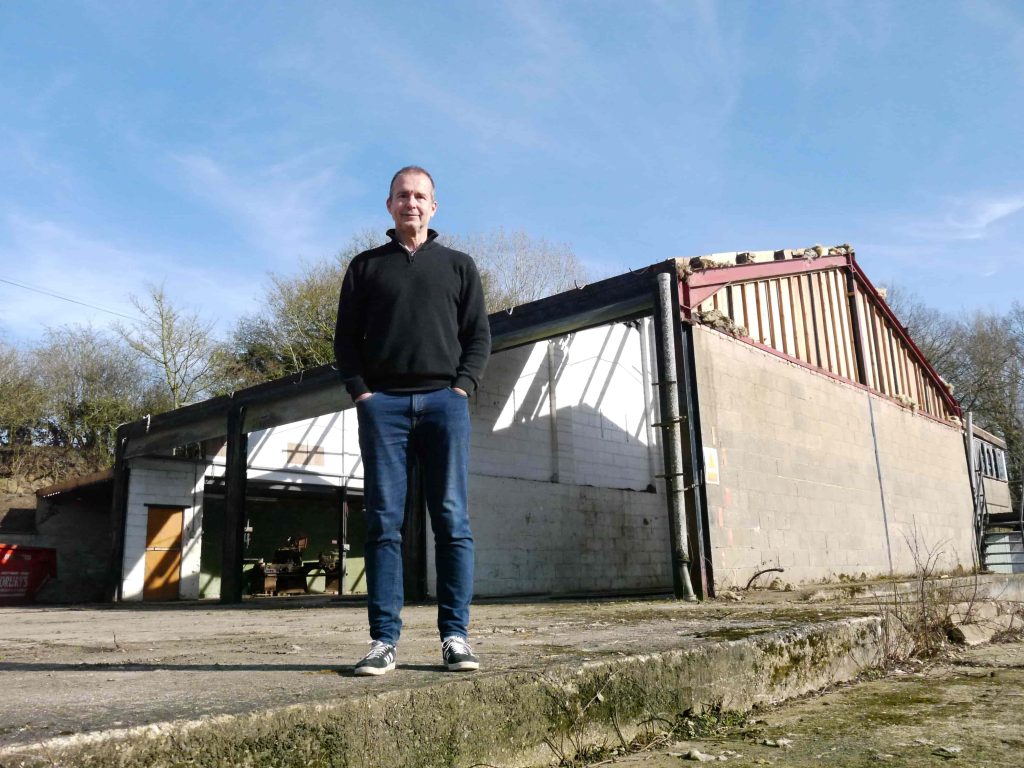
Already on site is a workshop with three vehicle bays and a wooden cabin. All is in a state of disrepair – but Anthony is well underway with development plans. By March, the workshop roof will be raised and refitted to accommodate coaches. Electrics and plumbing should be installed by the end of May. The control room will eventually become the site office.
Anthony has attractive ideas for the grounds too, with plans for a wildflower meadow in a central green strip, and the introduction of 40 indigenous willow trees, to be donated by the field study centre. On the topic of circularity, guidance from the local district authority’s environmental council is leading Marett’s down the carbon neutral path, and Anthony wants to use spare acreage, water recapture and energy use to offset carbon produced by the vehicles.
On the future of Marett’s Chariots
That’s the site. What of the business? As Anthony says, he’s keeping hands off where that is concerned; further expansion for the coaching arm will be at the discretion of Managing Director Danny Ford. Those who follow Anthony’s activities will well understand that much of his energy has been directed into building exit strategies for coach operators, and with Danny leading the coach business and one of his children chomping at the bit to join, an ideal solution for Anthony’s own business has potentially fallen into his lap.
“Danny is keen to see the name of the company continue,” says Anthony. “There is a value and a reputation associated with it. I don’t think he wants it to grow to be massive – but he is like me, and wants to offer the best service possible. The difference between Danny and me, though, is that Danny was born with diesel in his veins.”
Anthony’s involvement in succession planning, and his own plans for diversification of the Marett’s business, makes it difficult not to ask what his beliefs are when it comes to the future of coaching. Certainly, consolidation continues to make headlines and draw opinions; Anthony has been at the forefront of those discussions.
“In the time I’ve been working as an operator, as for everybody, the sector has changed beyond all recognition,” he says. “I don’t think this is particular to the coach industry. It’s in all businesses, in all sectors. Running a small business now is harder than it ever has been before. I do often wonder whether part of the consolidation that is occurring in almost every sector isn’t because running a small business is becoming so difficult.”
When it comes to expanding beyond coaching, though, Anthony says his experience from being a director and board member of UKCOA has taught him that diversification is less important than “rolling with the punches”, so to speak.
“As there are downturns, you need to cut your cloth accordingly,” he says. “That means maybe holding back on that pay rise, not buying that new vehicle this year, etcetera. Certainly, what we are doing is looking at newer second-hand vehicles in the immediate future rather than more new vehicles.
“Being a fluid business allows you to change your cost base relatively quickly if you need to. We’re looking to diversify because the location we have presents that opportunity to us… and, of course, it stops me from becoming bored!”