



















UK coach, bus and minibus registrations fell sharply in the first quarter of 2026, although zero-emission vehicles achieved a record share of the market, figures published by the Society of Motor Manufacturers and Traders (SMMT) show.
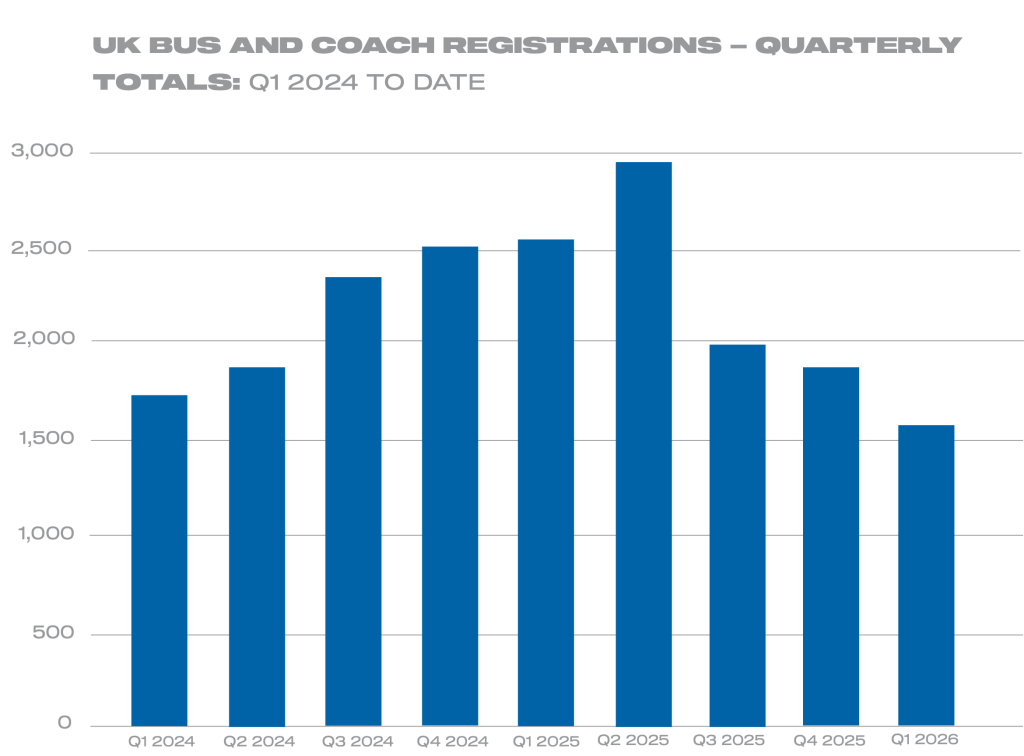
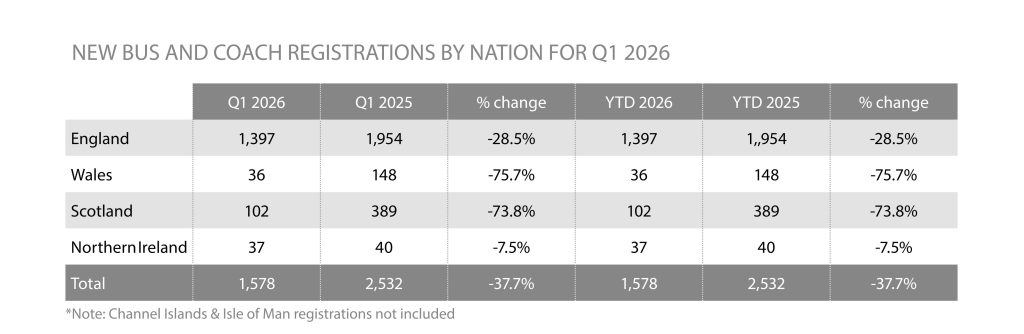
Total registrations fell by 37.7% year-on-year to 1,578 units in Q1, marking a third consecutive quarterly decline following a period of growth.
The downturn was driven largely by a steep fall in minibus demand, which declined by 56% to 572 units.
The wider coach and bus market also softened, with single-deck registrations down 15.5% to 584 units and double-deckers falling 22.1% to 422.
The year-on-year comparison is contrasted by a strong Q1 in 2025 when registrations surged by almost 50% on the back of Zero Emission Bus Regional Areas (ZEBRA) rounds.
All UK regions recorded declines: England, which accounted for 88.5% of registrations, saw volumes drop 28.5% to 1,397 vehicles. Scotland, which has benefitted from zero-emission funding through ScotZEB, saw a drop of 73.8% to 102 units, while Wales recorded the sharpest proportional decline, down 75.7% to just 36 vehicles. In Northern Ireland registrations slipped by 7.5% to 37 units.
Despite the overall contraction the transition to zero-emission buses continues to accelerate. While volumes fell by 20.4% to 588 units, their share of the market rose to a record 37.3%, meaning nearly two in five new buses registered in the quarter were zero-emission.
SMMT says the figures point to a period of stabilisation after two years of strong growth, with electrification increasingly embedded in procurement strategies. It suggests public funding and policy clarity is needed to sustain momentum.
Recent government commitments, including a long-term zero-emission bus order pipeline projecting more than 23,0000 vehicles by 2035, are expected to support future demand. However, SMMT says challenges remain for operators and local authorities facing higher costs and infrastructure barriers, such as grid capacity and depot electrification, in the transition.
Comments Mike Hawes, SMMT Chief Executive: “After the bus market’s boost over the past two years, a decline was always inevitable as the market stabilises. With zero emission buses taking such a high market share, however, all signs point to a market that is eagerly transitioning.
“Manufacturers have made massive investments in zero-emission buses and public funding schemes have helped drive adoption. With more local commitments to ZEV bus procurement, the market can grow, and the UK can get ever closer to a nationwide zero emission bus network.”