




















The latest four-year exemption framework for home-to-school coach services may reassure some, but those who invested early into accessible fleets argue the policy risks rewarding delay
The latest chapter in the debate over accessibility on home-to-school transport has become a question of business judgment and capital risk for some coach operators, with early investors in PSVAR-compliant vehicles questioning whether they will see proper recognition for their efforts.
The Department for Transport’s (DfT’s) new exemption framework for coaches used on in-scope, closed-door home-to-school services will run from 1 August to summer 2030. Applications opened in July, with operators required to submit details of non-compliant vehicles they intend to use, alongside broader fleet information.
The exemptions come with conditions attached: operators must maintain a minimum level of PSVAR compliance based on their existing position, provide a compliant coach when required if one is available, and respond to requests from DfT or DVSA for fleet data.
Also noteworthy is a new requirement that, from 1 February 2027, new coaches with more than 22 passenger seats entering any service (with the exception of a few niche cases) must be PSVAR enabled when purchased by a holder of an exemption for home-to-school.
Timing under scrutiny
For government, the approach is intended as a transition. Its final stage impact assessment points to what it sees as a legislative imbalance between closed-door home-to-school services where no fares are paid, and those where at least one separate fare is taken. The former sit outside PSVAR while the latter fall within scope. On that basis, the assessment says the case for seeking full compliance on all in-scope home-to-school work is “weak”.
The policy, it adds, is to move away from “arbitrary annual increases in fleet compliance” and instead maintain current compliance levels while targeting accessible vehicles at passengers who need and want them.
Yet for operators that have spent the past few years buying, converting or disposing of vehicles in anticipation of full compliance, the announcement offers clarity, but raises the question – if operators that have not made equivalent investments can continue to compete for the same work, what is the value of having complied early?
That concern is reflected by the UK Coach Operators Association (UKCOA), which has welcomed the reassurance provided by the new framework but criticised the timing of key decisions. That concern is not confined to PSVAR; it also points to the new grant scheme supporting compliance with the Accessible Information Regulations, noting that operators that bought equipment after the previous grant scheme closed and before the latest funding became available are unable to benefit from support now being offered.
“Operators have been seeking clarity for many months, yet key decisions have once again been announced only weeks before existing arrangements expire,” Director of Operations Stephen Spendley says. “This makes it difficult for operators to plan fleet investment, equipment purchases, and service delivery with confidence.
“While the headline announcement on home-to-school services is welcome, the industry is still awaiting the detailed conditions that will apply under the new PSVAR arrangements. Until those details are published, operators remain unable to fully assess the impact on their businesses or make informed decisions regarding future fleet strategy.”
The price of compliance
Frustration with the late policy change is echoed among operators.
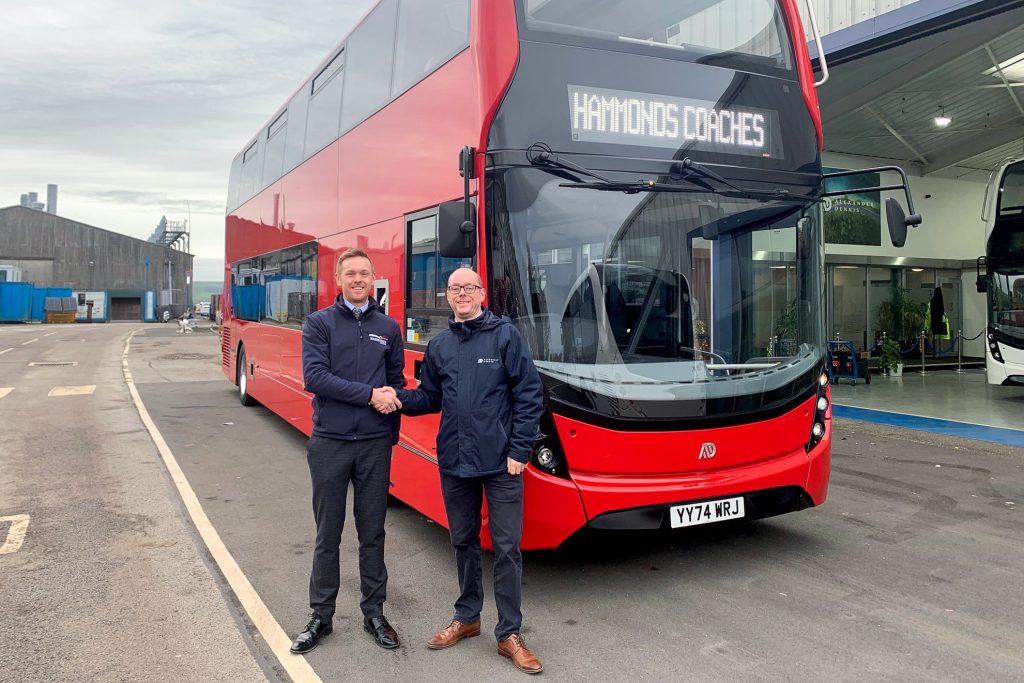
Nick Hammond, Managing Director of Hammonds Coaches, is one of many coach operators who says the latest exemptions will not alter his company’s direction, because it has already gone down the compliance route in preparation for the previous deadline.
For Hammonds, home-to-school transport accounts for around 20% of turnover. The company runs five school contracts a day using two 85-seat Alexander Dennis Enviro400s, two 74-seat MOBIpeople Explorer 330s, and a 31-seat Iveco Ilesbus I-City Max. Out of a fleet of 12, only two vehicles remain non-compliant.
Nick characterises the latest move as indecision: “The government has been clear what’s going to happen, but this is a situation of kicking an issue down the kerb.
“It’s frustrating. We have toed the line, complied with the rules, and by the time these new exemptions come to their end, the vehicles we have now will be coming up ready for replacement. With so much of the local authority home-to-school work across the country going to the lowest bidders, those of us who are compliant are seeing no reward for our investment, or for the improvements we are making in service provision.”
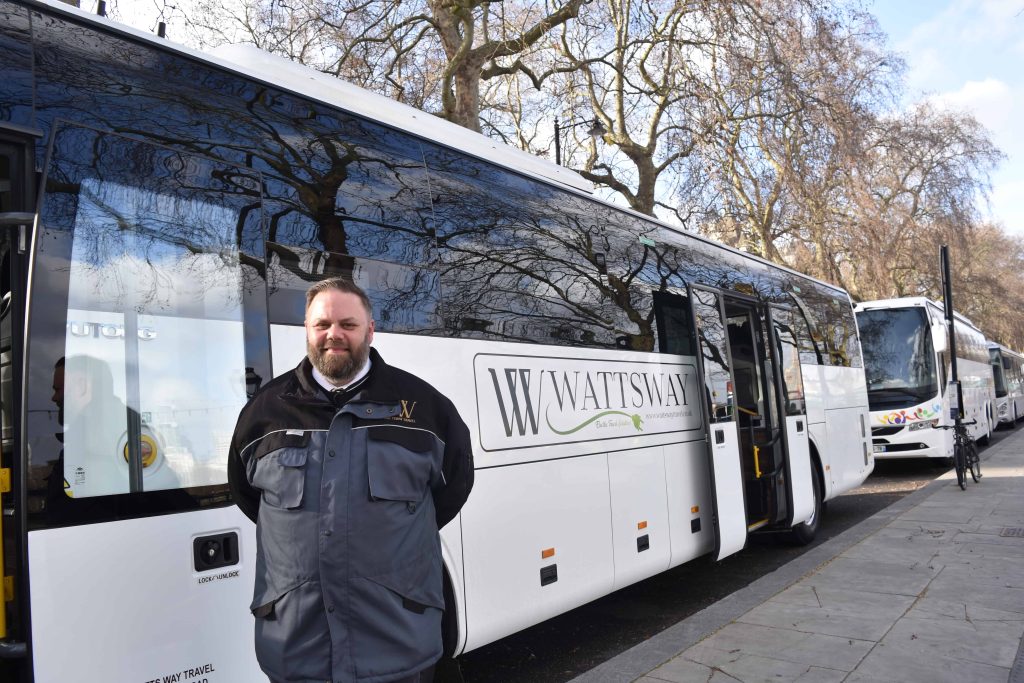
For Wattsway Travel, the issue is sharper still. Home-to-school work accounts for around 60% of business, with 20 vehicles operating daily across 15 schools. Director Mark Watts (pictured, below left) says the company has 16 PSVAR-compliant vehicles on in-scope work and recently prepared for the end of previous medium-term exemptions by selling its last two non-compliant coaches.
“The government should have done away with the exemptions, and said that was that,” he argues. “Our last two non-compliant coaches have just been sold, and two brand new vehicles are due for delivery at the end of August.”
For a relatively small company, that has meant capital investment in the millions of pounds. Mark notes that that money could now have instead been spread over a much longer period.
“A lot of the trouble is that we’ve made that huge investment,” he says. “We had to get rid of vehicles that were not necessarily ready to be disposed of; they could have had a new lease of life.
“We keep up to date with regulations, we negotiate with clients because of the investment we are having to make into the vehicles, and for government to push back this deadline means the £2 million we have invested could have been spread over eight years instead of the last four. It feels as though those operators that have not acted, hoping the issue would go away, have been proven right.”
The sharpest criticism of the policy is the sense that operators are now at risk of being penalised for early movement on PSVAR. The February 2027 requirement for new vehicles to be PSVAR-enabled may grow the accessible vehicle pool in the long term, but early adopters argue the market will in any case correct itself as accessible first-generation coaches enter the second-hand market.
Mark points to his first PSVAR coach, a 20-plate registration, as an example. That vehicle has already gone through Wattsway’s fleet cycle and has been sold to another operator. He notes that in four years’ time, early adopted accessible vehicles will be old enough to become affordable to those businesses that did not previously justify buying them new.
Procurement an ongoing concern
Procurement will predictably continue to be the most immediate concern. Where local authorities or schools assess bids primarily on price, a company that has not invested in accessible vehicles will continue to be at an advantage to those that have.
Although he does not go so far as to advocate an immediate end to exemptions, Nick argues that a solution would be a procurement system that distinguishes between operators that have invested and those that have not. That could mean higher rates, or priority for operators with greater weighting in the contract award process.
“Those who invest have shown they are on top of the issue and want to provide a good service,” he explains. “If you don’t want to invest, and don’t want to run compliant vehicles, it seems fair that you should fall down the rung of opportunity accordingly.”
He adds that without phased procurement weighting over the next four years, the industry may face another rush near the next deadline. Operators that have not invested may wait, manufacturers may see demand bunched, and government may once again face pressure to extend.
Communication at a local level may be a solution. Nick reports positive conversations with Nottinghamshire County Council, which has been receptive to concerns about prioritising service delivery and the realities of contract pricing. “Other areas than ours may be more cut-throat, but we still see very cheap prices being thrown about. And our thought process is always that these are contracts of up to five years – you will be tied to that low price for a long time,” he says.
Wattsway has meanwhile been able to defend its own work through service quality. Mark says the company recently won a five-year tender for one school with five sites despite being priced higher than competition, because the decision was made on service, fleet quality, and the operator’s wider approach, which includes investment in zero-emission vehicles.
“These decisions should definitely be weighted [in favour of those who invest],” he says. “For customers, it also means avoiding a conversation halfway through a contract when an operator needs to buy something compliant and provide a more expensive vehicle.”