




















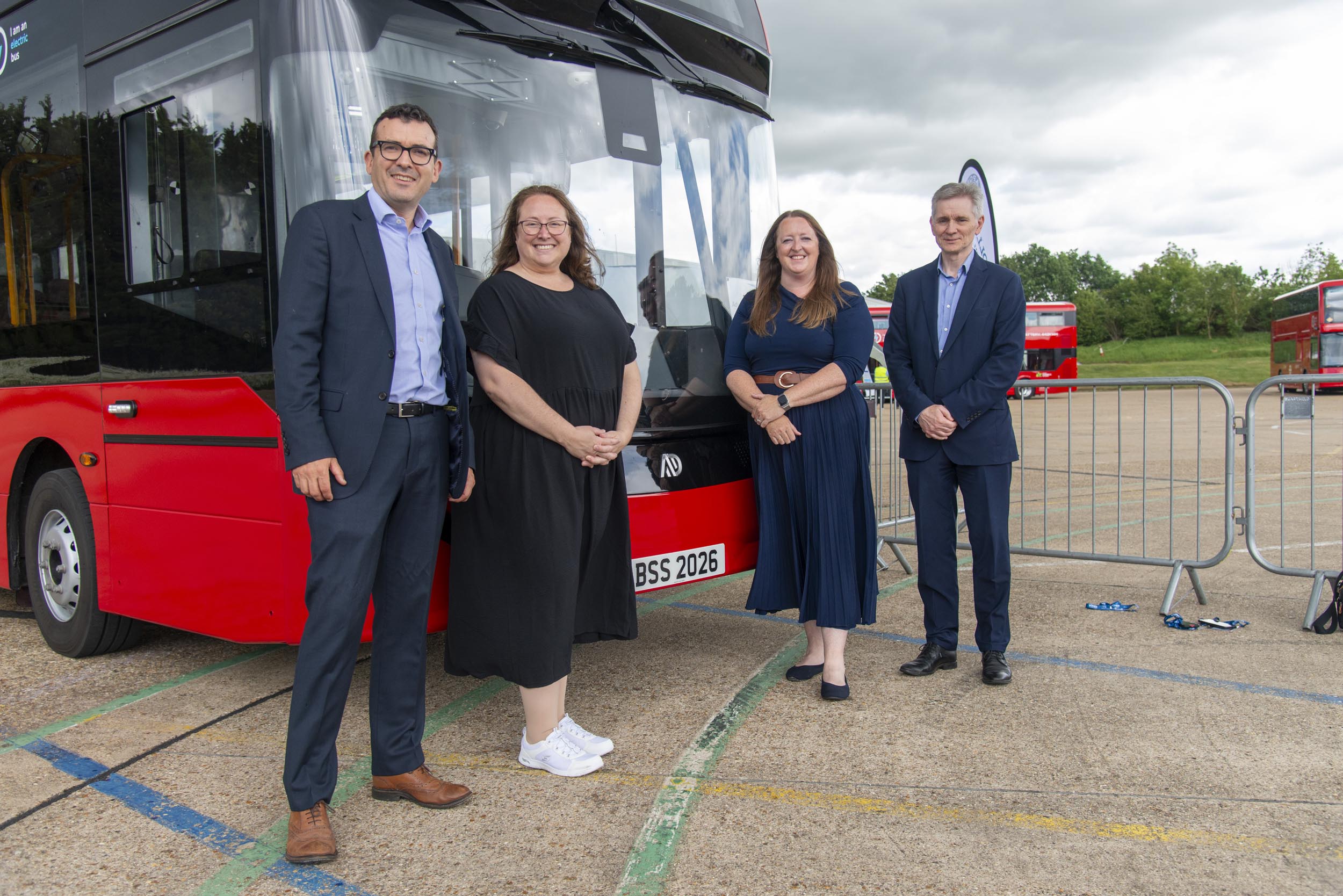
Women in Bus and Coach was pleased to support the launch of Bus Safety Standard 2 (BSS2) alongside Transport for London (TfL) and the Bus KSI Network, part of the Bus Centre of Excellence, on 2 June. As a supporting partner, we helped raise awareness of the standard, engaged with stakeholders across the sector and championed the importance of safer, more inclusive bus travel.
Building on the original Bus Safety Standard, BSS2 encourages operators to strengthen safety through collaboration, shared learning and continuous improvement. Those principles are ones we strongly believe in at Women in Bus and Coach.
Improving safety is not something any one organisation can achieve alone. It depends
on operators, policymakers, representative organisations and frontline colleagues working together, sharing knowledge and learning from experience.
That collaborative approach sits at the heart of everything we do. Whether we’re supporting the next generation of leaders, working with operators on workforce initiatives or partnering on projects to improve the passenger experience, we’ve seen first-hand that the best outcomes come when different organisations bring their experience and expertise together.
One example is the inclusive bus cab design project, delivered in partnership with TfL and the Transport Research Laboratory. By listening to people of all shapes and sizes from across the industry, the project identified practical improvements to cab design that will benefit all drivers. It was a reminder that the people closest to the day-to-day operation of our services often have the most valuable insights.
The same principle applies across the wider sector. Standards provide a framework, but their real value comes from creating a culture where organisations are willing to learn from one another, share good practice and continually look for ways to improve.
That means encouraging open conversations, learning from incidents and recognising that no single organisation has all the answers. When we work together, we strengthen safety not just for passengers, but for colleagues and the communities we serve. Of course, no standard can deliver change on its own. It is the people behind it who make the difference. Drivers, engineers, supervisors, trainers and operational teams all play a role in creating safer services, supported by leaders committed to continuous improvement.
Just as importantly, we must continue listening to those who use our services and those who work within them. Different experiences help us identify risks, challenge assumptions and develop solutions that work in the real world.
Supporting the launch of BSS2 was a natural fit for Women in Bus and Coach because it reflects the values we champion every day: collaboration, shared learning and giving people a voice. Those principles don’t just help create more inclusive organisations. They also help create safer ones.
As our sector continues to evolve, I believe those partnerships will become even more important.
By working together, sharing knowledge and learning from one another, we can build a safer, stronger and more inclusive future for everyone who relies on our bus services.
To find out more about BSS2, please read the executive summary published by TfL.