




















Our Westminster insider takes a look at what Andy Burnham’s premiership could mean for bus and the wider political landscape
With new Labour leader Andy Burnham due to be officially named Prime Minister today, based on what we have heard from him since he was elected as MP on 18 June, what is to be expected, particularly for the bus sector?
From his first set-piece speech, delivered in Manchester on 28 June, it is clear that devolution is going to be a central dynamic of his overall policy agenda.
That is no surprise as, ever since he was elected as Mayor of Greater Manchester, he has advocated further devolution.
The speech was laced with criticism of Britain’s over-centralised form of government, claiming that “Westminster hasn’t been working for people for a very long time; in fact it’s broken,” and that Westminster and Whitehall “are set up for conflict and require radical change”.
This is all very easy to say, but a great deal harder to fix. And there are a number of consequences, intended or otherwise, that flow from this devolution agenda and his stated plan to “rewire” Westminster and Whitehall. Let me highlight a few.
Department downsizing to come?
First, if devolution is to happen on the scale Mr Burnham has set out, there must surely be a reduction in the power and size of certain government departments, otherwise what’s the point of devolution?
Indeed, if he is serious about a radical rewiring in the way Whitehall functions then you can see an opportunity for that.
Most Whitehall re-organisations have been a waste of time and change little, if anything. Remember the infamous Department of the Environment, Transport and the Regions set up in the early days of Tony Blair’s first administration?
However, if this overhaul is serious, the scope for merging or even abolishing certain departments surely presents itself. If we see no change to the size and shape of Whitehall, this talk of “rewiring” is just so much rhetoric.
If elected mayors are to have greater powers over public transport … a large chunk of DfT could easily be downsized
That said, Miatta Fahnbulleh, the Labour MP for Peckham and one of Mr Burnham’s close team of advisers, was reported a couple of days afterwards as saying Whitehall would be “streamlined”.
Moreover, if we are also to see some fiscal devolution, with mayors given certain tax-raising powers, what does that mean for the power of the Treasury? It could even be split up, according to comments in Westminster.
The new PM and his team will, in my view, have to move hard and fast to drive through this devolution and Whitehall reform agenda. It will surely meet resistance from the civil service, which has never liked giving up power.
Mr Burnham told us that “the days of Whitehall fighting the devolution agenda are over for good”. Bold talk. Whitehall is, collectively, a past master at fighting off reform it doesn’t like. It’s why the Yes Minister and Yes, Prime Minister TV series are documentaries, not comedies!
A voice for the North
The one specific proposal in Mr Burnham’s speech was the creation of “No. 10 North”.
This sounds good on paper, but which part of No. 10 will be the senior partner – No. 10 in Downing Street or No. 10 North?
We have seen many turf wars within No. 10 down the years, but now we have the potential for turf wars between two No. 10s!
However, I understand that No. 10 North will focus on devolution and that Caroline Simpson, the Greater Manchester Combined Authority Chief Executive Officer, has been appointed as Mr Burnham’s Deputy Chief of Staff and will be based at No. 10 North to drive the devolution agenda.
So, while on paper No. 10 in Downing Street and No. 10 North will have separate and distinct roles, I see real scope for conflict, which only strong leadership can prevent.
Mr Burnham also talked about a new type of politics, a more consensual approach across parties, and even of reforming the current whipping system so that MPs can be more “authentic”.
I can’t see the whipping system being eradicated, but I could imagine it taking on a “gentler” form, if I can put it like that.
However, allowing backbench MPs to become more outspoken on government policy could be a dangerous road to go down.
It sounds good, even progressive, and many would doubtless want to see MPs given more freedom to speak their minds. But you loosen discipline over your parliamentary party at your peril, as Keir Starmer discovered.
Is a minister cull on the way?
One other consequence of devolution and a streamlined Whitehall must, logically, also be fewer ministers, including cabinet members.
The number of ministers has grown like Topsy over the years and is long overdue a cull.
This may not be very popular among Labour MPs who might aspire to ministerial office, so I wonder if and how quickly it would happen.
The devolution and Whitehall rewiring agendas cannot be accomplished overnight so it would be a while before we saw any significant change in the size of the cabinet.
However, at some point, there would need to be a shake-up if Mr Burnham means what he says.
Implications for DfT and bus
So, what might all this mean for the Department for Transport (DfT) and bus? I can see DfT being one of the departments that could be caught up in a streamlining.
If elected mayors are to have greater powers over public transport, as is the supposed target, a large chunk of DfT could easily be downsized, especially with the creation of Great British Railways. Aviation, shipping and ports can all be merged into the Department for Business and Trade.
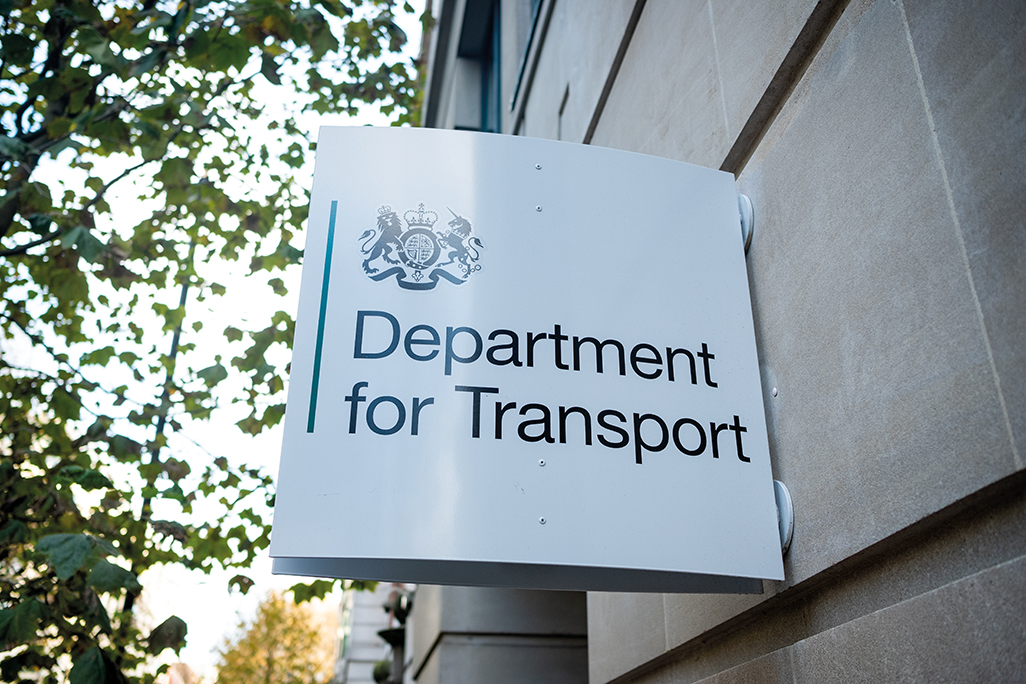
Under this, agenda would we need DfT? As for bus, Mr Burnham has previously said he would like all areas to be combined authorities.
If he delivers on that – and that’s a big “if” – we could see the take-up of bus franchising explode!
Plenty of food for thought!