


















Technology is now one of the main gatekeepers to compliance and contract success for the coach and bus industry.
As well as managing many aspects of an operator’s business, from auditable compliance to vehicle oversight and bookings, tech acts as a baseline expectation in many procurement processes. The Bus Open Data Service (BODS) in England is one example where transport providers must meet strict legislative requirements when it comes to applying tech to their business.
The broadening role of technology has nurtured a growth in suppliers offering solutions to operators and to their customers. Some, like school transport specialist Imperial Coaches, are operators themselves — and have built solutions with knowledge of their niche, and their customer, in mind.
From being purely a coach operator, Imperial Coaches has developed Trackaroo: an automated, all-in-one solution for home-to-school transport management. Developed from a desire to build a tech solution that solved its own pain points and engage directly with its customers, the company has now made its bespoke solution available to others.
A solution for operators, by operators
Imperial Coaches Managing Director Joe Johal says the goal of Trackaroo is to empower companies to secure educational contracts. Initially built in-house as a private solution, growing investment of money and time prompted the company to push ahead and perfect the system for commercial release. Joe emphasises it as a “solution built for operators, by operators”.
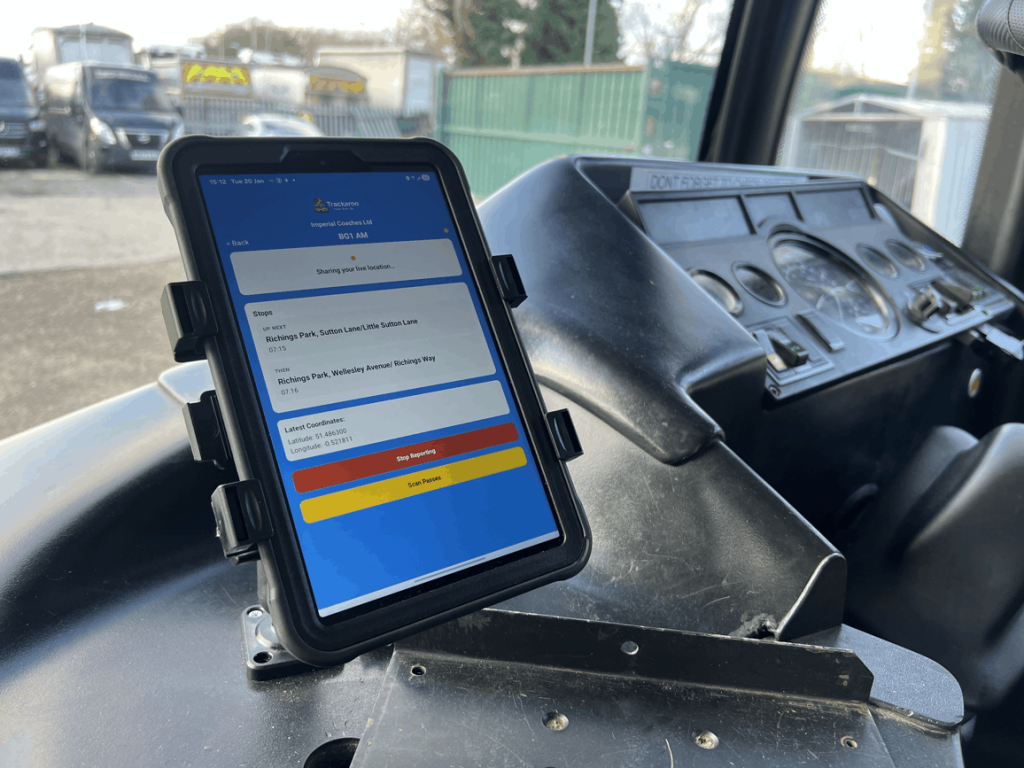
It features live vehicle tracking for parents and guardians, schools, and operators; digital student passes through the use of QR codes; a ticket sale portal with customisable ticket types; an automated payment failure feature to avoid loss in revenue; and a driver route navigation feature that allows users to make driver route training easier.
Trackaroo has just achieved certification from the Department for Transport, and Imperial Coaches is ISO 9001 accredited, demonstrating commitment to the highest standard for its quality management system.
Six-year journey
The introduction of Trackaroo to the wider market is the culmination of a six-year journey of development at Imperial that began in earnest when the company completed the registration of its own school routes in 2020, following an outsourcing process with Buckinghamshire County Council.
The company had already begun to lay a tech platform to solve the challenges brought by legacy systems in school transport. Prior to Trackaroo, Imperial Coaches relied on passengers using an identity card system set up through direct debit accounts.
“Looking back, we made some big losses,” Joe says. “Revenue was lost through people cancelling direct debits, and it required us to physically check every pass. We developed a rudimental app, as we knew we were having issues. The app checked the passes, but it didn’t have scan logs — it just checked to make sure the card was valid, it was as simple as that — and we knew drivers were not really using it.”
While a better tech solution was needed, the implementation of BODS in 2020 placed new obligations on coach operators involved in school transport, and acted as the chief catalyst for Imperial to invest in a stronger product.
“We were very aware that we needed to become BODS compliant, as school contracts were brought in-scope,” says Finance Director Daniel Cooper. “We were told by DVSA that, because our tickets are advertised to the public and that we sell separate fares, there was no way around it.”
Imperial achieved BODS compliance in 2025 by building on its existing app. While the company already had the capability to publish timetable data, and DVSA provided a tool for publication of fares data, the main challenge was automatic vehicle location (AVL) data.
“We had everything in place — tracking systems on the vehicles — but not an AVL feed,” Daniel adds. “That’s when we reached out to other companies and realised what a large investment that would be. It prompted us to look at our own solution.”
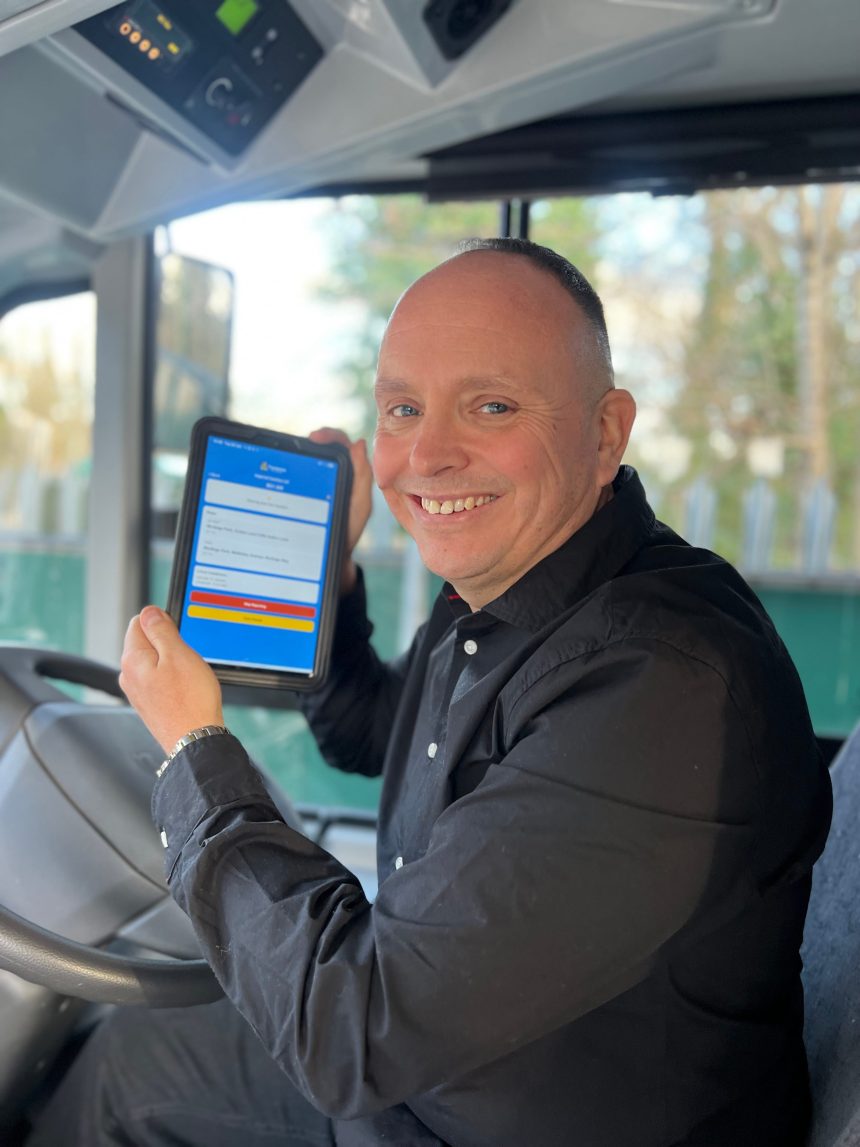
In March 2025, Imperial used its pre-existing foundations to roll out new native ‘parent’ and ‘driver’ apps. It works by a QR code being generated to parents and guardians — either via text message, multimedia message or email — which is then passed on to the child. Neither child nor parent/guardian needs the app, only the code; however, the parent app goes beyond the minimum requirements of BODS by not only tracking the vehicle but by giving users notifications of travel as an additional safeguard.
“To send a BODS feed, you need a device on the vehicle — in this case, the driver app — which then collects data, such as the vehicle location, and sends it back to a database,” explains Daniel. “While we had the device there, we asked what else we could do with that. We have data going both ways and now we are able to check the passes being used.”
Additional features
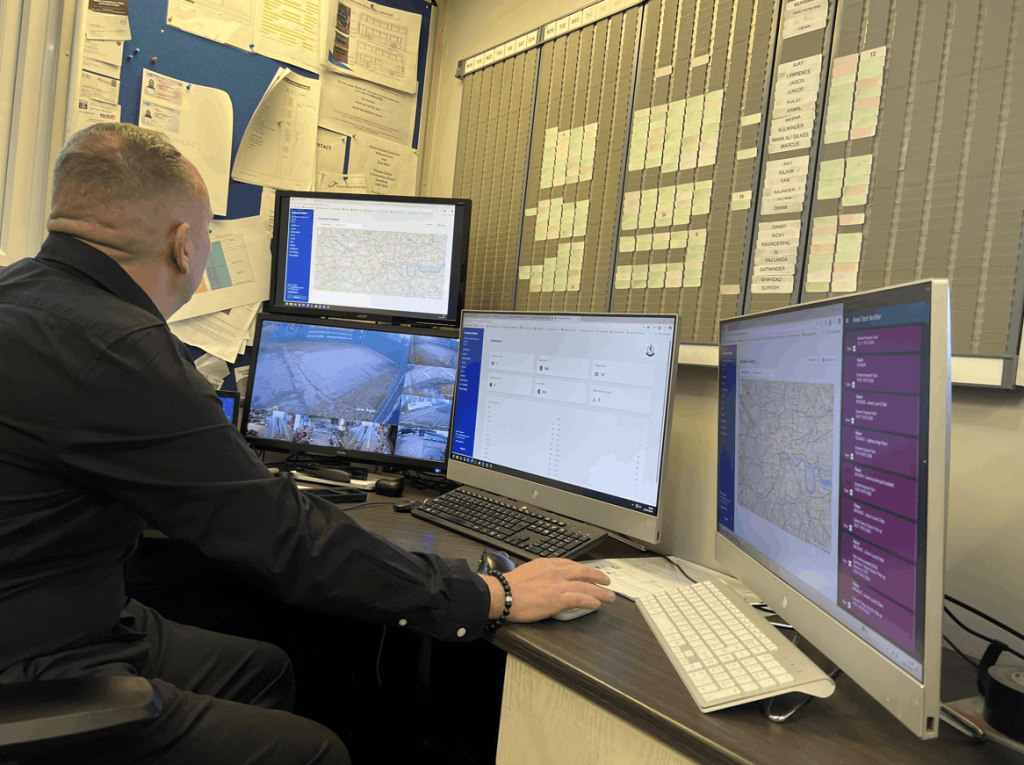
More features have since been built into the Trackaroo system. Ticketing management gives an instant view of how much revenue is being generated on certain routes. Messaging has been built into the app, allowing office staff to send alerts to drivers and request call backs to the office. Compliance reports are built in, and Imperial says its drivers are fully engaged with the system.
Trackaroo also permits sub-accounts, to allow for the management of services that do not require ticket sales, and integrates with third-party tracking products.
Joe says one of the biggest differentiators with competitor products is Trackaroo’s ‘timed driver route navigation’ feature.
“One of the industry’s struggles is getting drivers to memorise multiple routes,” he says. “That’s why we developed in the app the ability to have navigation as well, with users able to build routes and solve training issues.”
Imperial says these additional features reinforce the message that its app is built with coach operator knowledge, and with coach operator needs in mind.
“We have run school routes for 20 years,” adds Joe. “We know the problems that are out there. We know the problems are drivers and navigation, we know that delays are a problem. We have faced these as an operator over two decades, and built our app with those pain points in mind. We are now making the solution available to anybody else who needs it.”
A solution to revenue loss
Automating software has proved transformative for Imperial Coaches, allowing its owners to upscale the business while eliminating loss of revenue that was a vulnerability of inefficient legacy systems such as travel cards.
Consequently, it has allowed for an impressive investment and fleet renewal strategy.
“We have learned to build systems and implement them. This is about building and implementing a system to ensure continuity of the business,” Joe says. “We have secured our future — we have no more need for tendering. The resale value of our business has been upscaled significantly by owning our 12 school routes. It has also given us the confidence to upscale and invest in new vehicles.”
Business profile
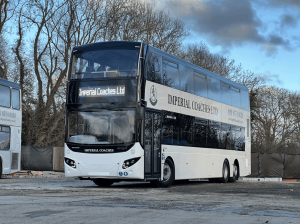
Joe Johal took over Imperial Coaches, which had two vehicles at the time, following the retirement of his father in 2002. The company had been established in West London in 1976 in response to demand for school transport.
Daniel, the brains behind most of the tech, joined the business in 2008 as Transport Manager.
In 2013 the company moved to its present location near Heathrow Airport having expanded to 35 vehicles. It ran school contracts on behalf of local authorities until 2019, when it was given the option to bid for and register its own routes.
While Joe says 90% of the business is now focused on the school contract market, it has recently begun to diversify into the day trips and touring field.
It shortly plans to release a tour and coach client management platform for operators that can be bolted on to their existing websites.