


















In suspending the nine-vehicle O-Licence held by Christchurch-based Amberley Minibuses for two months, Traffic Commissioner (TC) Sarah Bell ruled that thereafter it be marked as surrendered. In addition, she disqualified the two directors that also acted as transport managers — Stephen and Matthew Lucas — from acting as such for an indeterminate period.
In her decision, the TC said that in May 2025 the company used a vehicle to carry young people when its MoT had expired. Director Samantha Denson told DVSA that she had forgotten the MoT expired when she used the vehicle from 3-12 June 2025 to take her own children to school.
While the vehicle was not used for commercial purposes, it was a road safety risk, and the vehicle did not receive a class 5 MoT until 12 June 2025. That informed the TC’s decision in terms of how effective the company’s systems were.
The follow up investigation showed basic and significant failings in the maintenance systems such that the company posed a significant risk to road safety.
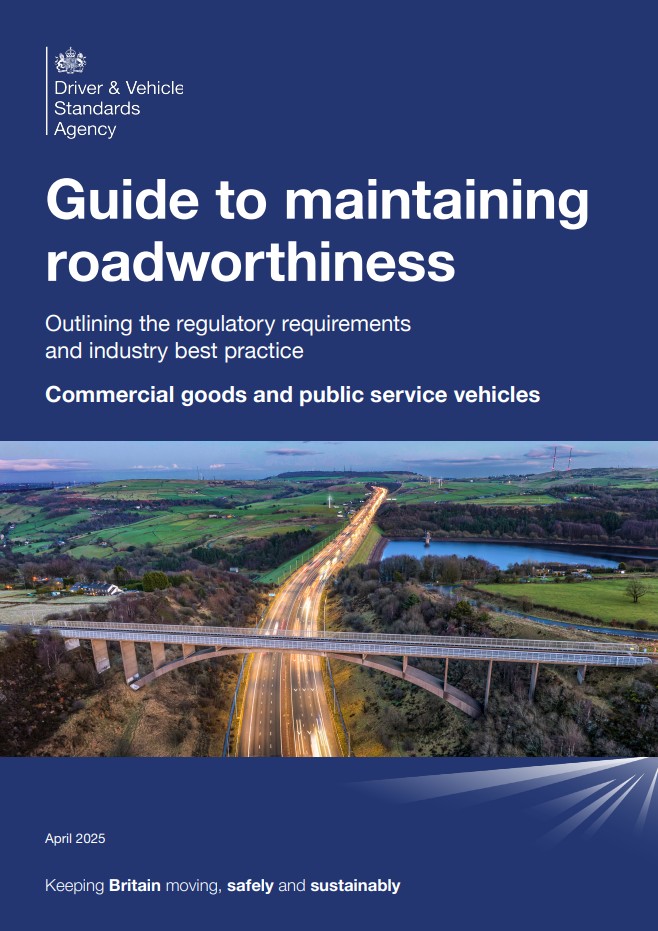
The periodic maintenance inspection sheets did not accord with the Guide to Maintaining Roadworthiness, including basic omissions such as ISO week numbers, missing defect rectification, and tyre pressures not recorded. The forms were so confusing that the experienced vehicle examiner found it difficult to ascertain how the records should be completed correctly.
Further, all brake performance checks were carried out using a decelerometer with no corresponding brake temperatures recorded. A particular concern was that the company did not have a formal wheel and tyre management policy.
Stephen and Matthew Lucas had failed to do any refresher training since passing their CPCs in 1991 and 2016 respectively.
Stephen Lucas said that previously there had been robust systems, but as business eased, the focus on the necessity of meeting full compliance had diminished.
With no refresher training it was hard to see how assurances of robust systems could be evidence based. While there may be no compliance history, this was an operator that had fallen off the radar and nothing more. The failure to understand and demonstrate basic systems that had been clearly dealt with in the Guide to Maintaining Roadworthiness over the last 15 years did not support suggestions of previous robustness.
Currently, the only aspect of the business that mitigated some of the risk to passengers and other road users was the limited mileage the vehicles travelled per annum.
It was difficult to conceive how two transport managers, responsible for only nine vehicles, were found to be so out of date and with systems so inadequate.
The evidence demonstrated that there was too much ‘customs and practice’ and informality, yet the company was responsible for some of the most vulnerable passengers.
The TC said: “The risk posed to road safety is such that despite this being a first Public Inquiry it is appropriate and proportionate to find a loss of good repute as transport managers for Stephen and Matthew Lucas. Neither have demonstrated competence in the common sense meaning of the term for too long.”