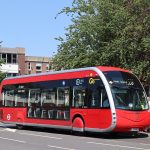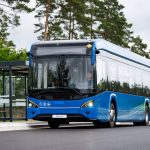
At least two members of the Crown Commercial Services (CCS) framework are expected to be able to satisfy a tender to supply 24 battery-electric articulated buses for the Sprint bus rapid transit (BRT) service in the West Midlands, a report to a meeting of the West Midlands Combined Authority (WMCA) on 13 March has said.
The preferred route to purchase those vehicles is via the CCS framework, which has already been used by other Combined Authorities to procure buses.
A full business case (FBC) for the buses that was released in December 2025 outlined how almost £26 million is expected to be required for the 18-metre models (including extended warranty and maintenance commitments) and their associated depot infrastructure. The FBC had noted that at least one supplier could meet requirements for the fleet.
In addition, £5.5 million is needed for off-board ticket machines, although among other options considered for the Sprint service was provision of conductors. They would have resulted in “elevated costs… relative to off-board ticketing.” The favoured approach aligns with the Metro light rail, which is moving towards contactless tap on, tap off ticketing.
Of the funding for vehicles and charging infrastructure, £20.5 million will come from the City Region Sustainable Transport Settlement (CRSTS) mechanism, while £5.46 million is from the Zero Emission Bus Regional Areas pot. CRSTS will cover all of the funding requirement for ticket machines.
Estimates are “based on significant market engagement with bus manufacturers, including receipt of detailed quotations,” the report to a WMCA on 13 March notes. It seeks approval of the use of the monies above to purchase buses and charging infrastructure. Further work is required to determine the optimal ticketing model.
The earlier FBC stated that the quality element of the eventual tender for the vehicles “will primarily be concerned with how well the design brief for the buses is met.”
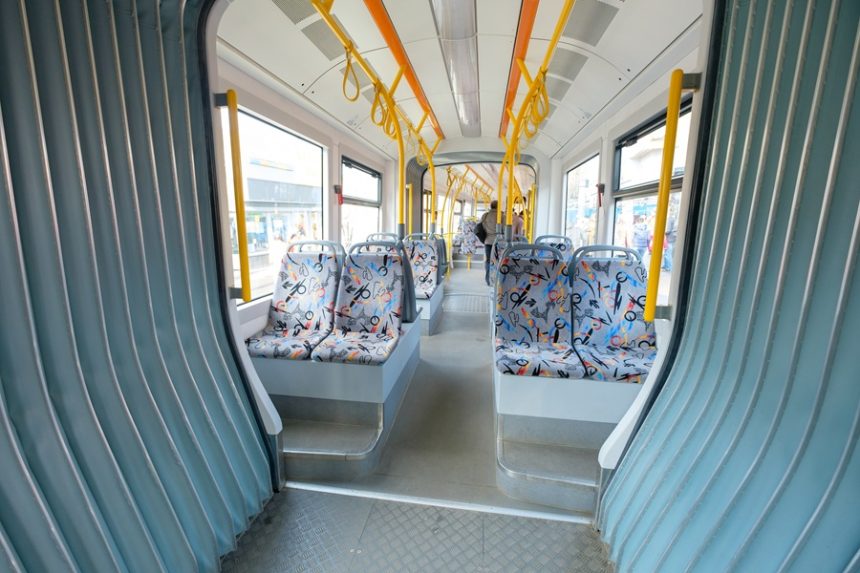
The overall Sprint concept is “to provide a bus service which aligns with a tram-like operation and has a strong differential with a standard bus services. This include the interior and exterior styling of the vehicle.”
Sprint will run from Walsall, through Birmingham City Centre, and along the A45 before splitting into branches to Birmingham Airport and Solihull. The WMCA report notes that the BRT-based approach will give journey times, comfort and accessibility “akin to the Metro service but utilising the lower costs and greater flexibility of bus technology.”
Rollout of Sprint is expected for October 2027 as part of the first bus franchise contracts in the West Midlands. It will be part of the Walsall large lot and operate from the depot in that town that is already owned by WMCA. £158 million has thus far been spent on or committed to preparing the Sprint corridor for operation.
The vehicle suppliers that can meet Sprint requirements are not named by WMCA, but all of those that are part of CCS Lot 8 for coaches and buses over 17 seats are listed on the Crown Commercial Services website.