




















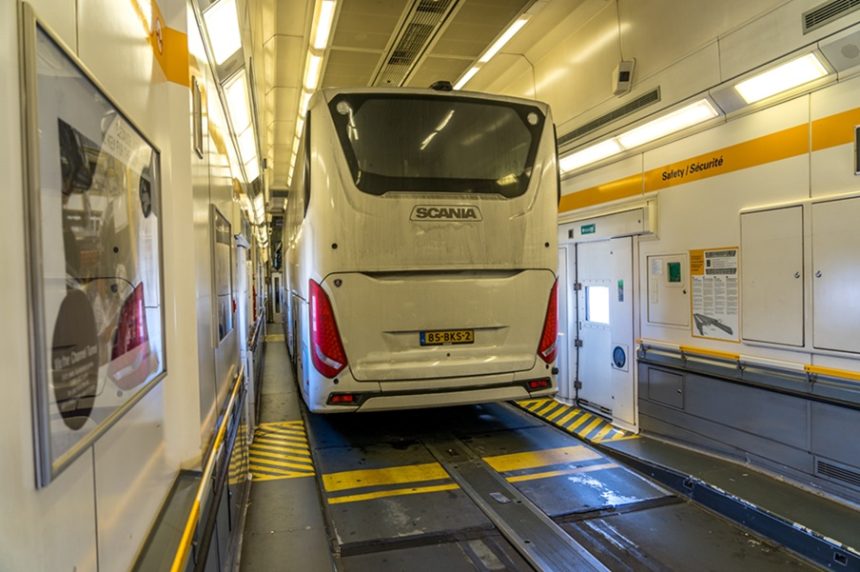
A significant section on cross-border operation is among items added to coach and bus security best practice guidance. It was updated by the Department for Transport for the first time since 2018 in early December.
The revised guidance includes changes to other areas, such as vehicle as a weapon attacks as part of a strong focus on anti-terrorism measures, and rapid evacuation from vehicles. Various further sections have been rewritten or amended as part of a majoring on a security culture that captures staff, depots, stations, termini and vehicles.
Cross-border references added note how as well as established parts of the guidance that apply to all coach and bus operators, those that travel outside the UK must be aware of three specific risks: clandestine immigration, the importing of prohibited items, and clandestine exit from the UK.
Coach operators have long been advised to take strong measures to prevent clandestine entrants when returning to the UK. The revised document cites it as the primary among factors applying to those engaged in cross-border operations, noting how in addition to vehicle stowaways, it can be facilitated by falsified passports, visas or travel documents.
Existence of the Clandestine Entrant Civil Penalty Scheme to sanction drivers and operators who unwittingly permit clandestine immigration is noted, as is advice for drivers to regularly check vehicles for any evidence of tampering with locks or access points.
Operators are recommended to join the Clandestine Entrant Civil Penalty Accreditation Scheme by the guidance. Membership can potentially lead to a reduction in penalties imposed by Border Force and recognises operators with an “effective system” to prevent carriage of clandestine entrants.
Importing prohibited items can extend from minor indiscretions by the travelling group to firearms or drugs, the document notes. In the former case, it advises that party leaders are properly briefed on what is and is not legal to import, including reference to UK Border Force’s list of the latter.
Cross-border scheduled coach services are cited as being targets for clandestine entrants or smuggling, although the guidance adds that operators engaged in it “can establish procedures and practices in a more systematic way that companies that only conduct occasional trips abroad.”
Clandestine exit from the UK “is often overlooked by coach companies, perhaps because it is the most unexpected,” the document states. However, the threat exists, and it “highlights the need in all cross-border operations for meticulous control of a passenger’s documentation.”
A further update to the coach and bus security guidance will follow once the Terrorism (Protection of Premises) Act of April 2025 has completed implementation and statutory guidance is issued by the Home Office.
That legislation, known as Martyn’s Law, will ensure that the public are better protected from terrorism by requiring some public premises and events to be prepared and ready to keep people safe should an attack occur. How the coach and bus industry complies with that will be included in the next revision.