Our political insider ponders over some positive funding news for the bus industry and challenging times ahead for Labour
No sooner had I submitted my last column for 2025 than the Department for Transport (DfT) announced a £3 billion multi-year funding settlement for local transport authorities and bus operators in England.
This was good news indeed in the run-up to Christmas and a positive end to 2025 for the industry. A stable and longer-term funding settlement has been long overdue.
The settlement covers both revenue and capital allocations, although I find it slightly curious that the revenue allocation covers a three-year period from 2026/27 to 2028/29 while the capital allocation covers a four-year period to 2029/30.
Why the difference, I wonder? £3 billion is a lot of money, of course, but over the full four-year period it amounts to less than £1 billion a year. I wonder if it’s enough to halt any further decline in bus patronage let alone facilitate growth.
Let’s hope it is, and I certainly don’t want to start off 2026 on a negative note. Still, longer-term funding should enable local transport authorities and operators to drive better value into the amounts they receive, given the longer-term planning and certainty they have.
Longer-term funding should enable local transport authorities and operators to drive better value into the amounts they receive
The railway industry has enjoyed five-year funding settlements ever since privatisation in the mid-1990s, but that is now under threat as the government’s proposals for renationalisation explicitly say that the funding that would be given to Great British Railways could be cut at any point in that five years – something that could not happen under the current funding regime for Network Rail.
So, just as the government is moving to give the bus industry stable longer-term funding, so it is potentially moving away from this for the railways. Slightly topsy-turvy, don’t you think?
Election prospects
I wonder what joys 2026 holds for us. The year has got off to an interesting start given the events in Venezuela!
On the domestic political front, I have little doubt that there will be near-constant speculation over Sir Keir Starmer’s future as Prime Minister, with Labour now trailing both Reform UK and the Conservatives in some opinion polls.
Logic suggests that nobody will mount a challenge to Mr Starmer before the elections in May, but if – as is widely expected – the party loses control of the Welsh Senedd and performs badly in the Scottish parliamentary elections and the local elections, then a challenge is a near certainty.
I suppose it’s not inconceivable that the party will lose its nerve at the prospect of defeat in these elections and seek to remove Mr Starmer well before they take place in the hope that a new leader may revive the party’s fortunes and see off an electoral meltdown.
He may be the most unpopular Prime Minister in modern history, but the party generally is now so out of favour that I can’t see a new leader turning things around between now and May.
It would be much better for the party to let Mr Starmer crash and burn at these elections and allow a new leader time to try to mend things before the 2029 General Election – even assuming that is now possible.
All eyes are, of course, on Reform and how it will perform in those elections in May. If recent local authority by-elections are anything to go by, it’s going to do very well. Since its success in the local elections last May, Reform has won a further 68 town hall seats, including 58 gains.
Labour won just 14 town hall seats and lost 44, while the Conservatives won 21 and lost 23. Overall in 2025, Reform won 781 council seats compared to 475 for the Liberal Democrats, 364 for the Conservatives and just 134 for Labour.
All the momentum is with Reform, for now at least, but there is just the occasional sign that its popularity in the polls is peaking. Most polls put the party on or around 30-31%, with only YouGov putting it lower at 25%. For Westminster watchers like me, the weeks and months leading up to the elections are going to be fascinating.
Free over-60s bus travel
However, back to buses. On 5 January, a Westminster Hall debate, introduced by the Labour MP for Folkestone and Hythe, Tony Vaughan, focused on the case for free bus travel for the over-60s, triggered by an e-petition on the issue.
The point was made that there is already free bus travel for the over-60s in a number of parts of the UK and that there should be a centrally administered and funded policy nationwide.
However, there is a contradiction in what Mr Vaughan said. He said that the current local schemes for free bus travel for the over-60s were “the result of local powers being used by local people for the benefit of local people” and went on to say that should be how local communities are run.
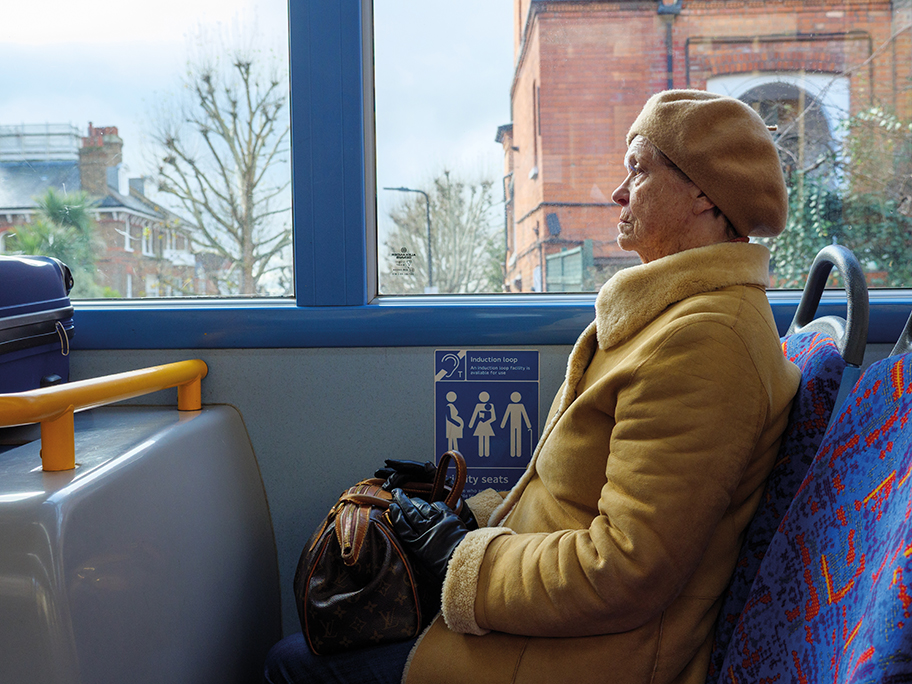
But how can you support local schemes being run by local people for the benefit of local people and then at the same time support a nationwide scheme administered centrally?
Mr Vaughan told us that a nationwide scheme would cost £250-400 million without saying how it would be paid for.
And the problem with all of these “free” schemes is that they aren’t free at all. They have to be paid for by taxpayers – including people over 60 who pay tax. It’s simply robbing Peter to pay Paul.
Many over-60s are wealthy or at least well-off. Do they really need free bus travel?
Moreover, we already have a concessionary travel scheme which costs almost £1 billion and, as DfT has pointed out, changing the statutory obligations on free bus travel, such as lowering the age of eligibility, could impact on the financial sustainability of the current concessionary travel scheme.
Further, I’m not sure anyway that I see the case for a national scheme for everybody over 60. Many over-60s are wealthy or at least well-off. Do they really need free bus travel?
Happy New Year!