




















Free bus travel for young people seems appealing, embodying fairness, opportunity, and climate goals. Questioning it feels uncomfortable. But once implemented, it becomes a system, which operates based on design rather than ideals.
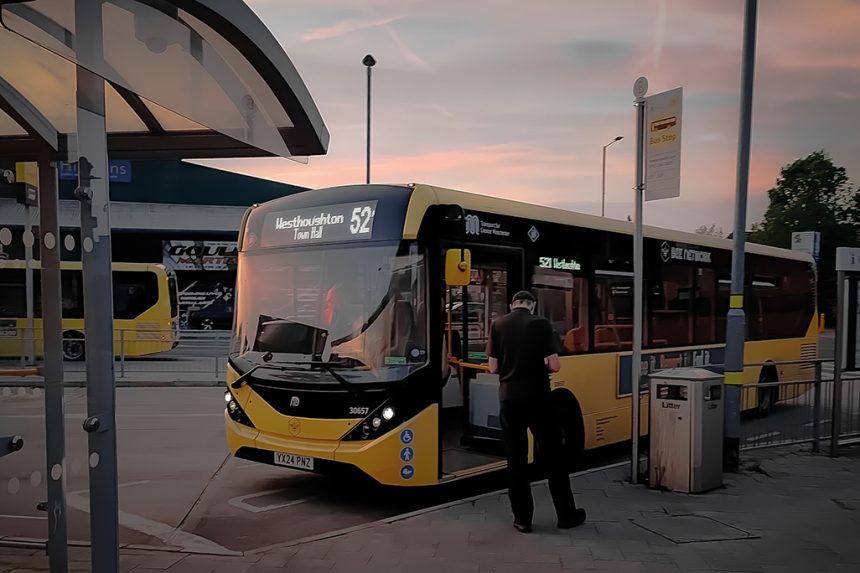
This matters especially in Greater Manchester, where youth travel is well-supported, and buses are managed via the Bee Network.
Greater Manchester already offers free bus travel for 16–18-year-olds via Our Pass, with extensions for care leavers, and discounted fares for 18–21s. Delivered by Transport for Greater Manchester for the Greater Manchester Combined Authority, these schemes are outside the national concession system. This highlights that local decision makers recognise youth mobility costs are funded locally through transport budgets.
One aspect of youth travel that rarely gets attention is misuse. A 17-year-old using an under-16 entitlement, friends sharing a pass, or a youth pass being used after eligibility expires are not usually treated as serious offences; operationally, they are logged as incorrect ticket use or fare evasion, but financially the impact is simple: the fare that should have been paid is not paid. When this happens occasionally, it barely registers. When it happens across millions of journeys, it starts to matter.
Clearly, misuse is a real operational risk, as our Pass and igo cards can be blocked or withdrawn if misused. These safeguards exist because misuse occurs. The key question is not if misuse exists but how much it will grow as access expands.
When people ask what this means in practice, the honest answer is that it depends on behaviour. There are no published figures on the level of misuse of youth travel products in Greater Manchester, so any estimate should be treated as indicative rather than definitive. For a conservative estimate, we might assume about 2% misuse, which shows good compliance. A more moderate view could be around 4%, based on similar wrong-ticket rates in other city transport systems. For a more cautious estimate, 6% might be used, reflecting times when enforcement is less strict during busy school and college hours.
Using cautious planning assumptions for journey volumes, fare differences and possible misuse rates, the potential financial exposure associated with youth concession misuse appears to be between the high hundreds of thousands and the low millions of pounds per year, with a central working estimate of one to two million.
With proposals for free travel up to age 22, such changes not only widen eligibility but also shift costs. England’s reimbursement rules aim to keep operators financially neutral, covering lost revenue and extra journeys. Expanding eligibility will also increase reimbursement unless controls are implemented early.
This is where the idea of ‘self-financing’ needs careful handling. Claims that free youth travel pays for itself usually rely on several factors aligning at once: large numbers of new trips, those trips occurring off-peak, no need for extra vehicles or staff, and minimal misuse. None of these outcomes is guaranteed.
Designing a genuinely low-risk scheme focuses on practical choices over good intentions. It involves funding enforcement that scales with journey volumes, including night routes, using robust, age-verified digital eligibility with automatic expiry to ensure compliance without visual judgement. It requires transparent measurement and publication of misuse data by time of day, revealing night service data separate from daytime averages. It recognises that late-evening and peak demand are not ‘free’ to carry and that funding arrangements should be agreed upon in advance, so financial risks stay with policy decisions instead of slipping onto local transport budgets.
None of this guarantees zero misuse, and no one should pretend otherwise. Low risk must be designed, funded, and monitored; without that, costs shift from farebox to public funds. Greater Manchester shows willingness to invest in youth mobility; if ambition increases, credibility relies less on policy appeal and more on robustness when assumptions fail.
Stephen Wigglesworth,
Former Duty Manager, Arriva NW