




















Those who have been around the bus industry for a long time will likely recall the extent of rancour when early hints of franchising came in the mid-2010s. Language from both the for and the against camps was blunt in making their respective positions known.
Former Stagecoach Chief Executive Martin Griffiths was a notable critic, while ‘Metro Mayors’ in England have been equally vocal in their attacks on deregulation and the private businesses that have made money from it. To anyone looking in, it could have all been a little unbecoming at times.
Broadly – but not entirely, particularly for SMEs – the bus operating sector has reached an acceptance that franchising, in England at least, is here and will expand. Six areas are committed and more will follow. Wales is moving forward with a country-wide approach.
There is thus a maturity to the relationships between parties where franchising is either in place or in the works. There has to be; operators already in those areas sit alongside others looking in that have all to gain and little to lose, barring the time and expense of bidding.
Meanwhile, local transport authorities need to coexist with their operator suppliers for a franchised network to work properly. One figure familiar with goings-on in Greater Manchester observes how a well-ordered approach on both sides brings that outcome, with money there to be made by operators overseeing disciplined delivery.
It is thus odd to see Mayor of the Liverpool City Region Steve Rotheram wind back the clock somewhat and take issue with private operators and the concept of profit in naming the winners of the first two bus franchising contracts in his region.
Mr Rotheram’s position on who should control bus services is crystal clear, as it is for other elected mayors in the North of England. His comments on deregulation were echoed on the same day by Mayor of North East England Kim McGuinness.
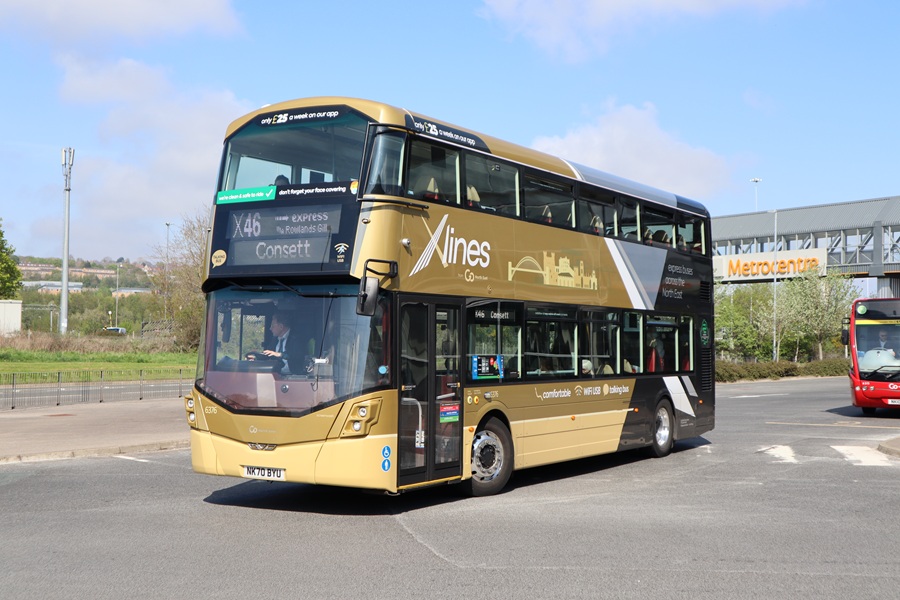
She used social media to share a similar if not even more strident message that the North East’s buses “should just work” but under deregulation do not, something that it is claimed franchising will remedy. As with others, wider factors that hinder reliable bus operation regardless of regulatory landscape go unmentioned.
Mr Rotheram will get his franchised network, but claims of bus services under deregulation for the past 40 years having run with no accountability is perhaps an unwittingly damning verdict on the Traffic Commissioners as much as anyone else. Therein sits a continuation of the war of words that has done neither side many favours.
No doubt Mr Rotheram’s transport team in the Liverpool City Region will work hard with successful bidders to roll out franchised services. The scale of effort seen in Greater Manchester illustrates how it is a mammoth task for both sides to get ready for Day One.
Meanwhile, strong words have flowed in the other direction in discussion of bus franchising in the West of Scotland. McGill’s Buses has as-yet unanswered questions about how it will be paid for if it happens. The operator leaves no room for doubt about what its policy is, or that it will fight reregulation with all its might.
But the reality is that franchising or not, elected mayors must accept that private operators and profits will continue to form part of their networks unless they go down the municipal route. Appetite for that appears lacking.
Do Stagecoach, Go-Ahead, First Bus, Rotala, Metroline and Vision Bus operate the Bee Network altruistically? No. They do so to make money, and a look at Stagecoach’s recent annual report shows that it is quite happy with that approach. In England at least, the die is set. Collaborative, not combative, language should now be the order of the day.