



















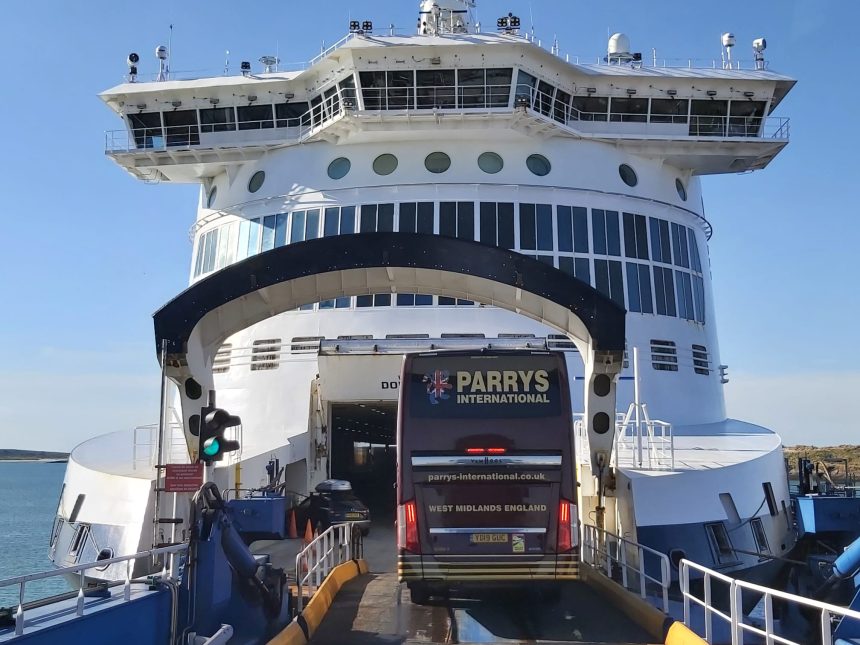
Parrys International Tours has gained support from its local MP in a campaign to minimise delays for coaches at the Port of Dover.
Gavin Williamson, MP for Stone, Great Wyrley and Penkridge, says he will talk to ministers at the Department for Transport about the delays, which are thought to be due to the new European Union Entry/Exit System.
Dave Parry, Parrys International Managing Director, relayed news of the development to the Coach Tourism Association, which publicised it on its social media accounts and has asked other operators for feedback on their experiences at Dover.
He spoke of lengthy delays for his coaches at Dover during the early May bank holiday, although the port of Dover understands that the maximum wait time for coaches there was 60 minutes during the weekend in question.
“Coach operators are facing gridlock and processing delays at the Port of Dover, particularly during peak periods, leading to missed ferry crossings and significant scheduling disruptions,” Mr Parry says. “This is resulting in passenger dissatisfaction and logistical difficulties regarding driver hours, all while operators are paying triple the standard rates for peak travel dates.”
According to the owner of the Staffordshire-based operator, a high volume of car traffic is preventing coaches from entering the port area to be processed.
“During peak periods, the port cannot cope with the volume of traffic, despite having full prior awareness of the number of coaches entering because they’ve pre-booked – and paid a premium rate,” Mr Parry says.
Since it began to be rolled out in October 2025, the EES process has led to severe disruption at airports and seaports across Europe.
The digital border control system, which is designed to replace manual passport stamping, was due to be fully operational by April.
However, the delays have at times led to border officials suspending the checks.
Dover appeared to be coping reasonably well on the initial roll-out last autumn and during spring peak periods, according to feedback received by routeone.
Mr Parry believes that, while the system is being bedded in, the Port of Dover should move processing to a more spacious area of the port at peak times.
“The Dover quayside is a very large area and during peak periods they could potentially use this space to process vehicles, rather than routing purely through the normal areas,” he says.
The Port says that such an option has been considered but no suitable space exists for that purpose.