



















What might seem like a clever device is within conditions for the next round of PSVAR exemptions for coaches that cover in-scope, closed-door home-to-school services from 1 August and last to 2030: any operator granted such special authorisation will be required to include PSVAR readiness within new coaches it places into service from February 2027.
Some niche vehicles are excluded, such as team transporters and ‘band buses’. There may also be room to debate the application of certain other parts of the list of types not captured by the condition.
But its intention is otherwise clear and straightforward: to grow the number of accessible coaches in the market. New coach registrations have been buoyant in recent years; some who follow the figures believe they have been as many as 200 per annum above what was seen pre-2020. Whether that continues remains to be seen.
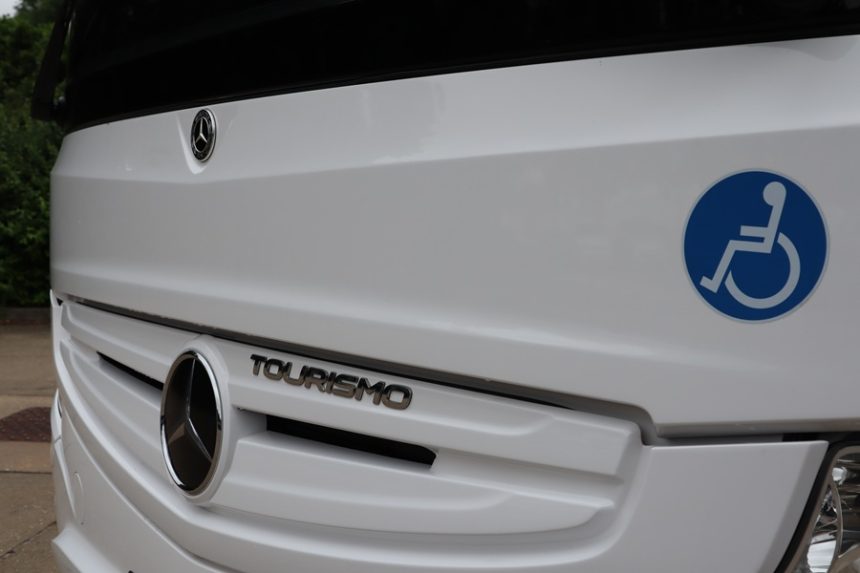
PSVAR ready configuration is already understood by the coach industry. It does not include a passenger lift or destination displays, but makes their future fitment straightforward by doing structural work at build rather than later.
It is not beyond probability that a coach operator involved in home-to-school already specifies new vehicles as PSVAR ready as a minimum. An end to exemptions for rail replacement furthers that argument. Planned work on behalf of a train operating company does not often occur at the same time as home-to-school, and crossover of vehicle utilisation is clear.
Realistically, requirement by the Department for Transport (DfT) that holders of exemptions to 2030 go with PSVAR ready on all new coaches (barring niche cases) can be little surprise, sitting as it will alongside a continuation of existing baseline compliance levels by those operators as a further condition.
The Department has come around to messaging from much of the coach industry on the absurdity of requiring compliance on all in-scope closed-door home-to-school services regardless of the needs of the known passenger manifest.
Wording around the latest exemptions gives a strong suggestion (but no confirmation) of that position having been abandoned, although – as has been said many times – that will be no consolation to those operators that have invested to reach full compliance.
But a softening of the government line on PSVAR (for now) was always going to involve compromise on all sides. Some sources had speculated that the requirement on new coaches would have gone straight to full compliance. Demand for PSVAR ready may itself thus be a compromise of a compromise.
Made clear in a regulatory impact assessment on the latest policy is that this is not an end to the matter. The four years from August will be used to develop “a longer-term, fit for purpose regulatory approach for accessible coach provision for closed-door services.”
Note no mention of home-to-school in that. The document muses how such a position post-2030 could include additional use cases (albeit unnamed for now), or a new vehicle compliance requirement.
The run-up to the latest exemptions expiring in four years’ time will no doubt be as filled with opinion, pitch and swerve as the approach to the end of the current round. But come 2030, the consequences may well extend far beyond closed-door home-to-school.