


















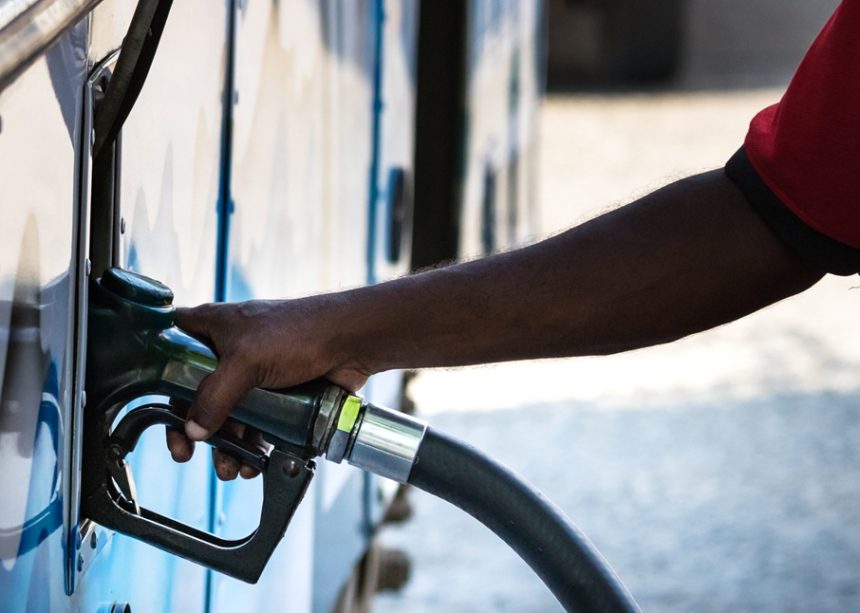
Businesses in coach and bus that are exposed to variance in the unhedged price of diesel will be watching oil trends carefully over coming days and weeks, particularly where bulk fuel is needed. A penny or three per litre adds up quickly on a tanker full of go-juice.
Agreement (in some form) on an end (of sorts) to hostilities in the Middle East quickly saw Brent crude fall back to around US$75.50 per barrel on 16 June. It had been within touching distance of US$120 at the worst part of the latest crisis, and as low as US$56 before conflict began.
Eyes will also be on the Strait of Hormuz. Donald Trump has told fellow G7 leaders that it will be fully open soon, notwithstanding it having been his actions that caused it to close in the first place. Experts in that field suggest that there will be something of a lag as shipping gets back to normal, but the end is at least in sight, we are told. Hopefully.
What is the coach and bus industry to learn from the past few months? Other than its political masters making certain to avoid further aggravating Iran being highly desirable, there is perhaps not a lot to take forward into the next oil crisis that, while unwelcome, is as inevitable at some point as day following night.
Has there been a sudden clamour for zero-emission? No, not beyond the natural trajectory that particularly in bus is well-established. It may be so in the car market, but choice and availability of vehicles, and of infrastructure for buyers that have off-road parking, is a different animal to the commercial vehicle sector.
Will politicians do much to help sectors that depend on fossil fuels? No. Rachel Reeves’ inevitable decision to postpone the planned increase in fuel duty from September is little more than performative and will not decrease the cost of diesel; instead, it will – under current plans – merely delay the point at which the figure increases.
Do fuel prices have an impact on the behaviour of customers and their willingness to consider public transport over the private car? This is less clear, and while Stagecoach has seen some changes, its communication around that focused on the youngest group of people of working age.
There is some anecdotal evidence that scheduled coach routes benefit when consumer fuel costs rise, although whether they do so sufficiently to balance out horrendous diesel spend increases for operators in that high-utilisation field is open to discussion.
Finally, do local authorities or the public care much when increasing costs are encountered by coach and bus providers? Some may, but broadly, the answer is (again) no.
One SME coach operator highlights the ongoing finger-in-the-air approach to ordering bulk diesel. Commit today and it is one price. A couple of days later, and it could be 3ppl different in either direction. On a 30,000 litre delivery, that is a lot of money to gamble.
They add that passing on the uplift to customers where a price is not contracted ahead of time is increasingly difficult. Coach hire rates may have previously touched a ceiling beyond which they cannot go, the operator speculates; it has previously been said in some corners that the biggest competition is now not travelling at all.
But there is, at least in the context of a conflict where the truth has been used economically by all sides on many occasions, a respite in store on fuel prices.
Yet three things are worth remembering: one, the crisis will repeat at some point; two, that the answer to requests for help then will be the same broad ‘no’ as this time; and three, that diesel prices have a magical ability to fall much more slowly than they increase.