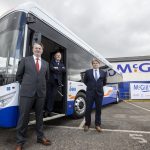




















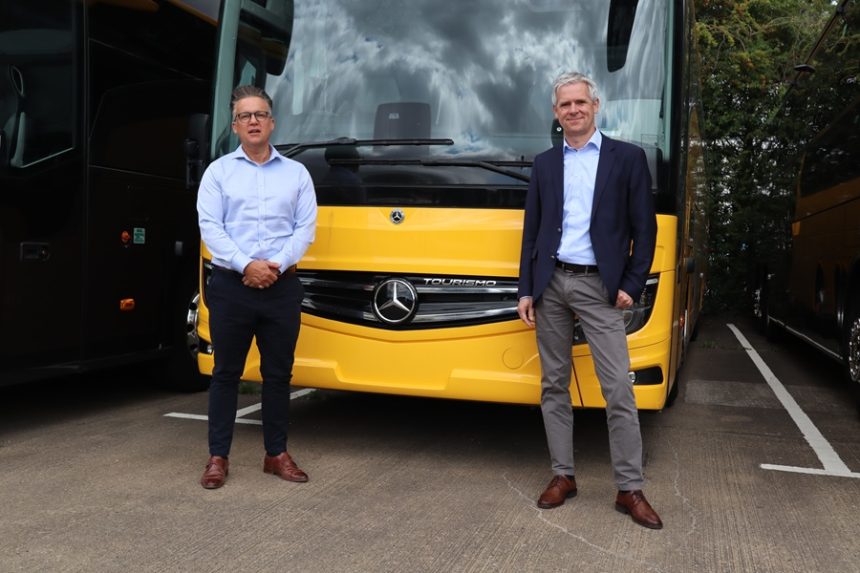
Commentary around lead times for new coaches perhaps disguises the ongoing scale of demand for those vehicles. Daimler Buses UK has long seen significant market share for the Mercedes-Benz Tourismo, and the dealership says that 2025 will be its best year yet for deliveries; well over 300 new vehicles will enter the market in the UK and Ireland, and Director Sales Mercedes-Benz Jonathan Prime (pictured above, left) expects that buoyancy will endure in the medium-term.
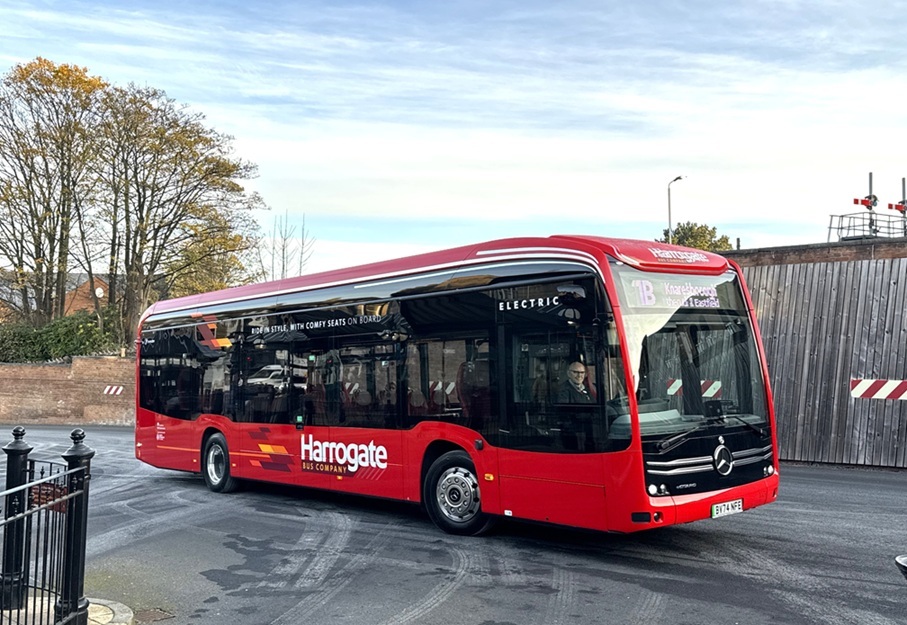
At the same time, the Coventry business is leveraging its work in bus. The well-established Citaro continues to attract orders in diesel and mild-hybrid forms, but centrepiece of the range is the battery-electric eCitaro. It remains the case that in the UK and Ireland, the eCitaro is largely focused on bespoke requirements.
Availability of batteries for the eCitaro has improved, and the fourth generation of that energy storage – NMC4 – will be adopted into production next year. Up to 533kWh of usable capacity will deliver a maximum range of 480km. In the meantime, Daimler Buses is targeting European market leadership for the eCitaro.
Facilities investment a priority for Daimler Buses UK
With a right-hand drive product line-up that majors on evolution rather than revolution, strong numbers in coach and a growing presence in battery-electric bus, work behind the scenes at Daimler Buses UK to support customers is of primary importance. That has been quietly ongoing at Coventry under the leadership of Jens Heinemann (pictured top, right) as CEO.
Jens is now three years in that post. Before moving to the UK, he was responsible for coach and bus sales to all mid-sized and small fleets in Germany. There he oversaw 30 staff on Mercedes-Benz-branded products and liaised with 21 others on Setra coaches.
“An impression I gained on my first day in Coventry was that there is an excellent team here,” he explains. But a split-site approach – where coach handovers took place on another plot nearby, effectively separating new vehicles from aftersales – was a surprise.
Bringing affairs back under one roof was a priority. “I wanted to reestablish that as quickly as possible,” Jens continues. An open-plan office now greets all visitors. “Customers see all of us,” he adds. Investment of £1.5 million has gone into facilities on the consolidated site, including a dedicated electromobility centre, a handover bay, and space for classroom and hands-on training.
Numbers sustainable for Tourismo coach
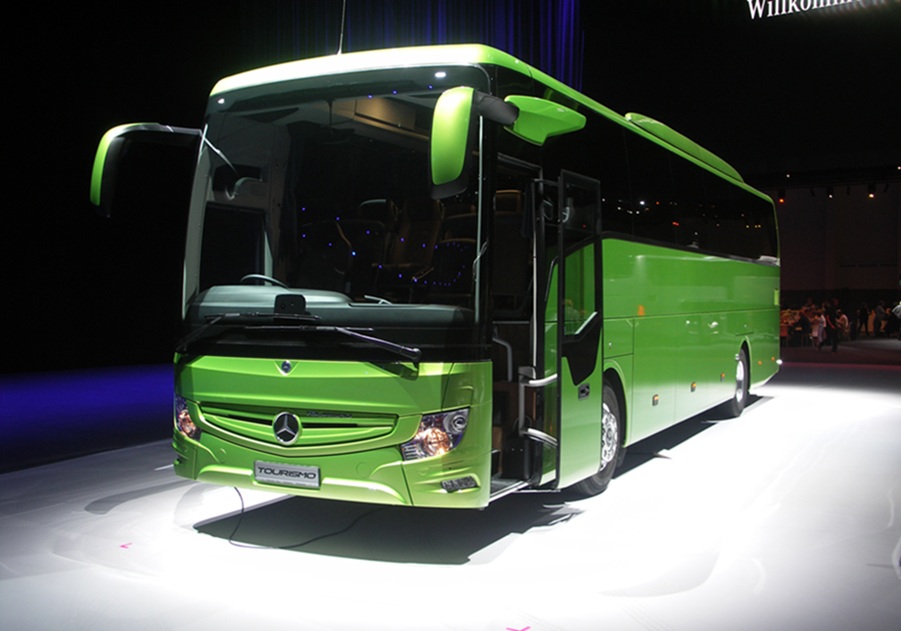
In coach, the Tourismo is as popular as ever. While it attracts strong customer loyalty, Jens points to support as being key to sustaining volumes. Training is important, and Daimler Buses UK is working closely with local service partners to expand that.
“We have good relationships with them. I see the resource for our coach and bus customers functioning as an independent network within the wider Daimler Truck network,” he says. “It is for us to support that. Technicians at local dealerships are employed by those parties, but they are trained and certified on coach and bus by us. I was pleased that when we invited our service partners to Germany, they all accepted.”
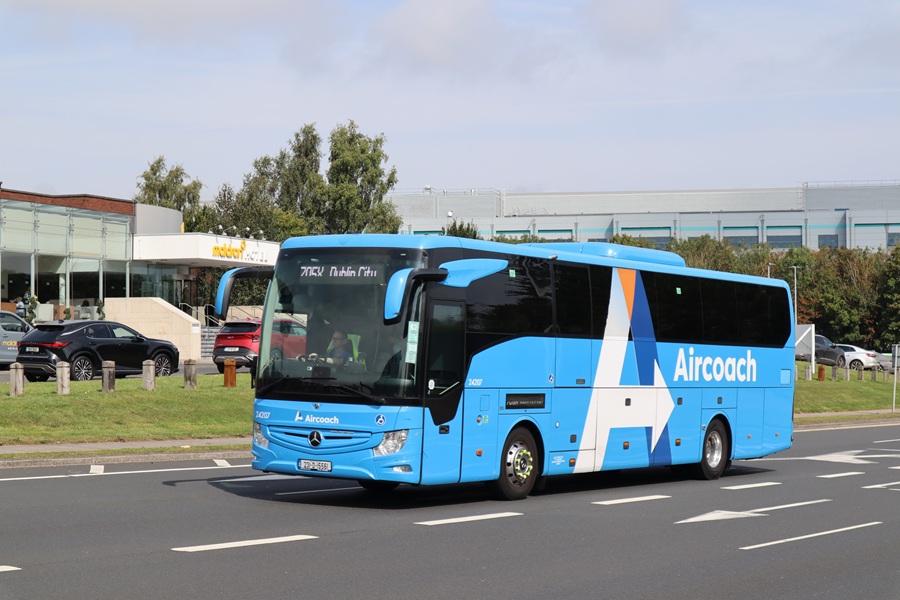
In terms of the Europe-wide touring coach outlook, two things are clear: Euro 7 diesel and zero-emission, the latter expected by 2030.
For ultimate parent Daimler Truck, there will be a large global market for Euro 7, but how the UK adopts it remains to be seen. Jens notes how Euro 7 will nevertheless broaden considerations beyond the tailpipe and introduce other sources of emissions to calculations. That will foster a package-based focus for manufacturers, and he is confident that what is forthcoming will be attractive.
Coach and bus synergies for electric shift
On battery-electric in coach, Jonathan sees eventual synergies with what Daimler Buses is already doing with eCitaro. Packaging is critical. To maintain luggage space and flexibility while also offering the right range, next-generation battery technology is seen as being necessary in the touring coach field, although Daimler Buses has already developed the low-height eIntouro in left-hand drive.
“We are not sleeping on battery-electric coach, and we will have a product in time. But it must be fully developed, and that is reliant on a subsequent generation of technology,” he continues.
Jonathan underlines wider factors that will influence battery-electric. Some buyers dispose of coaches in mid-life and residual values are thus in play. He also identifies a stable existing market for operators where rates are strong. “Is it for us to push [coach] customers into electric? I do not believe so. But we recognise that things could change quickly. We will be there; it is a question of the right time.”
‘Public transport plus’ focus for eCitaro
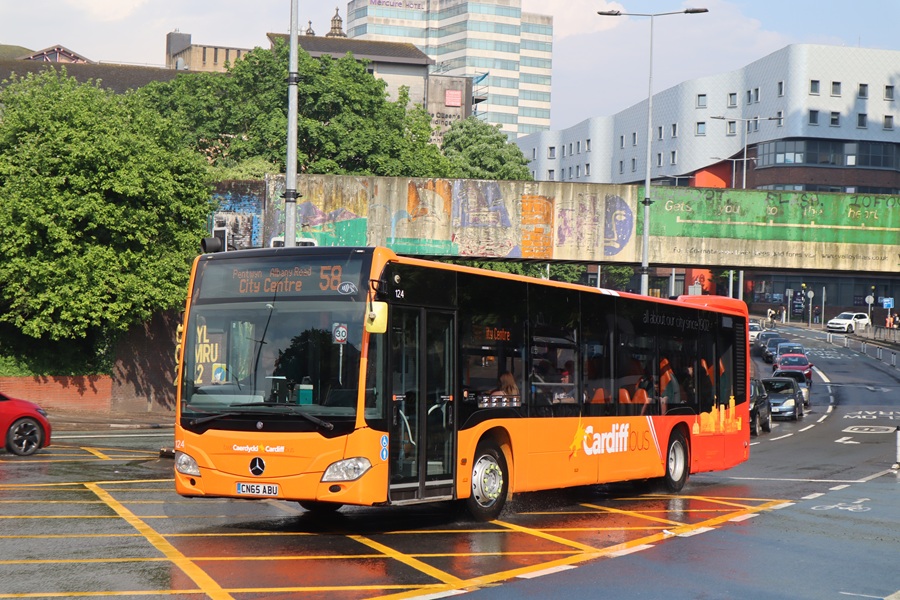
For eCitaro, the UK focus is on what Jens calls “public transport plus” applications in flagship or high-profile applications. NMC4 batteries will be a big step. A right-hand drive demonstrator with that generation of energy storage is due to arrive here in April 2026. Promotion of a turnkey-based ‘eSystems’ combined vehicle and depot infrastructure deployment approach is also gaining momentum.
“We consider smaller customers and the discussions they would have on electrification,” Jens outlines. “They need to buy vehicles and chargers and have the necessary civil engineering work done, among other things.”
The eSystems vehicle-as-a-service offering started when Daimler Buses worked with the medium-sized German city of Wiesbaden. The manufacturer ultimately redesigned the customer’s depot and provided all the necessary infrastructure, vehicles and support. It has since completed over 30 such projects in Europe.
“Lots of operators in the UK now have the necessary infrastructure for electric but many more do not, and they will enter the electric field over coming years,” Jonathan adds.
A recent seminar in Ireland alongside one of its aftersales partners, JJ Kavanagh, saw good response to the turnkey approach from operators and transport authority representatives. eSystems will also support adoption of vehicles from other sources in certain scenarios, such as where an eCitaro buyer adds battery-electric double-deckers. “We have the specialists to deliver that,” Jens continues.
On the product front, the move to NMC4 will come with options of four, five and six battery packs for local, standard and extended ranges. That sits close to the eSystems approach; Daimler Buses models and analyses routes to reach the best solution for the buyer. The Citaro will not move to Euro 7 for internal combustion.
Cementing plans for the future
As products and services continue to develop, Jens is keen that capacity at Daimler Buses UK to support customers does the same. Investment in that area will be maintained, a task that he views as vital with volumes in the coach field showing no sign of slowing. Staff are central to that.
Apprentices are recruited in many disciplines and 10 of those employees are on the payroll at Coventry. Experience shows that when staff are brought through and developed, they are more likely to stay. The bespoke nature of coach and bus sales and support is a further consideration.
“As a business we generally cannot hire a mechanic who can do everything we need, so we create those skills internally,” he continues. Much electromobility training is ongoing and that has established strong competence in the electric bus field. When coach takes the zero-emission step, Daimler Buses UK will thus have a good base to build on.
More widely on coach, Jens is confident that the business can sustain deliveries at high volumes. Some go directly to Ireland but the remainder come through Coventry. Pre-delivery inspection is a big task, but workshop facilities now in place will allow further growth. An overhead gantry to handle traction batteries from electric buses has been installed, and the training area includes mechanical units from diesel coaches.
The now and the future are thus both positive for Daimler Buses UK. It knows where products are going and is looking towards Euro 7 and then battery-electric in coach. The eCitaro majors on ‘public transport plus’ and its provision via a turnkey approach is developing alongside the step change of NMC4. As with work by its parents in Germany, the mantra for the dealership is ongoing evolution, not one-time revolution.