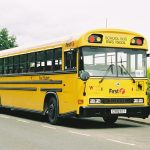




















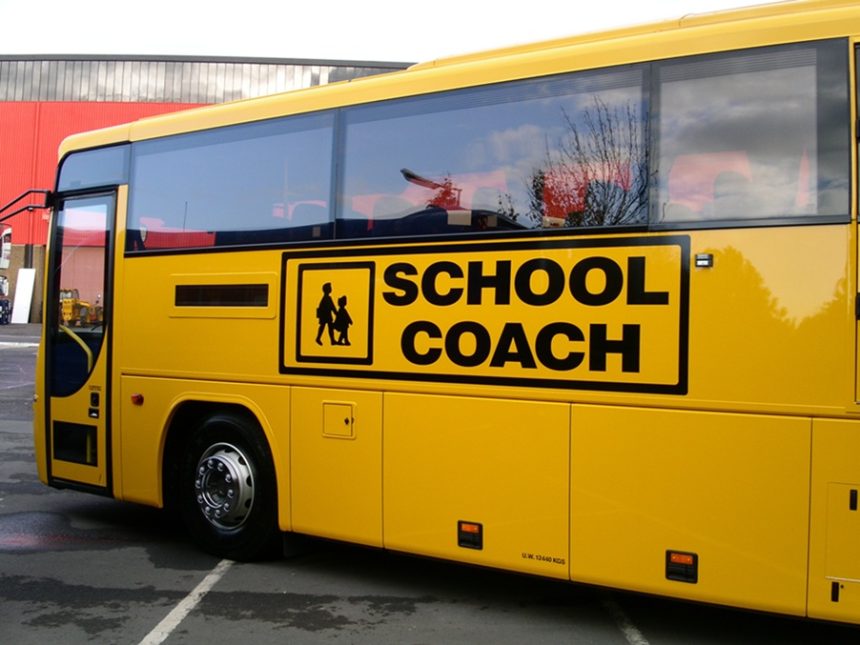
Many local authorities (LAs) in England consistently overspend on home-to-school transport, with almost half doing so by 20% or more than budgeted in FY2023/24, a report from the National Audit Office (NAO) has shown. That gave an overall exceedance of £415 million from a total spend of £2.32 billion by those councils.
Such rising costs will be compounded by an end to medium-term exemptions from PSVAR on 31 July 2026, the public spending watchdog believes. If that planned move progresses, from the start of the 2026/27 academic year all vehicles used on in-scope home-to-school services will need to comply with the accessibility legislation.
NAO notes how some coach and bus stock currently used is not compliant and that the changes could reduce the pool of available vehicles and pressure rates.
Further steps on PSVAR are awaited from the Department for Transport (DfT), which in the summer consulted coach operators that deliver home-to-school services. Its survey hinted at an extension to the exemptions being under consideration.
Fuel and labour in rising home-to-school transport costs
The report was prepared for the Department for Education (DfE). It captures all home-to-school transport commissioned by LAs in England. During FY2023/24, those bodies procured transport for an estimated 520,000 young people.
Of the £2.32 billion spent, £513 million went on mainstream provision for children aged up to 16. By far the biggest share was for special educational needs or disabilities (SEND) transport for the same age group, at £1.52 billion. The remainder was spent on transport for young people aged 16 and over.

Services within scope of the report are delivered by a variety of means including coaches, buses, minibuses, and taxis and private hire vehicles.
Across LAs in England with a duty to provide home-to-school transport, the £415 million overspend in FY2023/24 was 22% above budget. In FY2015/16, it was £51 million, or 4% of a total £1.36 billion adjusted to 2023-24 prices. One in five LAs overspent by 20% or more then.
Rapidly growing need for SEND transport following changes to legislation is cited as the primary driver for the 70% overall increase across the eight-year period, although a disconnect between financial and academic years is also given. Some LAs reported provider uplifts just before start of the academic year and little option other than to accept them.
Increases to fuel and labour costs among operators are acknowledged as factors in that dynamic. The lift in employers’ National Insurance contributions in April was also highlighted as potentially affecting the availability and cost of home-to-school transport.
The report adds: “In November 2023, the Association of Directors of Children’s Services and the Association of Directors of Environment, Economy, Planning and Transport reported that where contracts have ended, retendered contracts were costing 20% or more [extra] due to inflation, wage rises and fuel costs.”
Many other elements to spiralling demand and costs are in play
While total real-term spending across the home-to-school field in England rose by 70% from FY2015/16 to FY2023/24, for mainstream transport that uplift was just 9%. SEND transport costs grew by 106% over the same timeframe, however.
Mainstream home-to-school transport costs have risen more steeply since the pandemic than before it, with a 5.3% uplift from FY2022/23 to FY2023/24. That spending actually decreased by 11% from FY2015/16 to FY2020/21.
Some LAs told how local coach and minibus markets have still not recovered from the fallout of COVID-19. As a result, those bodies’ ability to negotiate “favourable rates” has diminished and use of taxis has increased. Such constraints also apply to SEND transport, the report observes.

A reduction in local bus service mileage, particularly in rural areas, is highlighted as a further contributor to pressure on home-to-school budgets through greater reliance on dedicated provision.
Nevertheless, DfE believes that the Bus Services Act 2025 will make it easier for LAs to integrate home-to-school transport with local bus networks and give the opportunity to increase bus service provision in rural areas.
“At the same time, DfE is working with DfT to ensure that the Integrated National Transport Strategy… considers home-to-school transport,” NAO continues.
Financial reform on home-to-school transport totals underway
On central government funding for home-to-school transport in England, the report describes how its formula within the Local Government Finance Settlement (LGFS) aligns with neither LA spending on pre-16 transport nor cost drivers for that.
As part of efforts to reform LA finances, DfE is working with the Ministry of Housing, Communities and Local Government to develop a new funding formula for pre-16 home-to-school transport that will be part of the LGTS in FY2026/27. Unlike the current approach, it will be based on pupil population and distances travelled.
To tackle rising costs, the report notes how various steps have been taken by some LAs. Introduction of dynamic purchase systems (DPS) and reverse auctions are cited, as is encouragement of more bidders.
The document adds how two LAs aired efforts to expand in-house fleets to reduce dependence on external suppliers. Against that are cited other reports that in-house delivery is not always viable through difficulties with vehicles and staffing.
One authority spoke of how it has moved away from a DPS to a purchasing framework that enables control of cost variations by keeping increases for fuel and driver wages within an agreed limit. That is estimated to have saved around £13 million in FY2024/25.
Download the National Audit Office report on home-to-school transport here.