



















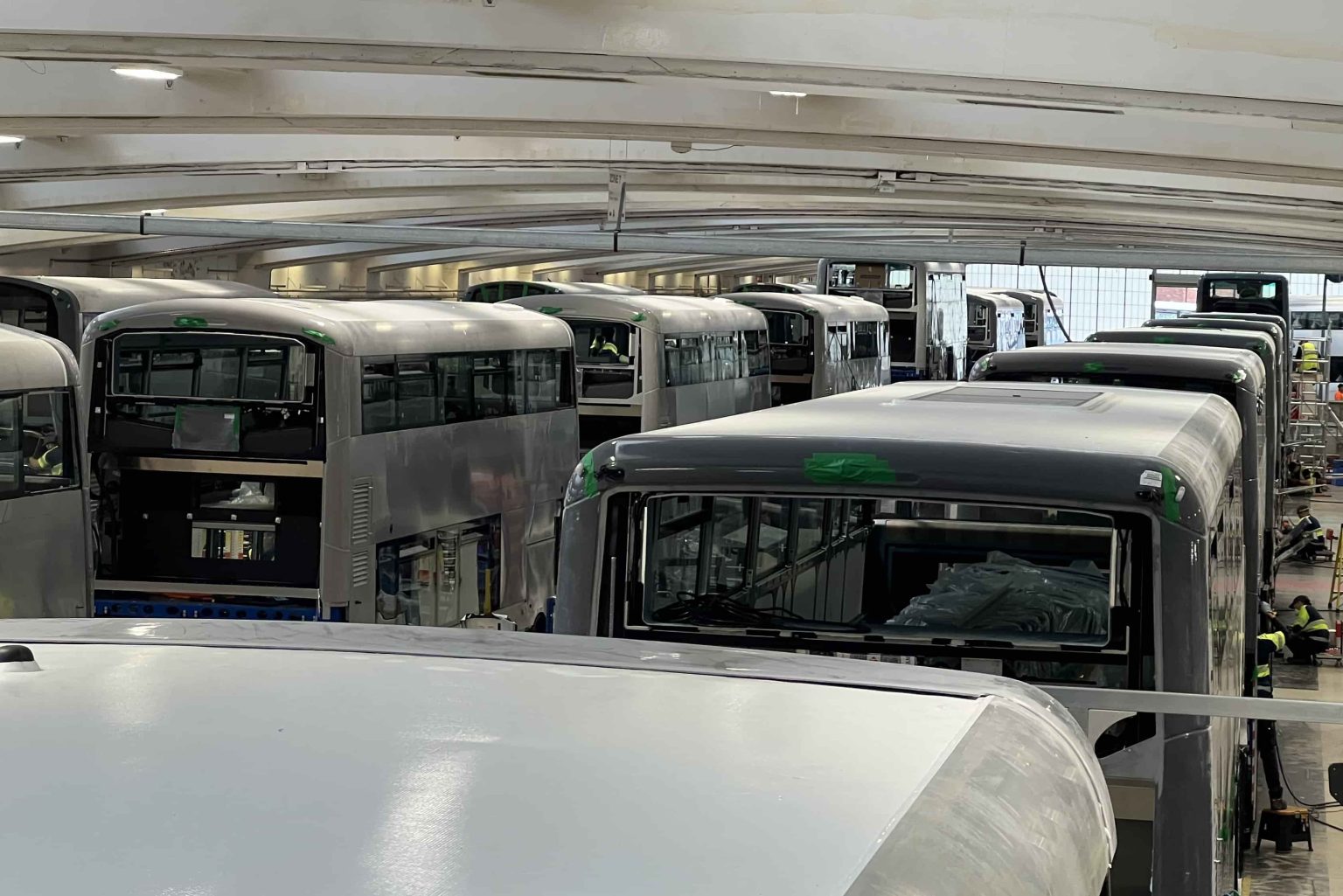

The Department for Transport (DfT) has published its 10-year zero-emission bus (ZEB) order pipeline, projecting demand for more than 23,000 battery-electric and zero-emission buses over the next decade — all while offering little clarity on how or where those vehicles will actually be procured.
The document has been developed via the UK Bus Manufacturing Expert Panel and is intended to give manufacturers and suppliers greater confidence to invest in production capacity.
It aggregates anticipated orders from local transport authorities and operators between 2026 and 2035, presenting a headline figure of 23,381 vehicles, with a more conservative range of 17,400 to 21,525.
While that topline number suggests a healthy long-term market, there is an absence of granular detail.
The pipeline sets out annual projections with demand expected to peak around the end of the decade. Estimates suggest between 1,450 and 1,750 ZEBs in 2026, rising to as many as 3,050 in 2030 before tapering off towards 2035.
Double-deck buses dominate the forecast and account for 12,673 vehicles. Single-deck vehicles total 6,726, while a further 2,112 are categorised as mini, midi or “slimline” buses suited to rural routes.
The pipeline provides no indication of which authorities or operators are expected to procure vehicles, nor how orders align with funding streams or franchising timelines.
DfT is explicit about the document’s limitations. Data is anonymised, excludes many smaller operators, and is based on self-reported confidence levels ranging from “confirmed” to “low confidence”. It is not classified as official statistics, no geographical breakdown is provided, and there is no link to specific funding programmes such as the Zero Emission Bus Regional Areas (ZEBRA) rounds.
The government instead positions the pipeline as a tool to improve “consistency and transparency” while supporting decarbonisation goals.
Manufacturers have responded with positivity, noting it is good that the UK government is demonstrating a commitment to future orders. Ian Downie, Head of Yutong UK, says the pipeline “gives an indication” of the potential volumes over the next 10 years. “Our initial reaction with every document is that we take at face value,” he adds. “It will be useful for planning, but in terms of our own capabilities, we are able to deliver from order to delivery within nine months, meaning we will be ready to cope with the fluctuations of the forecast.”
DfT says the final meeting of the UK Bus Manufacturing Expert Panel focused on agreeing mayoral commitments that reflect “the collective work that the Panel members have put in over the past year” and that are shaped by practical insights and shared priority. Attendees shared reflections on how they would maintain accountability for their commitments.
Comments Roads and Buses Minister Simon Lightwood: “The UK’s bus manufacturing sector has a rich history, and over the course of the last year we have made huge strides in exploring how we can better support the UK’s bus manufacturing capacity. Last week, I was delighted to bring together industry experts, regional mayors and the devolved regions together for our final UK Bus Manufacturing Expert Panel meeting.
“Following these discussions, all members have agreed to a series of commitments that will play a significant role in shaping the bus manufacturing industry for years to come. This includes a forward look of future bus orders allowing manufacturers to invest with certainty into new buses that will offer better, smoother journeys for passengers.
“They also agreed to doing all they can to make buses safer and accessible for passengers while committing to a more consistent approach to social value in all future bus procurement. This includes embedding new safety and accessibility guidance in manufacturing from design to delivery.
“With the Bus Services Act now law and £3 billion invested into buses across the country, we are reaffirming our commitment to ensuring bus services work for everyone – whether it is passengers getting from A to B, or the manufacturers who play a vital role in keeping the country moving.”