



















Bus manufacturing has always found year-to-year consistency on orders difficult to come by. When the going is good, there have been some big numbers; equally, there have been some dismal ones, and with long-lead items around zero-emission a growing factor in build schedules, there will be little envy for those who must plan around such fluctuation.
Recent weeks have brought signs of a good return ahead in the medium-term, while the 10-year zero-emission bus (ZEB) order pipeline from the UK Bus Manufacturing Expert Panel was published on 16 March.
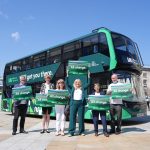
Major investment will come from franchising bodies; Greater Manchester, the Liverpool City Region, South Yorkshire and West Yorkshire each have major procurements ahead to replace legacy fleets, and in the case of Greater Manchester, to satisfy an ambitious plan for the Bee Network to be entirely zero-emission by 2030.
In the West Midlands, the Combined Authority there has, to its credit, realised that a regular and ongoing fleet renewal programme is the right way of doing things, an approach that will no doubt deliver value to the buyer as well as the builder(s).
Meanwhile, the Martijn Gilbert effect at Arriva UK Bus has led to consolidated orders for over 800 new buses from multiple manufacturers. Such a procurement was probably overdue, but it is good news for the beneficiaries, which include both UK builders of large buses.
At the same time, government purse strings were again released to part-fund a further 484 zero-emission buses in England, and the results of the third round of the Scottish Zero Emission Bus challenge fund (ScotZEB3) are awaited. London’s move to an entirely zero-emission fleet continues, albeit not by the hoped-for 2030.
If all of ScotZEB3’s £45 million allocation is taken up, a rough-and-ready calculation suggests at least 350 buses could follow, depending on vehicle sizes and the amount of associated infrastructure work.
Northern Ireland has also made good progress, but the outlier is Wales, where warm words on decarbonisation and franchising are not being matched by the pace of fleet transition to zero-emission.
Total purchases for the 10-year pipeline add up to an estimated 23,381 ZEBs, with double-deck representing the largest share of expected demand. It offers little beyond that — data has not been broken down by geography, nor are the projections considered official government statistics.
The wait now will be for ScotZEB3 results, particularly given the political expediency attached to the need to get Alexander Dennis production in Scotland back to something like full pace.
Nevertheless, the coming years look like they will see some good orderbooks in bus. Coach has also been doing well, with new entrants and new models from existing suppliers in hand that look likely to maintain that pace; 50 midicoaches ordered by one dealer were sold before any arrived, and other suppliers report strong ongoing demand.
For bus, the need for a long-term horizon on orders has never been more important. It is critical to maintaining the current pace of zero-emission transition. The vehicles themselves are broadly where they need to be, and manufacturers have put a lot of money into reaching that position.
It had been hoped a sensible pipeline outlook from the Expert Panel would boost confidence among builders in their long-term product and production strategies. The industry will be hoping that the pipeline does not fall into the BSOG reform or PSVAR exemptions bottomless trap and that more realistic, well-considered clarity is forthcoming, and soon.