




















The costs landscape against which the coach and bus industry currently sits is, to draw an obvious conclusion, challenging. It is scarcely matched by revenues in some cases, holds the consensus. That all-important bit in the middle is thus under severe pressure.
A cautious welcome greeted inevitable news that a planned unwind of the temporary 5ppl fuel duty cut will now not begin in September. The only real surprise was how long it took to be announced.
But the latest position still holds a 3ppl lift for 1 January 2027, with another 2ppl a couple of months later. Backpedalling on fuel duty is nothing new, but as it stands, the rate of 57.95ppl will be back in nine months’ time.
Some sources believe that diesel prices are unlikely to ever return to the level seen before the ongoing and unpredictable disasterpiece in Iran, although they will undoubtedly come down at some point. Other factors around costs – business taxes, wages and insurance, to name a few – err between the unlikely and the impossible in their likelihood of falling.
Some elements of respite have been secured. In England, reimbursement for the £3 national bus fare cap will increase, as will BSOG Plus, while additional Local Authority Bus Grant monies will be provided to councils for targeted bus service support.
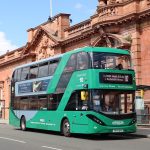
Against that sits a question mark over how reimbursement for free bus travel for children in England during August will be handled. Meanwhile, Nottingham City Transport (NCT) has cited rising costs among reasons why it will take nine vehicles off its peak requirement via a network review. That gives ample illustration of the extent of the costs problem.
Most of the aforementioned reliefs will be scant consolation to coach operators. Some may ponder why the one-year vehicle excise duty ‘holiday’ given to HGVs at the same time that the fuel duty uptick was postponed did not at least find its way across.
Reluctance on the part of local authorities to up rates for home-to-school contracts is no secret; on private hire and tourism-related work, opinions vary on increasing what is charged to cover rising costs, although it may be unavoidable soon, if it is not already.
What to do? The NCT decision to prune certain frequencies (while delivering targeted improvements to some other routes, it must be said) makes clear that elevated costs cannot be swallowed forever by the coach and bus industry. The municipal will not have taken its decision lightly.
NCT also highlights the deleterious effects of roadworks on sector finances. There is no sign of how those schemes are planned getting any better. They are becoming even more disruptive, with dubious use of emergency powers and little interest in getting jobs done as quickly as possible.
When the above is reduced to the basics, one conclusion is clear: a rebasing of the costs of operation is required. It must transfer through to those that hold a stake in consumption of the service delivered, whether that be a fare-paying bus passenger, a reimbursing authority, a contracting client, or a private hire customer or holiday booker.
The adage about fuel is relevant here: costs climb like a fighter jet, but fall like a feather. There is every reason to believe that what is currently being seen may not be all that far removed from a new normal.
If such a hypothesis is correct, it will need to be reflected in the sector’s ongoing financial make-up to assure its promised rosy future. That is still achievable, but external factors are ever more relevant to delivering it.