



















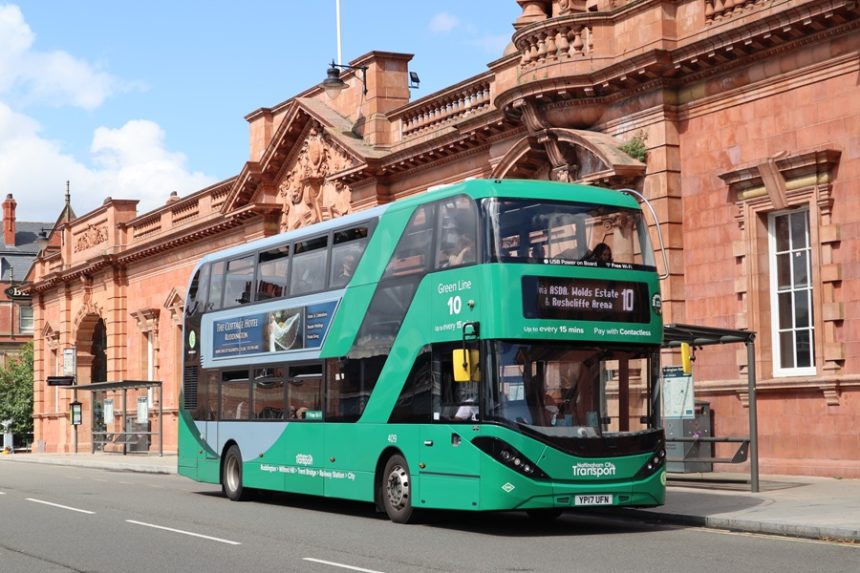
The impact of rising costs and evolving post-pandemic bus usage patterns are core to a review of the Nottingham City Transport (NCT) network, the operator says.
That has seen analysis of the number of customers boarding at every stop on every route at all times of the day. NCT has identified locations and times where over-capacity is provided, as well as some services “that just are not carrying enough people to cover the basic costs of running them.”
From Sunday 21 June that position will be reflected in adjustments to the operator’s network, including some reduction of frequencies at quieter times of the day and week. Doing so will allow busier daytime services to be maintained.
At the same time, the review identified some areas and services that justify improvement, including new links and frequency uplifts. Overall, the operator’s peak vehicle requirement will fall by nine, a spokesperson has confirmed.
NCT adds that patronage “has never fully recovered since the pandemic,” with working from home and hybrid working along with online shopping cited as reasons.
The operator has also highlighted a number of major roadwork schemes on its patch in recent years that impacted customer numbers. It notes that while those have finished, passengers found alternative ways to travel, and have not returned to the bus.
“As an example, one group of services is carrying 25% fewer people than before the works on those routes,” NCT says. The national bus fare cap in England lifting to £3 at the start of 2025 is another contributor, with the municipal seeing ridership fall by 3.77% over the last year.
Although it is protected from some rising costs via pre-agreed prices, the operator has still seen an impact. Insurance, business taxation, vehicle parts and wages have all increased, it notes.
Says Head of Operations David Conway: “A combination of higher costs and fewer people travelling is not a sustainable position, and we must make network changes to ensure that we can continue to provide the quality bus service that the residents of Greater Nottingham are used to enjoying, and other parts of the country look at enviously.”